


A farm in Chiayi yesterday became the nation’s latest poultry farm to test positive for the highly pathogenic H5N6 avian influenza virus strain.
Comprehensive test results should be available today, the Chiayi County Department of Agriculture said, adding that county inspectors found contaminated chickens at an unlicensed butcher’s shop in a traditional market.
The news came after a turkey farm in Tainan was on Sunday confirmed to have H5N6-infected birds, following the first confirmed H5N6 infection in the nation last week at a poultry farm in Hualien County and a case in Yilan County on Saturday.
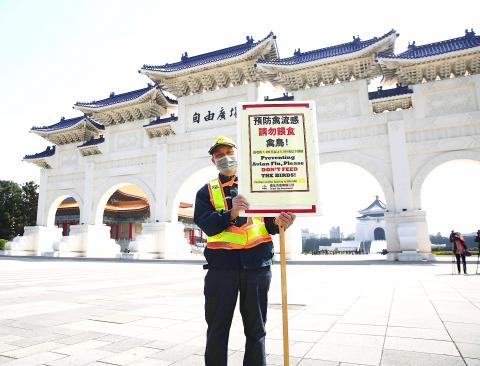
Photo: CNA
Later yesterday, another poultry farm in Hualien was also declared infected.
A case of H5N2 contamination was confirmed at a chicken farm in the county’s Taisi Township (台西), Yulin County Animal and Plant Disease Control Center Director Liao Pei-chih (廖培志) said separately yesterday.
The confirmation resulted in the culling of 3,900 chickens, bringing the total number of birds culled in the county to more than 130,000 so far this year, he said, adding that the authorities then disinfected nearby areas to prevent the spread of the virus.
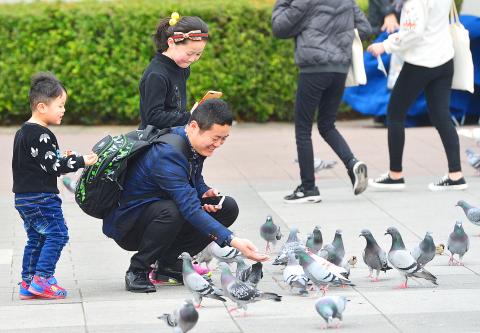
Photo: CNA
The Cabinet on Sunday established a Central Epidemic Response Center.
The center held its first meeting yesterday, during which Premier Lin Chuan (林全) called on local governments to work with the central government to make preparations and adopt measures to contain the disease.
He added that if the outbreak continues, the Cabinet would take further measures, such as imposing border or movement controls.
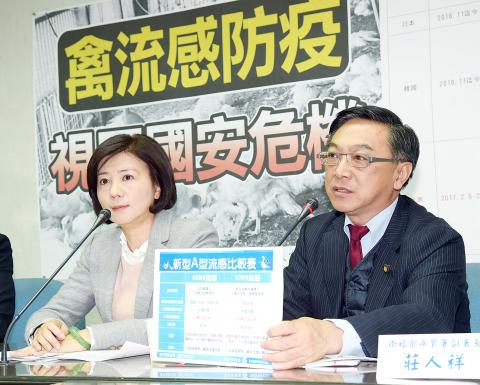
Photo: Huang Yao-cheng, Taipei Times
Centers for Disease Control (CDC) Deputy Director-General Chuang Jen-hsiang (莊人祥) yesterday urged people to avoid visiting live poultry markets or poultry farms and not to eat raw eggs to avoid H5N6 infections.
However, Chuang said humans can only become infected with the virus if a person is exposed to an environment where the virus is active, so only poultry farmers and personnel culling the infected animals are now at risk.
The centers have been working closely with the Council of Agriculture and local health bureaus since Feb. 5 to ensure that personnel who are responsible for culling and disposal of carcasses wear protective clothing and N95 surgical masks, he said.
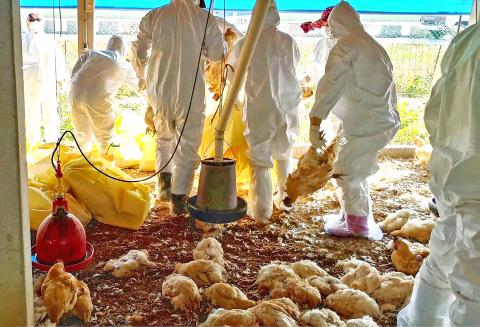
Photo: CNA
All personnel connected with the recent cases have been monitored by the centers for possible infection, Chuang said, adding that aside from checking on such personnel every day, the centers have also instructed medical facilities to ask patients with flu-like symptoms whether they had been near poultry carcasses.
The centers have prepared 1.97 million N95 surgical masks, 510,000 sets of protective clothing and about 45 million other types of surgical masks to serve as disease prevention equipment, Chuang said.
The Taipei Department of Environmental Protection yesterday warned the public not to feed wild birds, adding that the maximum fine for feeding wild birds is NT$6,000.
The department would be monitoring areas in the city such as the Chiang Kai-shek Memorial Hall complex and Daan Forest Park, which usually attract flocks of wild birds, department official Yang Wei-hsiu (楊維修) said.
The Chinese Nationalist Party (KMT) caucus yesterday called a news conference, demanding that the central government make the “maximum effort” to prevent a national outbreak.
The situation is “a matter of national security,” KMT Legislator Alicia Wang (王育敏) said, urging the government to remain on guard, as farmers might conceal incidents of contamination at their facilities.
KMT Legislator Arthur Chen (陳宜民) called on Taiwanese travelers and businesspeople to remain vigilant, as cases of H5N6 infection in humans have been reported in China.
Additional reporting by Huang Shu-li and CNA

PROVOCATIVE: Chinese Deputy Ambassador to the UN Sun Lei accused Japan of sending military vessels to deliberately provoke tensions in the Taiwan Strait China denounced remarks by Japan and the EU about the South China Sea at a UN Security Council meeting on Monday, and accused Tokyo of provocative behavior in the Taiwan Strait and planning military expansion. Ayano Kunimitsu, a Japanese vice foreign minister, told the Council meeting on maritime security that Tokyo was seriously concerned about the situation in the East China and South China seas, and reiterated Japan’s opposition to any attempt to change the “status quo” by force, and obstruction of freedom of navigation and overflight. Stavros Lambrinidis, head of the EU delegation to the UN, also highlighted South China Sea

SILENCING CRITICS: In addition to blocking Taiwan, China aimed to prevent rights activists from speaking out against authoritarian states, a Cabinet department said The Ministry of Foreign Affairs (MOFA) yesterday condemned transnational repression by Beijing after RightsCon, a major digital human rights conference scheduled to be held in Zambia this week, was abruptly canceled due to Chinese pressure over Taiwanese participation. This year’s RightsCon, the world’s largest conference discussing issues “at the intersection of human rights and technology,” was scheduled to take place from tomorrow to Friday in Lusaka, and expected to draw 2,600 in-person attendees from 150 countries, along with 1,100 online participants. However, organizers were forced to cancel the event due to behind-the-scenes pressure from China, the ministry said, expressing its “strongest condemnation”
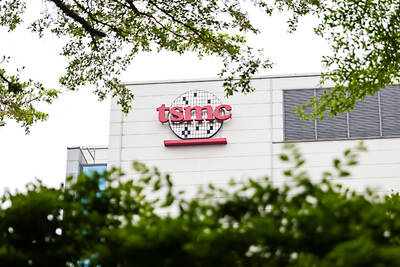
Taiwan Semiconductor Manufacturing Co (TSMC, 台積電), the world’s largest contract chipmaker, said it expects its 2-nanometer (2nm) chip capacity to grow at a compound annual rate of 70 percent from this year to 2028. The projection comes as five fabs begin volume production of 2-nanometer chips this year — two in Hsinchu and three in Kaohsiung — TSMC senior vice president and deputy cochief operating officer Cliff Hou (侯永清) said at the company’s annual technology symposium in Silicon Valley, California, last week. Output in the first year of 2-nanometer production, which began in the fourth quarter of last year, is expected to
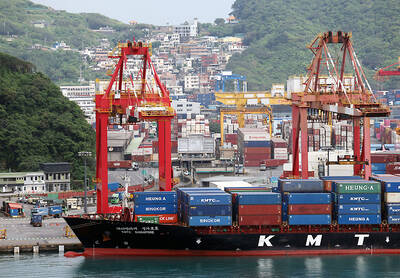
Taiwan’s economy grew far faster than expected in the first quarter, as booming demand for artificial intelligence (AI) applications drove a surge in exports, spilling over into investment and consumption, the Directorate-General of Budget, Accounting and Statistics (DGBAS) said yesterday. GDP growth was 13.69 percent year-on-year during the January-to-March period, beating the DGBAS’ February forecast by 2.23 percentage points and marking the most robust growth in nearly four decades, DGBAS senior official Chiang Hsin-yi (江心怡) told a news conference in Taipei. The result was powered by exports, which remain the backbone of Taiwan’s economy, Chiang said. Outbound shipments jumped 51.12 percent year-on-year to


 RSS
RSS