


About 200 representatives from local industries and the political community yesterday attended a closely watched national affairs conference on pension reform.
The conference, held at the Presidential Office Building, was the culmination of the government’s efforts to solicit opinions from all walks of life on pension reform, which has included 20 preparatory committee meetings and four regional forums over the past six months.
The conference was attended by 192 people, including representatives from various industries, lawmakers and political leaders.
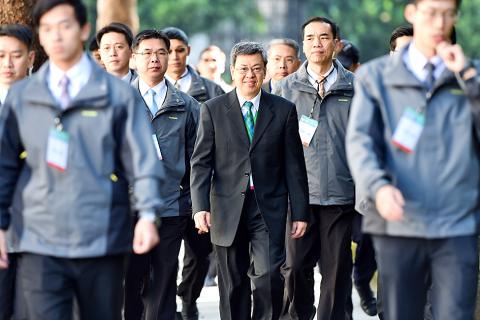
Photo: Chien Jung-fong, Taipei Times
Attendees were divided into three groups: group one focused on pension payments and eligibility; group two discussed issues related to the management and sources of pension funds; and group three concentrated on pension system structures, special insured status and the transferability of working years across sectors.
Group one attracted the most attention, with 75 people, followed by group three with 67 attendees. Group two had 46 participants.
After the groups met, three academics were invited to deliver a summary report of the groups’ opinions: Fu Tsung-hsi (傅從喜), a sociology professor at National Taiwan University; Frances Shao (邵靄如), a professor in Ming Chuan University’s Department of Risk Management and Insurance; and Taiwan Research Institute deputy dean Annie Lee (李安妮).
Listing several points mentioned in group one, Fu said some participants called for a less drastic reduction in the income replacement rate of public servants, which, according to the government’s draft plan, is to be gradually reduced to “60 percent of two times” a civil employee’s basic salary.
As for the period over which salary averages are calculated, participants were divided between a shorter timeframe of five or 10 years and the government’s proposed version of 15 years, Fu said.
The controversial 18 percent preferential interest rate on civil servants’ savings was also a contentious topic in group one. Some people said that the rate should be reduced, but not to zero, while others said it should be phased out within three years, rather than the proposed six years.
Most participants chose NT$32,160 over NT$25,000 as the floor for public servants’ pension payment, with attendees also calling for a floor to private-sector workers’ monthly pension payments, ranging from NT$11,000 to NT$19,000, Fu said.
Group two participants urged for a more open and diversified approach to manage pension funds, the establishment of a special pension fund management organization and a higher amount of annual state funding, Shao said.
There were also suggestions that a separate pension fund be created for the younger generations, Shao added.
Group three participants generally supported the government’s plan to carry out pension reform in two stages, but believed efforts should be made in the first stage to unify the main aspects of different pension funds, such as pension eligibility and retirement age, Lee said.
“Other opinions included conducting assessments of the nation’s pension systems every five to 10 years, setting up a permanent pension reform organization and drawing up a ‘pension standard act,’” Lee said.
Calls for the protection of the rights of women who are only covered by the National Pension after quitting their jobs for family reasons, as well as a special pension scheme for foreign affairs personnel — due to the nature of the profession — were also heard, Lee added.
Group three also saw brief heated exchanges between representatives of the Chinese Nationalist Party (KMT) and the Democratic Progressive Party (DPP), when DPP spokesman Chang Chih-hao (張志豪) blasted previous KMT administrations for failing to reform the pension system.
Minister Without Portfolio Lin Wan-i (林萬億), the deputy convener and executive director of the Presidential Office’s pension reform committee, told a post-meeting news conference that participants who did not fully express their opinions at the conference were welcome to send follow-up information to the committee.
“All the opinions voiced at the three groups will be organized and considered when the government draws up an act or amendment. Given their great variety, we will include those we think can be implemented immediately and save those that cannot to future discussions,” Lin said.
The committee hopes to send a draft bill to lawmakers no later than May 20, adding that an impact assessment report would be published later, Lin said.
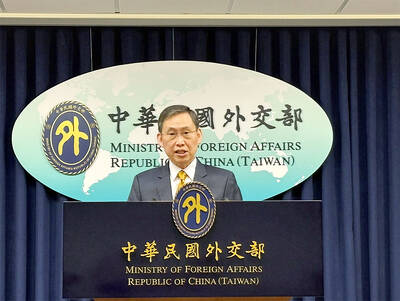
A Ministry of Foreign Affairs official yesterday said that a delegation that visited China for an APEC meeting did not receive any kind of treatment that downgraded Taiwan’s sovereignty. Department of International Organizations Director-General Jonathan Sun (孫儉元) said that he and a group of ministry officials visited Shenzhen, China, to attend the APEC Informal Senior Officials’ Meeting last month. The trip went “smoothly and safely” for all Taiwanese delegates, as the Chinese side arranged the trip in accordance with long-standing practices, Sun said at the ministry’s weekly briefing. The Taiwanese group did not encounter any political suppression, he said. Sun made the remarks when
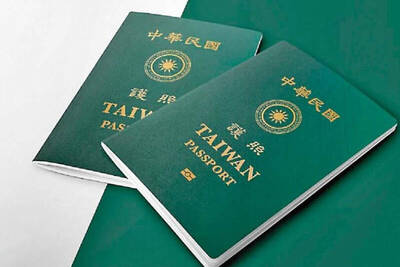
The Taiwanese passport ranked 33rd in a global listing of passports by convenience this month, rising three places from last month’s ranking, but matching its position in January last year. The Henley Passport Index, an international ranking of passports by the number of designations its holder can travel to without a visa, showed that the Taiwan passport enables holders to travel to 139 countries and territories without a visa. Singapore’s passport was ranked the most powerful with visa-free access to 192 destinations out of 227, according to the index published on Tuesday by UK-based migration investment consultancy firm Henley and Partners. Japan’s and

BROAD AGREEMENT: The two are nearing a trade deal to reduce Taiwan’s tariff to 15% and a commitment for TSMC to build five more fabs, a ‘New York Times’ report said Taiwan and the US have reached a broad consensus on a trade deal, the Executive Yuan’s Office of Trade Negotiations said yesterday, after a report said that Washington is set to reduce Taiwan’s tariff rate to 15 percent. The New York Times on Monday reported that the two nations are nearing a trade deal to reduce Taiwan’s tariff rate to 15 percent and commit Taiwan Semiconductor Manufacturing Co (TSMC, 台積電) to building at least five more facilities in the US. “The agreement, which has been under negotiation for months, is being legally scrubbed and could be announced this month,” the paper said,
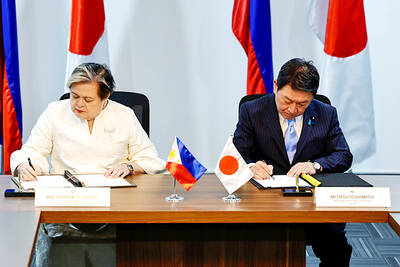
Japan and the Philippines yesterday signed a defense pact that would allow the tax-free provision of ammunition, fuel, food and other necessities when their forces stage joint training to boost deterrence against China’s growing aggression in the region and to bolster their preparation for natural disasters. Japan has faced increasing political, trade and security tensions with China, which was angered by Japanese Prime Minister Sanae Takaichi’s remark that a Chinese attack on Taiwan would be a survival-threatening situation for Japan, triggering a military response. Japan and the Philippines have also had separate territorial conflicts with Beijing in the East and South China


 RSS
RSS