


A spate of “fake news” believed to be fabricated by Chinese netizens has prompted the Presidential Office and the Executive Yuan to call a meeting to discuss countermeasures, a government official said.
The official, who spoke on condition of anonymity, said the Presidential Office, the Cabinet and national security agencies held a meeting to discuss countermeasures after suspected intervention from China in many of the government’s policy proposals.
For example, on Dec. 16 the Chinese People’s Liberation Army Air Force uploaded a photograph of a Xian H-6K bomber flying over mountain peaks on its Sina Weibo (微博)social media account.
Chinese media said that the peaks appeared to be Yushan (玉山) and that the photograph could have been taken when the bomber circled Taiwan on Nov. 25 last year.
The news quickly went viral on social media, in the news media and on the Professional Technology Temple, the nation’s largest academic online bulletin board.
However, the image was dismissed by the Ministry of National Defense, which urged the public not to circulate erroneous information.
The government’s plan to relax an import ban on food products from five Japanese prefectures near the Fukushima Dai-ichi nuclear power plant is another target of rumors, the official said.
An article alleging that the US Food and Drug Administration can confiscate food imports from 14 Japanese prefectures without physical examination has been circulating on the Internet, the official said, adding that China is believed to be the source of the false information.
“Although the information circulated on the Internet or social media is written in traditional Chinese characters, its vocabulary and grammar are different from Taiwanese. It is clearly the work of the Chinese online army,” the official said.
The official said the false information is aimed at unnerving and unsettling Taiwanese, and is a clear threat to national security.
Such actions are detrimental to cross-strait ties and are not a show of benevolence, the official said, urging China to stop spreading unsubstantiated stories.
The government plans to set up a rumor rebuttal section on concerned agencies’ Web sites, but it would also explore other measures, the official said.
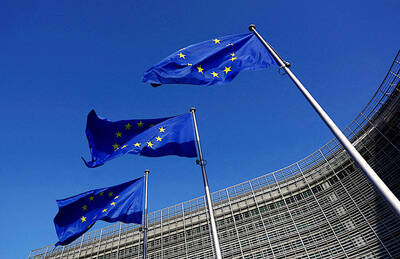
LEVERAGE: China did not ‘need to fire a shot’ to deny Taiwan airspace over Africa when it owns ‘half the continent’s debt,’ a US official said, calling it economic warfare The EU has raised concerns about overflight rights following the delay of President William Lai’s (賴清德) planned state visit to the Kingdom of Eswatini after three African nations denied overflight clearance for his charter at the last minute. Taiwanese allies Paraguay and Saint Kitts and Nevis, as well as several US lawmakers and the Inter-Parliamentary Alliance on China (IPAC) condemned China for allegedly pressuring the countries. Lai was scheduled to fly directly to Taiwan’s only African ally from yesterday to Sunday to celebrate the 40th anniversary of King Mswati III’s accession and his 58th birthday, but Seychelles, Mauritius and Madagascar suddenly revoked
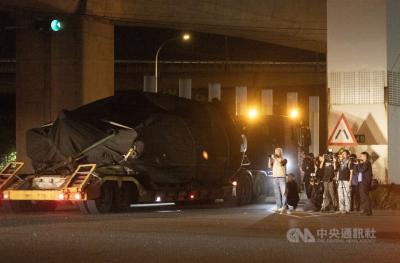
The final batch of 28 M1A2T Abrams tanks purchased from the US arrived at Taipei Port last night and were transported to the Armor Training Command in Hsinchu County’s Hukou Township (湖口), completing the military’s multi-year procurement of 108 of the tanks. Starting at 12:10am today, reporters observed more than a dozen civilian flatbed trailers departing from Taipei Port, each carrying an M1A2T tank covered with black waterproof tarps. Escorted by military vehicles, the convoy traveled via the West Coast Expressway to the Armor Training Command, with police implementing traffic control. The army operates about 1,000 tanks, including CM-11 Brave Tiger
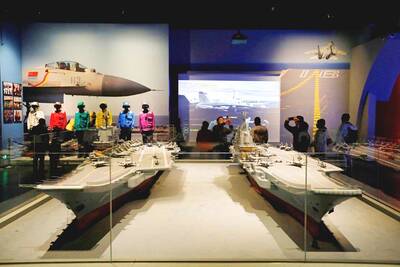
China on Wednesday teased in a video an aircraft carrier that could be its fourth, and the first using nuclear power, while making an allusion to Taiwan and vowing to further build up its islands, as it looks to boost maritime power, secure resources and bolster territorial claims. The video, issued on the eve of the 77th founding anniversary of the Chinese People’s Liberation Army Navy, featured fictional officers with names that are homophones of three commissioned aircraft carriers, the Liaoning (遼寧), Shandong (山東) and Fujian (福建). Titled Into the Deep, it showed a 19-year-old named “Hejian” (何劍) joining the group, sparking
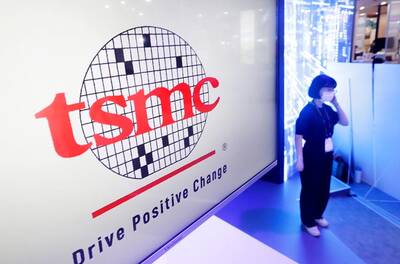
BIG YEAR: The company said it would also release its A12 chip the same year to keep a ‘reliable stream of new silicon technologies’ flowing to its customers Taiwan Semiconductor Manufacturing Co (TSMC, 台積電) yesterday said its newest A13 chip is to enter volume production in 2029 as the chipmaker seeks to hold onto its tech leadership and demand for next-generation chips used in artificial intelligence (AI), high-performance-computing (HPC) and mobile applications. TSMC, the world’s biggest contract chipmaker, also unveiled its A12 chip at its annual technology symposium in Santa Clara, California. The A12 chip, which features TSMC’s super-power-rail technology to provide backside power delivery for AI and HPC applications, is also to enter volume production in 2029, a year after the scheduled release of the A14 chip. The technology moves


 RSS
RSS