


The government yesterday warned that “the threat of our enemies is growing day by day,” as warships led by China’s sole aircraft carrier sailed toward the island province of Hainan through the South China Sea on a routine drill.
The drill comes amid renewed tension over Taiwan following President Tsai Ing-wen’s (蔡英文) telephone call to US president-elect Donald Trump earlier this month, which upset Beijing.
“The threat of our enemies is growing day by day. We should always maintain our combat alertness,” Minister of National Defense Feng Shih-kuan (馮世寬) said.
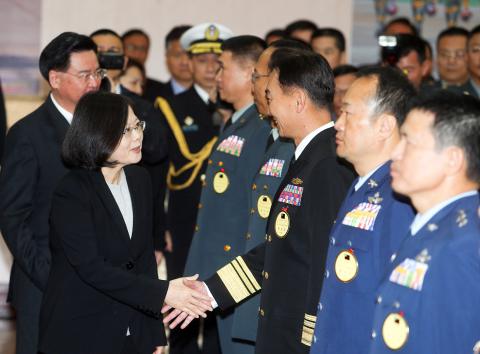
Photo: CNA
“We need to strengthen the training [of our soldiers] so that they can not only survive in battle, but also destroy the enemy and accomplish the mission,” he added.
Feng made the remarks during a speech at a Ministry of National Defense event marking the promotion of senior military officers.
The Chinese warships rounded Taiwan, passing between the Japanese islands of Miyako and Okinawa, then through the Bashi Channel between Taiwan and the Philippines, the ministry said.
Beijing has given few details of what the Soviet-built Liaoning aircraft carrier is up to, other than to say that it is on a routine exercise.
The Chinese People’s Liberation Army Air Force conducted long-range drills this month above the East and South China seas that rattled Taiwan and Japan.
China said those exercises were also routine.
China claims most of the South China Sea, through which about US$5 trillion in ship-borne trade passes every year. Taiwan, Brunei, Malaysia, the Philippines and Vietnam also have rival claims.
The Pentagon did not directly comment on the latest drill, but said that the US recognizes lawful use of sea and airspace in accordance with international law.
“We continue to closely monitor developments in the region. We do not have specific comments on China’s recent naval activities, but we continue to observe a range of ongoing Chinese military activity in the region,” Pentagon spokesman Gary Ross told reporters.
The Liaoning was maintaining a southwest course toward Hainan, and not deeper into the disputed South China Sea near the Spratly Islands (Nansha Islands, 南沙群島) near the Philippines, Malaysia and Vietnam, said a ministry official, who spoke on condition of anonymity.
“It is still heading southwest toward Hainan,” the official said.
The carrier had not sailed near Itu Aba Island (Taiping Island, 太平島), the official said, adding that Taipei would continue to monitor its movements.
The Liaoning has taken part in previous exercises, including in the South China Sea, but China is years away from perfecting carrier operations similar to those the US has practiced for decades.
In December last year, the ministry confirmed a Chinese program to build a second aircraft carrier, but its launch date is unknown.
Beijing could build multiple aircraft carriers over the next 15 years, the Pentagon said in a report last year.
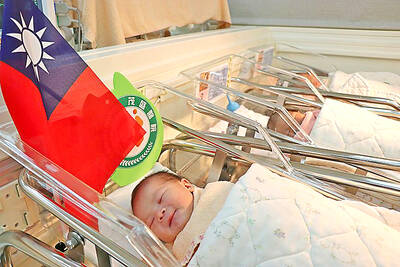
AGING: As of last month, people aged 65 or older accounted for 20.06 percent of the total population and the number of couples who got married fell by 18,685 from 2024 Taiwan has surpassed South Korea as the country least willing to have children, with an annual crude birthrate of 4.62 per 1,000 people, Ministry of the Interior data showed yesterday. The nation was previously ranked the second-lowest country in terms of total fertility rate, or the average number of children a woman has in her lifetime. However, South Korea’s fertility rate began to recover from 2023, with total fertility rate rising from 0.72 and estimated to reach 0.82 to 0.85 by last year, and the crude birthrate projected at 6.7 per 1,000 people. Japan’s crude birthrate was projected to fall below six,
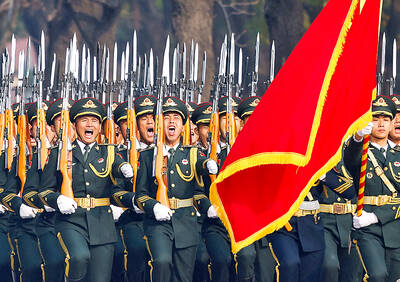
Conflict with Taiwan could leave China with “massive economic disruption, catastrophic military losses, significant social unrest, and devastating sanctions,” a US think tank said in a report released on Monday. The German Marshall Fund released a report titled If China Attacks Taiwan: The Consequences for China of “Minor Conflict” and “Major War” Scenarios. The report details the “massive” economic, military, social and international costs to China in the event of a minor conflict or major war with Taiwan, estimating that the Chinese People’s Liberation Army (PLA) could sustain losses of more than half of its active-duty ground forces, including 100,000 troops. Understanding Chinese
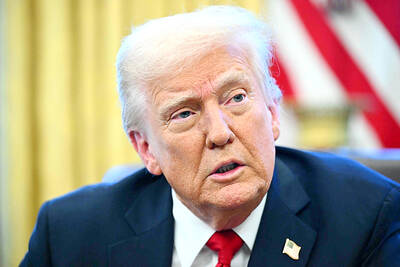
US President Donald Trump in an interview with the New York Times published on Thursday said that “it’s up to” Chinese President Xi Jinping (習近平) what China does on Taiwan, but that he would be “very unhappy” with a change in the “status quo.” “He [Xi] considers it to be a part of China, and that’s up to him what he’s going to be doing, but I’ve expressed to him that I would be very unhappy if he did that, and I don’t think he’ll do that. I hope he doesn’t do that,” Trump said. Trump made the comments in the context
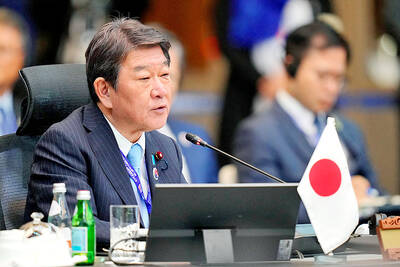
SELF-DEFENSE: Tokyo has accelerated its spending goal and its defense minister said the nation needs to discuss whether it should develop nuclear-powered submarines China is ramping up objections to what it sees as Japan’s desire to acquire nuclear weapons, despite Tokyo’s longstanding renunciation of such arms, deepening another fissure in the two neighbors’ increasingly tense ties. In what appears to be a concerted effort, China’s foreign and defense ministries issued statements on Thursday condemning alleged remilitarism efforts by Tokyo. The remarks came as two of the country’s top think tanks jointly issued a 29-page report framing actions by “right-wing forces” in Japan as posing a “serious threat” to world peace. While that report did not define “right-wing forces,” the Chinese Ministry of Foreign Affairs was


 RSS
RSS