


The Executive Yuan yesterday moved the implementation date for amendments to the Labor Standards Act (勞動基準法) forward to today, promising to negotiate with employers and business owners.
Premier Lin Chuan (林全) said the plan to implement the amendments on Sunday next week, the first day of the new year, was due to an oversight.
He said officials had not noticed that some articles were to become effective on certain dates, while others were to become effective immediately.
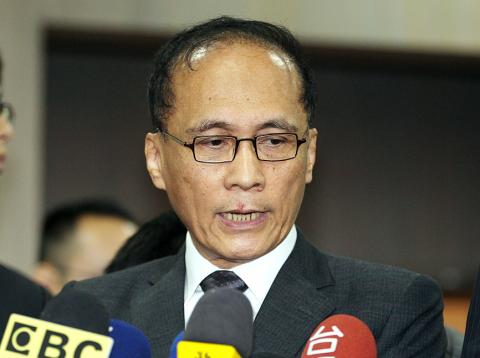
Photo: CNA
The Executive Yuan will help business owners acclimatize to the new regulations, specifically those in the transport and hotel industries, Lin said, adding that it is considering alternative implementation dates for them.
We believe that businesses will be able to weather this brief, turbulent period with relative ease, Lin said.
However, Executive Yuan spokesperson Hsu Kuo-yung (徐國勇) said the Executive Yuan had not actually moved the date forward.
The premier meant that from the start of next year, off days for all employees nationwide would be standardized, as seven holidays have been cut, Hsu said.
However, changes regarding “one fixed day off and one rest day” every workweek and increased overtime pay for rest days have been ratified by the legislature and approved by the president, he said.
Therefore, according to the Central Regulation Standard Act (中央法規標準法), the Executive Yuan has implemented those conditions within three days of the presidential approval, Hsu said.
We believe that this will not affect businesses much and we hope employers will empathize with their workers and give them a better working environment, he said.
The Executive Yuan is to invite firms in the hotel and transport industries to a meeting to discuss their situation with respect to the new rules, Hsu said.
Businesses will not be fined for following pre-amendment rules prior to an announcement of implementation dates covering their industries, he said.
Other industries, such as 24-hour factories, also face problems, and the Executive Yuan is to hold talks with the owners of such industries as well, Hsu said.

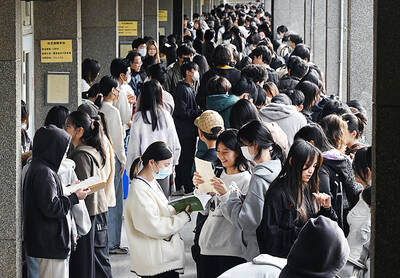
A global survey showed that 60 percent of Taiwanese had attained higher education, second only to Canada, the Ministry of the Interior said. Taiwan easily surpassed the global average of 43 percent and ranked ahead of major economies, including Japan, South Korea and the US, data from the Organisation for Economic Co-operation and Development (OECD) for 2024 showed. Taiwan has a high literacy rate, data released by the ministry showed. As of the end of last year, Taiwan had 20.617 million people aged 15 or older, accounting for 88.5 percent of the total population, with a literacy rate of 99.4 percent, the data

NEW LOW: The council in 2024 based predictions on a pessimistic estimate for the nation’s total fertility rate of 0.84, but last year that rate was 0.69, 17 percent lower An expected National Development Council (NDC) report expects the nation’s population to drop below 12 million by 2065, with the old-age dependency ratio to top 100 percent sooner than 2070, sources said yesterday. The council is slated to release its latest population projections in August, using an ultra-low fertility model, the sources said. The previous report projected that Taiwan’s population would fall to 14.37 million by 2070, but based on a new estimate of the total fertility rate (TFR) — the average number of children born to a woman over her lifetime — the population is expected to reach 12 million by
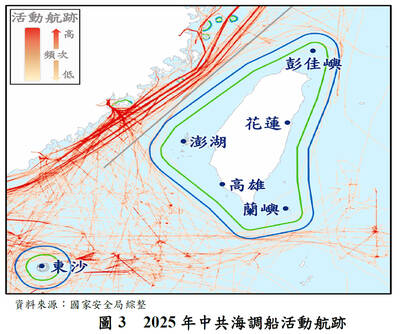
INTENSIFYING THREATS: Beijing’s tactics include massive attacks on the government service network, aircraft and naval vessel incursions and damaging undersea cables China is prepared to interfere in November’s nine-in-one local elections by launching massive attacks on the Taiwanese government’s service network (GSN), a report published by the National Security Bureau showed. The report was submitted to the Legislative Yuan ahead of the bureau’s scheduled briefing at the Foreign Affairs and National Defense Committee tomorrow. The national security team has identified about 13,000 suspicious Internet accounts and 860,000 disputed messages, the bureau said of China’s cognitive warfare against Taiwan. The disputed messages focus on major foreign affairs, national defense and economic issues, which were produced using generative artificial intelligence (AI) and distributed through Chinese

COUNTERING HOSTILITY: The draft bill would require the US to increase diplomatic pressure on China and would impose sanctions on those who sabotage undersea cable networks US lawmakers on Thursday introduced a bipartisan bill to bolster the resilience of Taiwan’s submarine cables to counter China’s hostile activities. The proposal, titled the critical undersea infrastructure resilience initiative act, was cosponsored by Republican representatives Mike Lawler and Greg Stanton, and Democratic Representative Dave Min. US Senators John Curtis and Jacky Rosen also introduced a companion bill in the US Senate, which has passed markup at the chamber’s Committee on Foreign Relations. The House’s version of the bill would prioritize the deployment of sensors to detect disruptions or potential sabotage in real-time and enhance early warning capabilities through global intelligence sharing frameworks,


 RSS
RSS