


Deputy Minister of Foreign Affairs Wu Chih-chung (吳志中) yesterday said that Taiwan’s diplomatic ties with the Vatican are not a “zero-sum game,” welcoming dialogue between the Catholic city-state and China for the sake of promoting religious freedom.
“Taipei and the Holy See are diplomatic allies connected by the same values, sharing a consensus on many aspects, including religious freedom, democracy, human rights and humanitarian aid,” Wu said on the sidelines of the final day of a two-day forum titled “Direct Election of President and Taiwan’s Democratic Development in the Past 20 Years” in Taipei.
Wu said that, due to its mission to promote human rights and religious freedom, the Vatican is supposed to engage in dialogue with China, something that Taiwan is not only not opposed to, but also thinks is positive.
“This is not a zero-sum game. It does not mean that we have to sever ties [with a diplomatic ally] just because it starts getting close to others,” Wu said, urging the public to not interpret the matter as being purely black-and-white.
Asked about the status of Taiwan-Vatican relations, Wu said the ties have been and are expected to remain relatively stable, but acknowledged that might not last forever, as “many things are changing.”
Wu made the remarks one day after Vatican Cardinal Secretary of State Pietro Parolin said in a speech in Pordenone, Italy, that there are many hopes and expectations for new developments and a new season in relations between China and the Vatican.
“[This] will benefit not just Catholics in the land of Confucius, but the whole country, which boasts one of the greatest civilizations on the planet,” Reuters quoted Parolin as saying.
Speculation over the possibility of the Holy See switching recognition from Taipei to Beijing has been growing, particularly after President Tsai Ing-wen’s (蔡英文) inauguration on May 20.
Despite uncertainty surrounding Taiwan-Vatican relations, Vice President Chen Chien-jen (陳建仁), who is Catholic, is on Friday scheduled to embark on a six-day visit to the Holy See, the nation’s only European diplomatic ally, to attend the canonization of Mother Teresa.
Wu, who is to be a member of Chen’s delegation, said the Vatican is not a country that puts national interests above all else and aims to push for religious freedom and the promotion of the Catholic faith.
“As far as the government is concerned, our priority is to maintain official diplomatic ties with the Vatican,” Wu said, adding that no changes would be made to Chen’s visit.
Earlier yesterday, the ministry also issued a statement saying that it has kept close tabs on interactions between China and the Vatican, and it reiterated that Taipei’s ties with the Holy See have a long history.
“For many years, high-level government officials from both sides have made frequent visits to each other’s nations. Intensive cooperation has also occurred between Taiwan and the city-state’s pontifical councils and Catholic charitable organizations,” the ministry said.
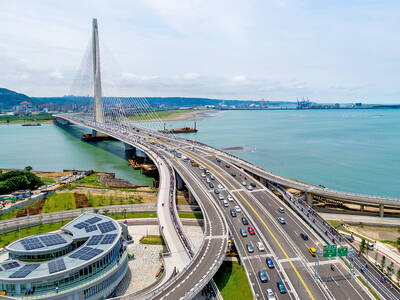
The Ministry of Transportation and Communications yesterday inaugurated the Danjiang Bridge across the Tamsui River in New Taipei City, saying that the structure would be an architectural icon and traffic artery for Taiwan. Feted as a major engineering achievement, the Danjiang Bridge is 920m long, 211m tall at the top of its pylon, and is the longest single-pylon asymmetric cable-stayed bridge in the world, the government’s Web site for the structure said. It was designed by late Iraqi-British architect Zaha Hadid. The structure, with a maximum deck of 70m, accommodates road and light rail traffic, and affords a 200m navigation channel for boats,
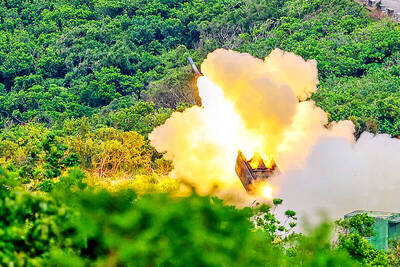
PRECISION STRIKES: The most significant reason to deploy HIMARS to outlying islands is to establish a ‘dead zone’ that the PLA would not dare enter, a source said A High Mobility Artillery Rocket System (HIMARS) would be deployed to Penghu County and Dongyin Island (東引) in Lienchiang County (Matsu) to force the Chinese military to retreat at least 100km from the coastline, a military source said yesterday. Taiwan has been procuring HIMARS and Army Tactical Missile Systems (ATACMS) from the US in batches. Once all batches have been delivered, Taiwan would possess 111 HIMARS units and 504 ATACMS, which have a range of 300km. Considering that “offense is the best defense,” the military plans to forward-deploy the systems to outlying islands such as Penghu and Dongyin so that
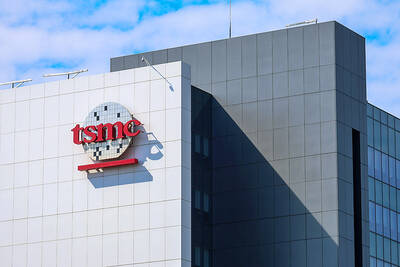
Taiwan Semiconductor Manufacturing Co (TSMC, 台積電), the world’s largest foundry service provider, yesterday said that global semiconductor revenue is projected to hit US$1.5 trillion in 2030, after the figure exceeds US$1 trillion this year, as artificial intelligence (AI) demand boosts consumption of token and compute power. “We are still at the beginning of the AI revolution, but we already see a significant impact across the whole semiconductor ecosystem,” TSMC deputy cochief operating officer Kevin Zhang (張曉強) said at the company’s annual technology symposium in Hsinchu City. “It is fair to say that in the past decade, smartphones and other mobile devices were
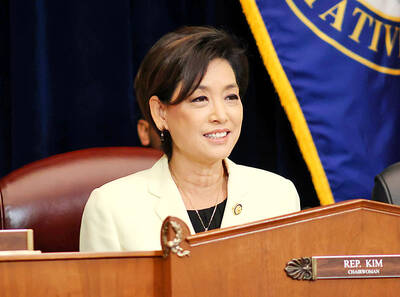
‘CLEAR MESSAGE’: The bill would set up an interagency ‘tiger team’ to review sanctions tools and other economic options to help deter any Chinese aggression toward Taiwan US Representative Young Kim has introduced a bill to deter Chinese aggression against Taiwan, calling for an interagency “tiger team” to preplan coordinated sanctions and economic measures in response to possible Chinese military or political action against Taiwan. “[Chinese President] Xi Jinping [習近平] has directed the People’s Liberation Army to be ready to invade Taiwan by 2027. China has a plan. America should have one too,” Kim said in a news release on Thursday last week. She introduced the “Deter PRC [People’s Republic of China] aggression against Taiwan act” to “ensure the US has a coordinated sanctions strategy ready should


 RSS
RSS