


Two car bombs claimed by the Islamic State group killed at least 14 people and wounded 37 others in the center of the southern Iraqi city of Samawa yesterday, police said, while on Saturday, protesters tore down walls and poured into the Iraqi capital’s heavily fortified Green Zone, where they stormed parliament.
The first blast was near a local government building and the second one about 60m away at a bus station, police sources said.
Unverified online photographs showed a large plume of smoke rising above the buildings as well as burned-out cars and bodies on the ground, including several children, at the site of one of the blasts. Police officers and firefighters carried people away on stretchers and in their arms.
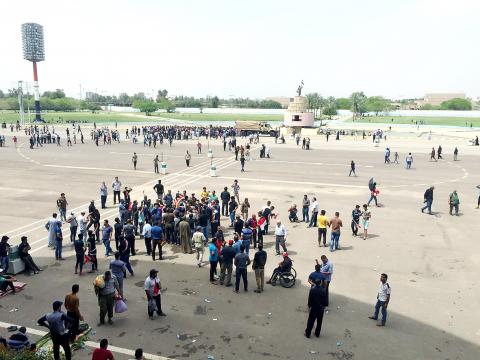
Photo: Reuters
Saturday was the first time supporters of Shiite cleric Moqtada al-Sadr broke into the Green Zone, home to most government ministries and foreign embassies. The group have been holding demonstrations and sit-ins for months to demand an overhaul of Iraq’s political system.
Iraqi security forces fired tear gas at one entrance of the zone, but appeared to be largely standing down as protesters marched through the area, chanting and waving Iraqi flags.
Iraq has been mired in a political crisis for months, hindering the government’s ability to combat the Islamic State group — which still controls much of the country’s north and west — or address a financial crisis largely caused by a plunge in global oil prices.
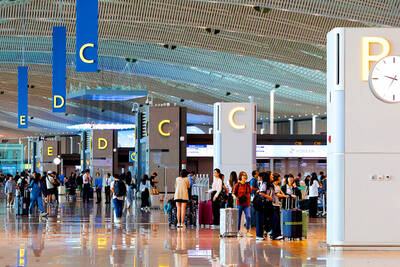
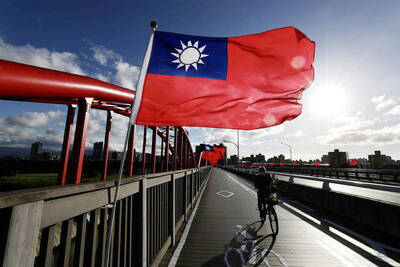
South Korea has adjusted its electronic arrival card system to no longer list Taiwan as a part of China, a move that the Ministry of Foreign Affairs said would help facilitate exchanges between the two sides. South Korea previously listed “Taiwan” as “Taiwan (China)” in the drop-down menus of its online arrival card system, where people had to fill out where they came from and their next destination. The ministry had requested South Korea make a revision and said it would change South Korea’s name on Taiwan’s online immigration system from “Republic of Korea” to “Korea (South),” should the issue not be
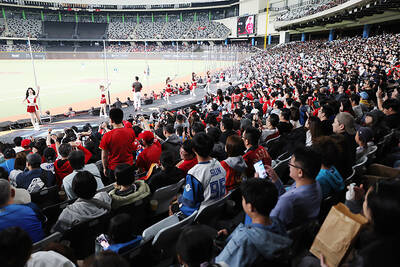
The Legislative Yuan’s Finance Committee yesterday approved proposed amendments to the Amusement Tax Act (娛樂稅法) that would abolish taxes on films, cultural activities and competitive sporting events, retaining the fee only for dance halls and golf courses. The proposed changes would set the maximum tax rate for dance halls and golf courses at 50 and 20 percent respectively, with local governments authorized to suspend the levies. Article 2 of the act says that “amusement tax shall be levied on tickets sold or fees charged by amusement places, facilities or activities” in six categories: “Cinema; professional singing, story-telling, dancing, circus, magic show, acrobatics
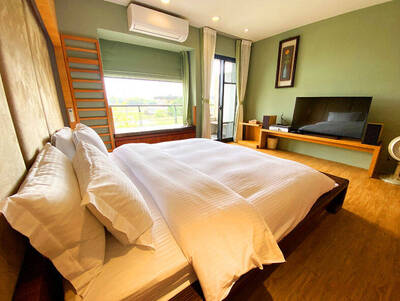
Tainan, Taipei and New Taipei City recorded the highest fines nationwide for illegal accommodations in the first quarter of this year, with fines issued in the three cities each exceeding NT$7 million (US$220,639), Tourism Administration data showed. Among them, Taipei had the highest number of illegal short-term rental units, with 410. There were 3,280 legally registered hotels nationwide in the first quarter, down by 14 properties, or 0.43 percent, from a year earlier, likely indicating operators exiting the market, the agency said. However, the number of unregistered properties rose to 1,174, including 314 illegal hotels and 860 illegal short-term rental
INFLATION UP? The IMF said CPI would increase to 1.5 percent this year, while the DGBAS projected it would rise to 1.68 percent, with GDP per capita of US$44,181 The IMF projected Taiwan’s real GDP would grow 5.2 percent this year, up from its 2.1 percent outlook in January, despite fears of global economic disruptions sparked by the US-Iran conflict. Taiwan’s consumer price index (CPI) is projected to increase to 1.5 percent, while unemployment would be 3.4 percent, roughly in line with estimates for Asia as a whole, the international body wrote in its Global Economic Outlook Report published in the US on Monday. The figures are comparatively better than the IMF outlook for the rest of the world, which pegged real GDP growth at 3.1 percent, down from 3.3 percent


 RSS
RSS