


The biggest trade deal in history was signed yesterday, yoking 12 Pacific rim countries in a US-led initiative aimed at wresting influence from booming China.
The ambitious Trans-Pacific Partnership (TPP) aims to slash tariffs and trade barriers for an enormous 40 percent of the global economy — but pointedly does not include Beijing.
“TPP allows America — and not countries like China — to write the rules of the road in the 21st century,” US President Barack Obama said after the pact was signed in New Zealand.
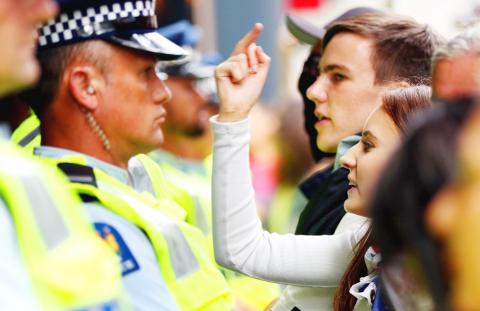
Photo: AFP
The deal — whose birth was fraught by domestic opposition in the US and in other key players, such as Japan — is a key plank of Obama’s so-called “pivot” to Asia, as he seeks to counter the rising power of China.
Along with a rebalancing of the US military machine toward the western Pacific, the TPP is recognition of the growing might of China, which has come to dominate the region, threatening US influence.
Supporters of the deal say harnessing the power of free trade in such a dynamic part of the world is vital if the US is to fend off China’s challenge to its supremacy.
Trade ministers from 12 participating countries — Australia, Brunei, Canada, Chile, Japan, Malaysia, Mexico, New Zealand, Peru, Singapore, the US and Vietnam — signed the pact in Auckland early yesterday.
Beijing was muted in its reaction to the deal, saying its officials were studying the 6,000-page document.
China’s Ministry of Commerce statement said Beijing would “actively participate in and facilitate highly transparent, open and inclusive free-trade arrangements in the region.”
Despite Obama’s comments, the US has also sought to play down any overt anti-China rhetoric.
US Trade Representative Michael Froman said the agreement was “never directed against” any specific country and “it’s important to have a constructive economic relationship” with China.
Although the signing marks the end of the negotiating process, member states still have two years to get the deal approved at home before it becomes legally binding.
“We will encourage all countries to complete their domestic ratification processes as quickly as possible,” New Zealand Prime Minister John Key said. “TPP will provide much better access for goods and services to more than 800 million people across the TPP countries, which make up 36 percent of global GDP.”
However, ratification may prove far from easy, notably in the US, where poisonous election-year politics are likely to stymie co-operation over a deal opponents have spun as a job killer.
In Japan — the second-biggest economy in the bloc — mainstream politicians and economists have generally supported the TPP as positive for Tokyo’s export-driven growth, despite concerns over its impact on its prized agriculture industry.
The Canadian government, which has changed since the deal was negotiated, signed up yesterday, but has yet to decide whether to go through with ratification.
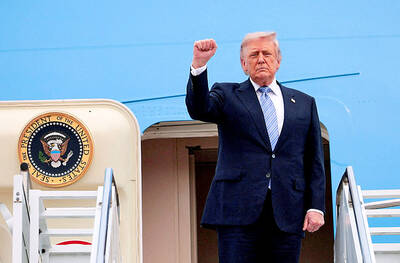
US-CHINA SUMMIT: MOFA welcomed US reassurance of no change in its Taiwan policy; Trump said he did not comment when Xi talked of opposing independence US President Donald Trump yesterday said he has not made a decision on whether to move forward with a major arms package for Taiwan after hearing concerns about it from Chinese President Xi Jinping (習近平). Trump’s comments on Taiwan came as he flew back to Washington after wrapping up critical talks in which both leaders said important progress was made in stabilizing US-China relations even as deep differences persist between the world’s two biggest powers on Iran and Taiwan. “I will make a determination,” Trump said, adding: “I’ll be making decisions. But, you know, I think the last thing we need right
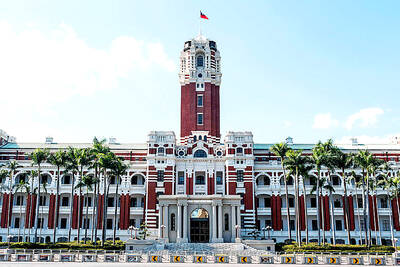
SECURITY: Taipei presses the US for arms supplies, saying the arms sales are not only a reflection of the US security commitment to Taiwan but also serve as a mutual deterrent against regional threats Taiwan is committed to preserving the cross-strait “status quo” and contributing to regional peace and stability, the Presidential Office said yesterday. “It is an undeniable fact that the Republic of China is a sovereign and independent democratic nation,” Presidential Office spokeswoman Karen Kuo (郭雅慧) reiterated, adding that Beijing has no right to claim sovereignty over Taiwan. The statements came after US President Donald Trump warned against Taiwanese independence. Trump wrapped up a state visit to Beijing on Friday, during which Chinese President Xi Jinping (習近平) had pressed him not to support Taiwan. Taiwan depends heavily on US security backing to deter China from carrying
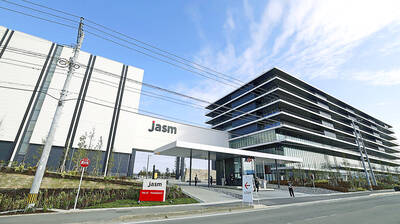
The subsidiary of Taiwan Semiconductor Manufacturing Co (TSMC, 台積電) in Kumamoto, Japan, turned a profit in the first quarter of this year, marking the first time the first fab of the unit has become profitable since mass production started at the end of 2024. According to the contract chipmaker’s financial statement released on Friday, Japan Advanced Semiconductor Manufacturing Inc (JASM), a joint venture running the fab in Kumamoto, posted NT$951 million (US$30.19 million) in profit in the January-to-March period, compared with a loss of NT$1.39 billion in the previous quarter, and a loss of NT$3.25 billion in the first quarter of
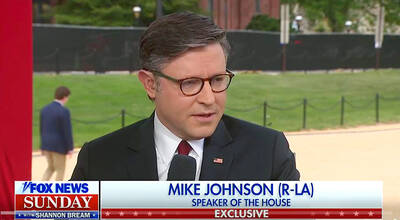
RESOLUTE BACKING: Two Republican senators are planning to introduce legislation that would impose immediate sanctions on China if it attempts to invade Taiwan US House of Representatives Speaker Mike Johnson on Sunday reaffirmed US congressional support for Taiwan, saying the US and “all freedom-loving people” have a stake in preventing China from seizing Taiwan by force. Johnson made the remarks in an interview with Fox News Sunday on US President Donald Trump’s summit with Chinese President Xi Jinping (習近平) last week. In an interview that aired on Friday on Fox News, just as Trump wrapped up a high-stakes visit to China, he said he has yet to green-light a new US$14 billion arms package to Taiwan and that it “depends on China.” “It’s a very good


 RSS
RSS