


The authorities are investigating an alleged murder-and-suicide that resulted in the death of three brothers, members of a prominent Taipei family which owns the Miramar Shopping Mall (美麗華百樂園) in the capital’s Neihu District (內湖).
Police said shots were fired during a corporate meeting at the offices of Mayfull Food Corp (美福食集) in Neihu yesterday morning.
Huang Ming-huang (黃明煌) and Huang Ming-jen (黃明仁) were killed by bullet wounds to the head, allegedly fired by their younger brother, Huang Ming-te (黃明德).
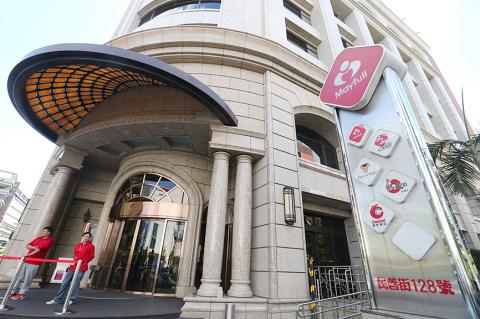
Photo: CNA
After receiving reports of gunshots, police officers arrived to find Huang Ming-te standing on the building’s seventh floor balcony holding a handgun. Despite the officers’ attempts to talk him down, he shot himself, fell to the ground and was later pronounced dead at the Tri-Service General Hospital.
All three brothers were in their 50s. The Huang family, which reportedly owns numerous plots of land and real estate in the Dazhi area worth more than NT$100 billion (US$3.06 billion).
The brothers’ father, the late tycoon Huang Jung-tu (黃榮圖), built up a large business empire, which included Mayfull Food Corp, one of the nation’s major meat importers and distributors, and the Miramar Group, a hotel and retail chain.
Police said Huang Ming-te, 54, took an Italian-made Tanfoglio pistol to the business meeting yesterday morning.
After a dispute broke out over dividing up the business, Huang Ming-te allegedly took out the pistol and fired several shots at his two elder brothers, before he later committed suicide with a single shot to his own head.
Overall, 13 shots were fired, while nine bullets remained in the pistol, police said.
Another brother, Huang Ming-tang (黃明堂), was also at the meeting when the shooting began. He quickly ran from the scene and locked himself in another suite, before calling the police.
“This is a terrible family tragedy, I have lost three brothers today, and now I must help the families with the funerals and the other arrangements,” Huang Ming-tang said when interviewed by reporters. “It was due to a family dispute among brothers and has nothing to do with the business operations of the companies.”
Media reports said Huang Jung-tu had been married twice and had seven sons, while he had another two sons from a relationship outside of marriage.
There have been a number of lawsuits between the families of the two wives over their shares of the business empire.

LEVERAGE: China did not ‘need to fire a shot’ to deny Taiwan airspace over Africa when it owns ‘half the continent’s debt,’ a US official said, calling it economic warfare The EU has raised concerns about overflight rights following the delay of President William Lai’s (賴清德) planned state visit to the Kingdom of Eswatini after three African nations denied overflight clearance for his charter at the last minute. Taiwanese allies Paraguay and Saint Kitts and Nevis, as well as several US lawmakers and the Inter-Parliamentary Alliance on China (IPAC) condemned China for allegedly pressuring the countries. Lai was scheduled to fly directly to Taiwan’s only African ally from yesterday to Sunday to celebrate the 40th anniversary of King Mswati III’s accession and his 58th birthday, but Seychelles, Mauritius and Madagascar suddenly revoked
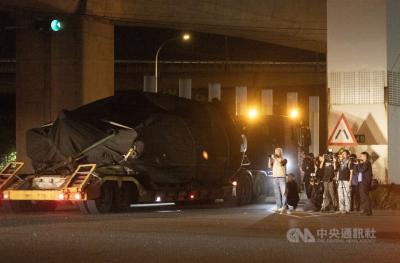
The final batch of 28 M1A2T Abrams tanks purchased from the US arrived at Taipei Port last night and were transported to the Armor Training Command in Hsinchu County’s Hukou Township (湖口), completing the military’s multi-year procurement of 108 of the tanks. Starting at 12:10am today, reporters observed more than a dozen civilian flatbed trailers departing from Taipei Port, each carrying an M1A2T tank covered with black waterproof tarps. Escorted by military vehicles, the convoy traveled via the West Coast Expressway to the Armor Training Command, with police implementing traffic control. The army operates about 1,000 tanks, including CM-11 Brave Tiger
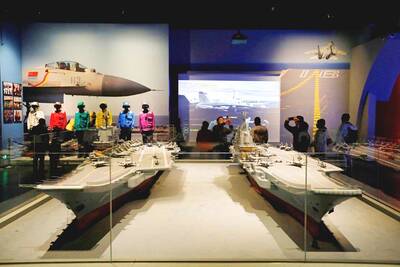
China on Wednesday teased in a video an aircraft carrier that could be its fourth, and the first using nuclear power, while making an allusion to Taiwan and vowing to further build up its islands, as it looks to boost maritime power, secure resources and bolster territorial claims. The video, issued on the eve of the 77th founding anniversary of the Chinese People’s Liberation Army Navy, featured fictional officers with names that are homophones of three commissioned aircraft carriers, the Liaoning (遼寧), Shandong (山東) and Fujian (福建). Titled Into the Deep, it showed a 19-year-old named “Hejian” (何劍) joining the group, sparking
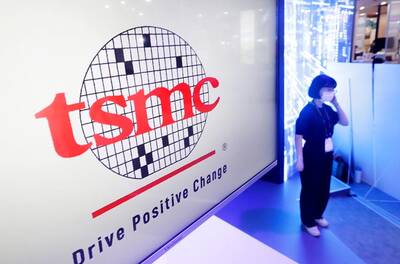
BIG YEAR: The company said it would also release its A12 chip the same year to keep a ‘reliable stream of new silicon technologies’ flowing to its customers Taiwan Semiconductor Manufacturing Co (TSMC, 台積電) yesterday said its newest A13 chip is to enter volume production in 2029 as the chipmaker seeks to hold onto its tech leadership and demand for next-generation chips used in artificial intelligence (AI), high-performance-computing (HPC) and mobile applications. TSMC, the world’s biggest contract chipmaker, also unveiled its A12 chip at its annual technology symposium in Santa Clara, California. The A12 chip, which features TSMC’s super-power-rail technology to provide backside power delivery for AI and HPC applications, is also to enter volume production in 2029, a year after the scheduled release of the A14 chip. The technology moves


 RSS
RSS