


A revelation by Sunflower movement leader Chen Wei-ting (陳為廷) that he once groped a female passenger’s breast on a bus has sparked heated debate among netizens, who had mixed views.
In an interview with the Chinese-language Liberty Times (the Taipei Times’ sister newspaper) published yesterday, Chen, who is running for legislator in the by-election in Miaoli County in February, was asked to discuss his potential risk of falling victim to “attacks on his personal integrity,” to which he responded by making the revelation, saying: “There are things that I have kept to myself for a long time.”
“One day, during the summer vacation before my senior year in college, I groped the bosom of a female passenger sitting next to me on public transport and was taken to a police station. Sometime later, I had improper physical contact with a female on the dance floor at a night club, for which I underwent mental health consultation at the order of school administrators,” he said.
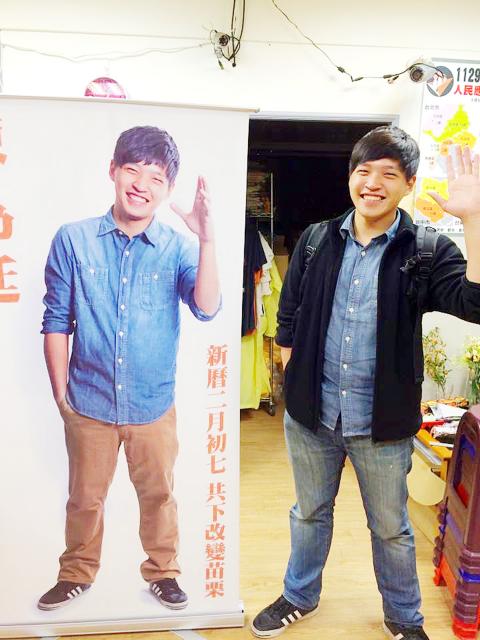
Photo from Lin Fei-fan’s Facebook page
Some netizens condemned Chen, with one saying that touching a woman’s body without permission — whatever the reason — without her permission is exactly what “subway gropers” do.
“He is just afraid that these incidents will impact his campaign when they are exposed, so he might as well reveal it now,” one said.
National Taiwan Normal University professor Wu Chia-cheng (吳家誠), referring to Chen’s previous act of throwing his shoe at Miaoli County Commissioner Liu Cheng-hung (劉政鴻) to protest against the county government’s forced demolition of four houses in Dapu Borough (大埔), criticized Chen on Facebook, saying: “He throws his shoe at someone when he is mad and gropes women’s bosoms when he is high. He is dangerous.”
Others expressed support for Chen and said he showed courage by confessing his past wrongdoing.
“I was very shocked when I heard [Chen’s confession],” Defend Miaoli Youth Alliance member Yu Chieh-min (游捷閔) said.
Knowing Chen on a personal level, Yu said he has many shortcomings, but she also commended his courage in admitting what he did.
“It shows that he is not afraid to admit that he was wrong and is willing to improve. I believe he will adopt a more mature attitude toward women. He has not lost my support,” she said.
Using former US president Bill Clinton as an example, Chinese dissident Wang Dan (王丹) said Americans could forgive Clinton because they elected him as they believed him to be capable of handling public matters, not because they saw him as a moral exemplar.
Chen’s fellow Sunflower movement leader Lin Fei-fan (林飛帆) said he had known about the incident for a long time. Lin lauded Chen for having the courage to face his own demons, even though he said he did not think Chen’s mistakes could be rectified by his engagement in social issues.
Prosecutors who handled the case three years ago said Chen touched a female passenger’s breast while she was sleeping on a Taipei-bound Hsin Chu Bus in July 2011, adding that the woman awoke and shouted for help, after which the bus driver stopped the vehicle near Chongqing N Road Sec 3 in Taipei and took Chen to a police station.
Chen was given probation, with the complainant’s consent, prosecutors said.
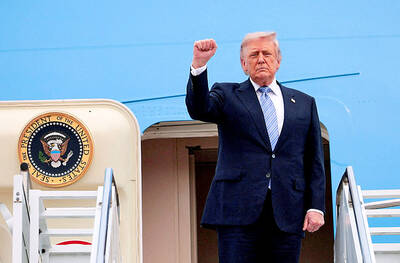
US-CHINA SUMMIT: MOFA welcomed US reassurance of no change in its Taiwan policy; Trump said he did not comment when Xi talked of opposing independence US President Donald Trump yesterday said he has not made a decision on whether to move forward with a major arms package for Taiwan after hearing concerns about it from Chinese President Xi Jinping (習近平). Trump’s comments on Taiwan came as he flew back to Washington after wrapping up critical talks in which both leaders said important progress was made in stabilizing US-China relations even as deep differences persist between the world’s two biggest powers on Iran and Taiwan. “I will make a determination,” Trump said, adding: “I’ll be making decisions. But, you know, I think the last thing we need right
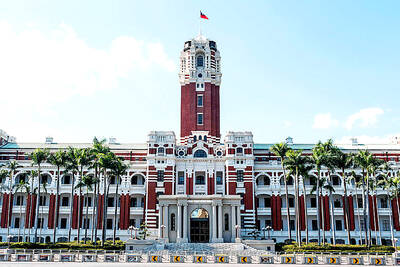
SECURITY: Taipei presses the US for arms supplies, saying the arms sales are not only a reflection of the US security commitment to Taiwan but also serve as a mutual deterrent against regional threats Taiwan is committed to preserving the cross-strait “status quo” and contributing to regional peace and stability, the Presidential Office said yesterday. “It is an undeniable fact that the Republic of China is a sovereign and independent democratic nation,” Presidential Office spokeswoman Karen Kuo (郭雅慧) reiterated, adding that Beijing has no right to claim sovereignty over Taiwan. The statements came after US President Donald Trump warned against Taiwanese independence. Trump wrapped up a state visit to Beijing on Friday, during which Chinese President Xi Jinping (習近平) had pressed him not to support Taiwan. Taiwan depends heavily on US security backing to deter China from carrying
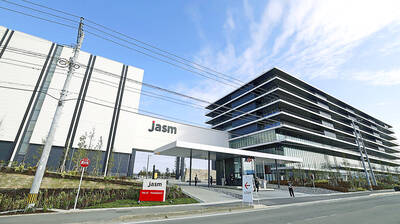
The subsidiary of Taiwan Semiconductor Manufacturing Co (TSMC, 台積電) in Kumamoto, Japan, turned a profit in the first quarter of this year, marking the first time the first fab of the unit has become profitable since mass production started at the end of 2024. According to the contract chipmaker’s financial statement released on Friday, Japan Advanced Semiconductor Manufacturing Inc (JASM), a joint venture running the fab in Kumamoto, posted NT$951 million (US$30.19 million) in profit in the January-to-March period, compared with a loss of NT$1.39 billion in the previous quarter, and a loss of NT$3.25 billion in the first quarter of
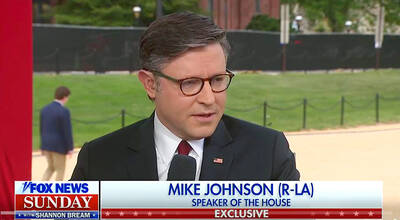
RESOLUTE BACKING: Two Republican senators are planning to introduce legislation that would impose immediate sanctions on China if it attempts to invade Taiwan US House of Representatives Speaker Mike Johnson on Sunday reaffirmed US congressional support for Taiwan, saying the US and “all freedom-loving people” have a stake in preventing China from seizing Taiwan by force. Johnson made the remarks in an interview with Fox News Sunday on US President Donald Trump’s summit with Chinese President Xi Jinping (習近平) last week. In an interview that aired on Friday on Fox News, just as Trump wrapped up a high-stakes visit to China, he said he has yet to green-light a new US$14 billion arms package to Taiwan and that it “depends on China.” “It’s a very good


 RSS
RSS