

Anticorruption officers in Hong Kong yesterday raided the home of Jimmy Lai (黎智英), a media magnate and outspoken critic of Beijing who has supported pro-democracy activists through his publications and with donations.
Hong Kong has been deeply polarized and hit by protests over how its next leader is to be chosen in 2017 — by universal suffrage, as pro-democracy campaigners want, or from a list of pro-Beijing candidates.
The raid on Lai’s home in an affluent avenue in Kowloon District came after media reports on Wednesday said China had decided to limit nominations for the 2017 election to a handful of candidates loyal to Beijing, which will likely escalate protests by pro-democracy activists.

Photo: Taipei Times
“The timing is not uncoincidental with [this week’s move] in our opinion. If you wanted to cool things down, this is the last thing you would do,” Lai’s top aide and spokesman Mark Simon said.
China’s National People’s Congress is expected to announce its decision on Hong Kong’s future on Sunday.
Simon said five anti-graft officials had also searched his home.
The territory’s Independent Commission Against Corruption (ICAC) said later in a statement it had searched three residences and the office of a lawmaker as part of a bribery investigation.
It said it also served a “statutory notice” to the secretary-general of a political party. It did not identify the people or the party, and said no arrests had been made.
Lai owns Hong Kong-based media company Next Media Ltd (壹傳媒), which publishes Next Magazine and the Apple Daily newspaper.
Lai spoke briefly to reporters outside his home after the raid, confirming that ICAC officials had left, but he declined to elaborate.
Trade in Next Media Ltd was halted after the stock fell as much as 6 percent.
This month, e-mails leaked to Hong Kong newspapers gave details of payments that Lai made to the pro-democracy Occupy Central movement.
The group has threatened to shut down Hong Kong’s financial district with protests if Beijing does not allow the 2017 election to be fully democratic. It is not illegal in Hong Kong to receive political donations.
The Apple Daily reported that anti-graft officers had also visited the home of Labour Party lawmaker Lee Cheuk-yan (李卓人) yesterday and removed bank documents. Lee was among activists arrested on July 2 at a protest billed as a rehearsal for the Occupy Central movement.
A copy of a search warrant seen by Reuters gave permission for the ICAC to look for items including bank and electronic records related to payments or donations made by Lai to Labour Party officials, including Lee.
This year, Next Media said HSBC Holdings and Standard Chartered had pulled millions of dollars worth of advertisements from Apple Daily after they were pressured by Beijing.
HSBC and Standard Chartered said the decision to pull the advertising was for commercial reasons.
In July last year, Apple Daily said tens of thousands of copies of two editions of the newspaper had been torched by masked men at distribution points.
Lai’s home was also rammed by a car and the assailants left a machete, an axe and a threatening message in the driveway, it said.

The Hualien District Prosecutors’ Office yesterday launched an investigation following allegations by a former foreign correspondent in Taiwan of widespread vote-buying in Hualien County. In an interview with Formosa TV (FTV, 民視) aired on Saturday, former Financial Times Taiwan correspondent Kathrin Hille spoke about Taiwan’s democracy and said that she now lives in rural Hualien, where “all the votes are bought.” Neighbors would talk about who had come by and leave cash on the table showing “how much each vote was worth that year,” Hille said. The practice needs to be addressed, considering Taiwan has been a democracy for many

INCREASING IMBALANCE: The percentage of working-age people is expected to shrink to 42.3% of the population, while older people would comprise 52.9%, the agency said Taiwan’s population is projected to shrink by almost half over the next five decades, intensifying labor shortages and placing a growing drag on economic growth as the technology-intensive economy confronts a rapidly aging workforce. The population is expected to fall to 12.15 million by 2075, a 48 percent decline from this year, National Development Council projections released yesterday showed. The decline would fundamentally alter Taiwan’s workforce. From 2037, more than half of the working-age population is projected to be aged between 45 and 64, signaling the end of an era when the economy could rely on a relatively large labor force. The shift
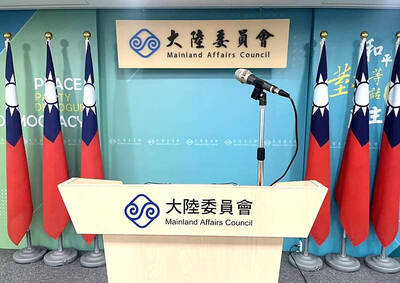
SAFETY RISKS: A Taiwanese man who was traveling to Shanghai for business was allegedly questioned for six hours due to his past work for Amnesty International The Mainland Affairs Council (MAC) urged Taiwanese to exercise caution when considering trips to China after a Taiwanese man was allegedly questioned for six hours in Shanghai over past work with Amnesty International. The council on Saturday said in a report that 426 Taiwanese have gone missing or been detained or had their freedom of movement restricted in China since Jan. 1, 2024. The figure is up by seven from the previous week. New Chinese entry and exit regulations are due to take effect on Sept. 15, the council said. Of the 426 cases, 160 people have gone missing, up

DEFENSE PROCUREMENT: The Pentagon has told a US congressional hearing that Taiwan has ‘top priority worldwide’ in the delivery of Harpoon missile systems The US Navy and Boeing Co have conducted a series of tests for land-based Harpoon anti-ship missile system being supplied to Taiwan and released footage showing the system striking a target vessel at sea. The weapons system and support equipment tested were reportedly tailored for Taiwan, while the first launch vehicles and other components have already begun arriving in Taiwan, with the full delivery of 100 systems scheduled to be completed by the end of 2028. Pentagon officials have previously told a US congressional hearing that Taiwan has “top priority worldwide” in the delivery of Harpoon missile systems, with production


 RSS
RSS