


During a group discussion titled “Civic Disobedience” hosted by National Taiwan University’s (NTU) college of law, college dean Shieh Ming-yan (謝銘洋) said that if anyone had the right to say “we failed our students,” it was the NTU college of law.
“We have truly failed our students, because we have not taught [President] Ma Ying-jeou (馬英九) well,” Shieh said.
Ma received his bachelor’s degree of law from the college in 1972.
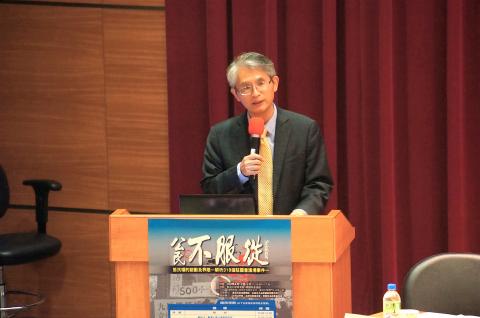
Photo:Taipei Times
Shieh’s comments referred to how the government allegedly intended to indict students for illegal actions when they were the only ones to stand up and highlight the government’s incapabilities and shortcomings.
Shieh’s comments also alludes to the apologies offered by National Chiao Tung University (NCTU) President Wu Yan-hwa (吳妍華) on Thursday to police on duty during the Sunflower movement for “not having taught our students well.”
Wu sent an open letter to university staff on Friday apologizing for her comments, saying: “I have apologized, not because I felt the students have done something to dishonor the school, but for my personal role.”
Wu’s comments on Thursday drew criticism from university students and professors, with 75 professors and 2,700 students co-signing a petition to remove her from office, with alumni even offering to donate NT$1.7 million (US$56,496) to help the efforts of removing Wu from office.
The student’s petition said that they regretted Wu’s comments and were puzzled at her apology.
As an educator and scientific researcher, Wu should have attempted to understand that the origins of the Sunflower movement stemmed from the undemocratic way in which the government handled the cross-strait service trade pact, the elevation of the power of administration over that of legislation, and attempts to repress the civil right of political participation, the petition said.
“Wu instead chooses to stand against the trend and seek to — as a sort of father figure — devalue the efforts of students to participate in their own future and the legitimacy of the democratic system,” the petition said.
Wu further said that she was worried about students being penalized by law for attempting to voice their concerns, adding that since so many alumni and students have complained about her comments, she would apologize for delivering commentary which were not well thought through.
NCTU student Chao Tzu-wen (趙子文) said that although he accepted Wu’s apology, he cannot accept her values.
Meanwhile, NCTU alumnus Chiu Chi-hung (邱繼弘), the manager of CacaFly.com (聖洋科技公司), said on Facebook he had learned while studying at NCTU that he could not be entirely unemotional and uncaring about social issues.
That was one of the reasons he set up the cacaFly Asian Scholarship, through which he is hoping to make NCTU students more competitive.
“I cannot believe Wu has shattered the honor of NCTU students like this,” Chiu said.
CacaFly would not stop any scholarships that have already been approved, Chiu said.
He added that he hoped Wu would not continue to ruin the honor of NCTU students and she should be more careful about what she says when she offers comments on issues.

The Tourism Administration yesterday announced that it would reward repeat international visitors with incentives of up to NT$8,000 to boost inbound tourism. The incentives are available to all international tourists, it said, adding that repeat visitors would be rewarded with NT$5,000 and would receive an additional NT$3,000 if they bring travel companions. The nation received 2,990,657 inbound visitors during the first quarter, marking a 3.8 percent increase from the same period last year, agency data showed. Japanese nationals are among groups visiting Taiwan the most. About 1.48 million Japanese tourists arrived last year, a year-on-year increase of more than 12
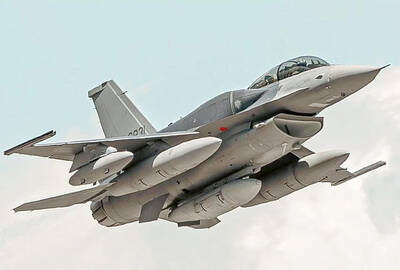
66 FIGHTER JETS: The aircraft is likely undergoing preparations for its transfer to Taiwan — a significant step forward in the nation’s modernization program, a lawmaker said The first of Taiwan’s order of F-16V Block 70 aircraft has been sighted in Texas ahead of delivery, Democratic Progressive Party (DPP) Legislator Wang Ting-yu (王定宇) said. Taiwan’s first F-16V Block 70 two-seat aircraft, tail number 6831, was seen flying from Lockheed Martin’s production facility in Greenville, South Carolina, to Naval Air Station Joint Reserve Base Fort Worth in Texas, Wang wrote on Facebook yesterday. The plane is likely undergoing preparations for its transfer to Taiwan, marking a significant step forward in the Republic of China Air Force’s modernization program, Wang said, citing military analysts. The F-16V Block 70 is a new-build version
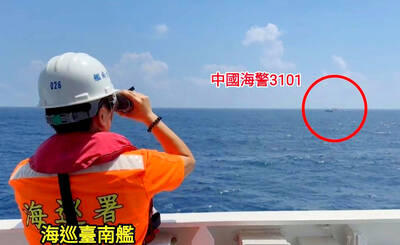
‘BRAZEN’: The holiday did not stop China from activities that infringe on Taiwan’s maritime jurisdiction, but the CGA is ready to defend the nation, Kuan Bi-ling said Beijing is intensifying maritime pressure on Taiwan, but the nation will never yield, Ocean Affairs Council Deputy Minister Sung Chen-en (宋承恩) said. The Coast Guard Administration (CGA) has adopted a “shadowing and monitoring” approach to avoid falling into a Chinese trap to escalate tensions and deepen the conflict, Sung said in an interview published yesterday in the Chinese-language Liberty Times (the Taipei Times’ sister newspaper). China Coast Guard formations patrolling waters east of Taiwan, as well as official Chinese vessels entering areas around Itu Aba Island (Taiping Island, 太平島) and Pratas Islands (Dongsha Islands, 東沙群島) show Beijing’s attempts to significantly step up
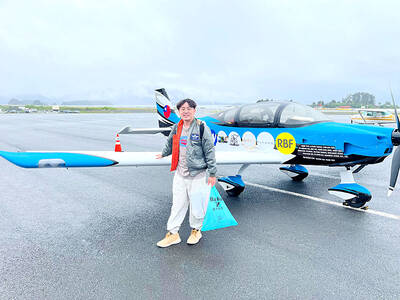
Taiwanese aviator Roger Lin (林睿哲) returned to Taiwan on Saturday after completing a nine-day round-the-world journey in a single-engine aircraft, becoming the first Taiwanese pilot to achieve the feat. Lin departed on June 5 from Los Angeles, California, and continued through Alaska, Japan, Taiwan, the Philippines, Indonesia, Malaysia, Thailand, Nepal, Jordan, Norway, Iceland and Canada before landing at the Taipei International Airport (Songshan) via Los Angeles and Japan. Lin shared numerous photos and videos of his journey on a Facebook page titled “Pilot Roger’s Around the World Flight,” including a video showing his aircraft flying over the Danjiang Bridge and


 RSS
RSS