

A group of Democratic Progressive Party (DPP) legislators and pro-Taiwan advocates yesterday took the Ministry of Education (MOE) to court over its controversial changes to high-school textbook guidelines, filing a lawsuit against Minister of Education Chiang Wei-ling (蔣偉寧) for document forgery at the Taipei Prosecutors’ Office.
Lawyer Huang Di-ying (黃帝穎) said that Chiang on Jan. 27 convened a ministry meeting to review the proposed changes, at which it was concluded that a panel composed of high-school teachers and experts who had discussed the proposal earlier agreed with the “minor adjustments” to high-school textbook guidelines in the fields of language and social studies, which cover three disciplines: history, geography and civics.
However, Huang said that according to various media reports, the 43-member panel actually decided against endorsing the proposed alterations during the meeting.
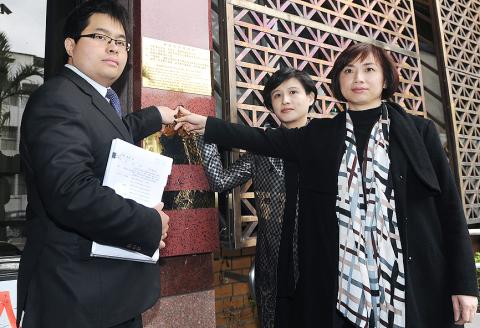
Photo: Liao Chen-huei, Taipei Times
“That means that Chiang has violated Article 213 of the Criminal Code, which states that a public official who causes injury to the public with the entry of a public document which he knows to be false can be imprisoned from one to seven years,” the lawyer said.
DPP legislators Cheng Li-chiun (鄭麗君) and Ho Hsin-chun (何欣純) urged investigators to seize the audio recording and minutes of the Jan. 27 meeting, which Chiang has refused to turn over.
Many teachers, historians and members of the pan-green camp and the public have voiced strong opposition to the adjusted textbook outlines over what they say is its hidden agenda of “de-Taiwanization and Sinicization” aimed at catering to “Greater China perspective” of the administration of President Ma Ying-jeou (馬英九).
The DPP caucus is planning to submit a proposal seeking to nullify the adjustments at the start of the legislative session today, Cheng said, adding that the public should keep pressuring the ministry until it suspends the initiative.
Ho said that the legislature’s Education and Culture Committee would also demand that the minister step down and be held responsible for the proposal.
The DPP also filed a complaint with the Control Yuan last week over what it termed the Ministry of Education’s “administrative errors.”

Taiwan, which accounts for more than half of the global outsourced semiconductor assembly and testing market, is well-positioned to develop copackaged optics (CPO) and manufacture precision silicon photonics chips, the Ministry of Economic Affairs said yesterday. Silicon photonics are emerging as a mainstream optical communications technology and is seen as key to overcoming bottlenecks in AI computing power. The technology is a key project under the government’s New 10 Major AI Infrastructure Projects, with industry, government, academia and research institutions working to overcome critical technological hurdles and build a self-reliant silicon photonics supply chain, the ministry said. Nvidia Corp in March invested US$4
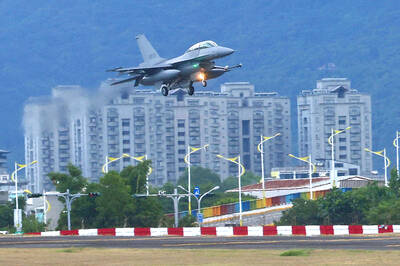
The air force plans to build 26 more hardened aircraft shelters as the number of F-16Vs stationed along Taiwan’s east coast is expected to reach 120 when the final shipment of 66 jets procured from the US arrives. The incoming jets would be stationed at Chihhang Air Base in Taitung County, augmenting the F-16V Block 20s operated by the 5th Tactical Fighter Wing in Hualien County, officials said yesterday. The air force plans to allocate more than NT$6.88 billion (US$218.1 million) from next year to 2031 to build the shelters in Hualien and Taitung as part of the implementation of a “one

NO LIMITS: More legislation expanding Beijing’s control over the movement of people, money and information raises risks for Taiwanese travelers and businesses, officials said China is set to implement several laws in the coming months that expand the definition of national security, creating greater risks for Taiwanese traveling to or doing business in China, Taiwanese officials said yesterday. Beijing’s Ethnic Unity and Progress Promotion Law took effect on July 1, while a draft “Internet Information Service Management Measures” finished its public consultation on Aug. 2, but has yet to be adopted. China’s Regulations of the State Council on Exit and Entry Administration are to take effect on Tuesday next week, while amendments to its National Defense Mobilization Law and the Ministry of Public Security’s Measures
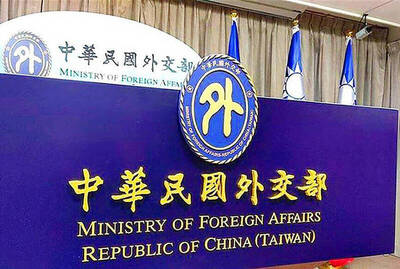
China’s continued efforts to inject geopolitical rivalry into the region and disrupt Pacific nations’ discussions of regional issues warrant greater international attention, a foreign affairs official said yesterday. Minister of Foreign Affairs Lin Chia-lung (林佳龍) last week led a delegation to diplomatic ally Palau to attend events related to the 55th Pacific Islands Forum (PIF) summit. However, the absence of some member-state leaders has been interpreted by some people as a sign of fracturing in Pacific unity. Thirteen PIF members were represented by their heads of state or government, while Fiji, New Caledonia, Vanuatu and Samoa sent ministerial-level representatives, a diplomatic official


 RSS
RSS