


Rescue teams fought gusty winds and altitude sickness yesterday as survivors faced a second night outside in freezing weather after strong earthquakes left more than 600 dead and 9,000 hurt in a mountainous Tibetan area of western China.
Rescuers, tired from the high winds and thin oxygen, pulled survivors and more bodies from the pulverized remains of the town flattened by Wednesday morning’s quakes, the largest of which was magnitude 6.9. About 15,000 houses have collapsed.
“We’ve seen too many bodies and now they’re trying to deal with them. The bodies are piled up like a hill. You can see bodies with broken arms and legs and it breaks your heart,” said Dawa Cairen, a Tibetan who works for the Christian group the Amity Foundation and was helping in rescue efforts. “You can see a lot of blood. It’s flowing like a river.”
Xinhua reported that Chinese Premier Wen Jiabao (溫家寶) arrived in Yushu to check on the rescue work and meet survivors.
Grim pictures emerged from several collapsed schools that were the focus of early rescue efforts. Footage on state television and photos posted online showed bodies laid out near the rubble, and Xinhua news agency quoted a local education official as saying 66 children and 10 teachers had died, mostly in three schools.
As roads were cleared and the nearby airport put into operation, relief operations quickened, with more than 10,000 soldiers, police, firefighters and medical workers now in Yushu County, where Jiegu is located, Ministry of Civil Affairs Director of Disaster Relief Zou Ming (鄒銘) said.
It appeared China was turning down offers of help from foreign rescue teams.
Zou said the affected area was limited.
“So we do have enough rescue teams,” he told a news conference in Beijing, adding the offers of help were appreciated.
Zou said that 617 people died in the quake, with 313 missing and more than 9,100 hurt.
The influx of rescue workers was producing unintended effects, taxing the normally scarce resources of remote Yushu, where the altitude averages about 4,000m.
Supplies of food, water, gas and other necessities were running low, said Pierre Deve, a program director at the Yushu-based community development organization Snowland Service Group.
Deve said he waited for hours in a line of some 100 cars at the only open gas station. Most shops in Jiegu remained shut, he said, and monasteries handed out some food, while some people scavenged food and other belongings from what was left of their houses.
Zou said tents, thick quilts, clothing and food were needed, adding that limited transportation options were slowing the delivery of aid.
Meanwhile, the Brazilian foreign minister said yesterday that Chinese President Hu Jintao (胡錦濤) would cut short his visit to Brazil, where he is attending a summit of leading emerging market nations, following the deadly quake.
“Because of the earthquake in China, President Hu Jintao ... has to leave today,” Brazilian Foreign Minister Celso Amorim told reporters.
Hu had planned to stay in Brazil until today and then to visit Venezuela and Chile.
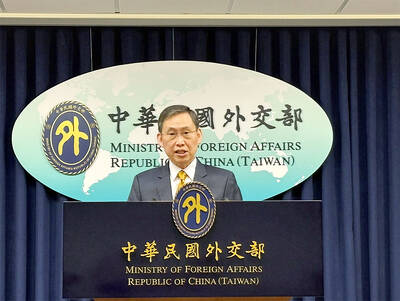
A Ministry of Foreign Affairs official yesterday said that a delegation that visited China for an APEC meeting did not receive any kind of treatment that downgraded Taiwan’s sovereignty. Department of International Organizations Director-General Jonathan Sun (孫儉元) said that he and a group of ministry officials visited Shenzhen, China, to attend the APEC Informal Senior Officials’ Meeting last month. The trip went “smoothly and safely” for all Taiwanese delegates, as the Chinese side arranged the trip in accordance with long-standing practices, Sun said at the ministry’s weekly briefing. The Taiwanese group did not encounter any political suppression, he said. Sun made the remarks when
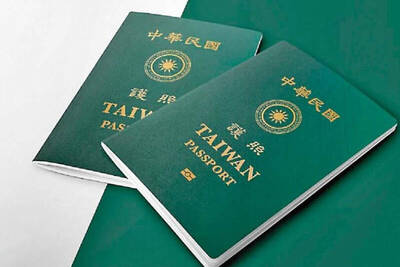
The Taiwanese passport ranked 33rd in a global listing of passports by convenience this month, rising three places from last month’s ranking, but matching its position in January last year. The Henley Passport Index, an international ranking of passports by the number of designations its holder can travel to without a visa, showed that the Taiwan passport enables holders to travel to 139 countries and territories without a visa. Singapore’s passport was ranked the most powerful with visa-free access to 192 destinations out of 227, according to the index published on Tuesday by UK-based migration investment consultancy firm Henley and Partners. Japan’s and
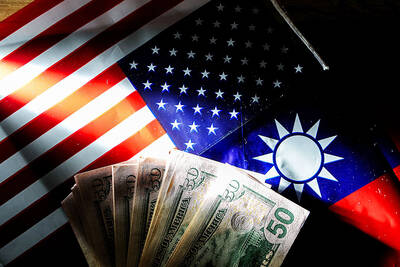
BROAD AGREEMENT: The two are nearing a trade deal to reduce Taiwan’s tariff to 15% and a commitment for TSMC to build five more fabs, a ‘New York Times’ report said Taiwan and the US have reached a broad consensus on a trade deal, the Executive Yuan’s Office of Trade Negotiations said yesterday, after a report said that Washington is set to reduce Taiwan’s tariff rate to 15 percent. The New York Times on Monday reported that the two nations are nearing a trade deal to reduce Taiwan’s tariff rate to 15 percent and commit Taiwan Semiconductor Manufacturing Co (TSMC, 台積電) to building at least five more facilities in the US. “The agreement, which has been under negotiation for months, is being legally scrubbed and could be announced this month,” the paper said,
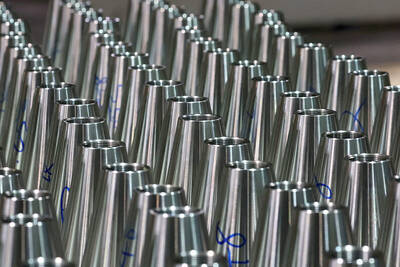
MIXED SOURCING: While Taiwan is expanding domestic production, it also sources munitions overseas, as some, like M855 rounds, are cheaper than locally made ones Taiwan and the US plan to jointly produce 155mm artillery shells, as the munition is in high demand due to the Ukraine-Russia war and should be useful in Taiwan’s self-defense, Armaments Bureau Director-General Lieutenant General Lin Wen-hsiang (林文祥) told lawmakers in Taipei yesterday. Lin was responding to questions about Taiwan’s partnership with allies in producing munitions at a meeting of the legislature’s Foreign Affairs and National Defense Committee. Given the intense demand for 155mm artillery shells in Ukraine’s defense against the Russian invasion, and in light of Taiwan’s own defensive needs, Taipei and Washington plan to jointly produce 155mm shells, said Lin,


 RSS
RSS