


An electronic copy of a report obtained by the Taipei Times on the yet-to-be-approved sale of Nan Shan Life Insurance Co claims that the backers of the Hong Kong-based consortium led by Primus Financial Holding Ltd and China Strategic Holding may include individuals found guilty of financial irregularities as well as close relatives of senior members of the Chinese Communist Party.
The English translation of the report, which is dated March 10 and comes from the office of Democratic Progressive Party Legislator Pan Meng-an (潘孟安), also mentions risks of stock speculation and raises questions about the qualifications of major shareholders and the use of “shell” companies.
Pan's office told the Taipei Times yesterday the report drew from newspapers, magazines and investors in Hong Kong. The office confirmed the report received “government help,” but would not specify which agency or agencies were involved.
The document claims that Primus Pacific Partner (Hong Kong) Co Ltd (Primus Pacific) — which provided funding for Primus Financial — receives “some funding” from the state-owned Beijing Enterprises Holding Ltd, while China Strategic, which according to the report is in very poor financial situation, “is … truly [a] 'shell' company.”
Other partners in the conglomerate appear to have been “tailor- made” for the Nan Shan bid, the report says.
Previous shareholders, board members and top managers at China Strategic “are backed by mainland Chinese money,” the report says, adding that: “Information publicly disclosed by [the] Hong Kong Securities and Futures Commission [demonstrates] that the firm has been financially controlled by Chinese capital.”
Topping the list is a well-known Shandong-born Chinese speculator who is reportedly at large over his involvement in two cases of stock speculation and insider trading.
Primus Financial was used to raise capital and hired Huan Guocang (宦國倉) as a representative, the report claims. The Shanghai-born Huan is the CEO of Primus Pacific and chairman of Primus Financial, as well as the director of Beijing Development (Hong Kong) Ltd, which is invested by Beijing Enterprises.
Following revelations of Chinese investment in the Nan Shan bid, Huan cut all ties to the case, the report says.
Primus Pacific president and general manager Li Wenlei (李聞雷) is the son of former Chinese vice premier Li Lanqing (李嵐清), the report says.
The Primus group, the report says, “is backed by ... mainland China's princeling party,” alleging that the son of former vice president Zeng Qinghong (曾慶紅), Zeng Wei (曾偉), and his brother, Zeng Qinghuai (曾慶淮), were both members of the group.
Among the principal parties at China Strategic are Shanghai-born Gao Yang (高央), who was the executive director and chief executive officer of the firm in 2006. While he resigned in 2007, he still owns a 23 percent stake — the largest share — in the company, the report says.
Current shareholders at China Strategic include two Hong Kong stock speculators, who were allegedly handed down administrative penalties by the Hong Kong Securities and Futures Commission (FSC) for “rampant speculation,” while another was allegedly indicted by the commission, also for rampant speculation, to which he confessed in 2004.
At press time, requests by the Taipei Times to the Hong Kong FSC for confirmation remained unanswered. As per Taiwanese law, if it were found that bidders have a criminal past, the Nan Shan bid would likely be turned down.
“Funding sources of China Strategic basically comes [sic] from China and Hong Kong, while the shareholders are made up of China and Hong Kong tycoons as well as speculators,” the report said, adding that this proves that China Strategic “is indeed controlled by mainlanders.”
“China Strategic, Primus Financial or its investor, Primus Pacific, all lack ... experience in managing financial holdings, let alone in [the] life insurance industry. In addition, the newly established Primus Nan Shan Holding Company was registered ... less than a year [earlier] for this case. Therefore, observers have called it a 'shell' corporation for falling short on both capital structure and a decent managerial team,” the report says.
The report concludes: “Most people involved in this case are Chin[ese] officials, mainlanders, or [individuals] with a Chinese background. Although it [is] hard to keep track of the final beneficiary due to ... several transfer[s] [in] the investment, concerns about ... mainland Chinese money still exist.”
American International Group sold Nan Shan to Primus Financial on Oct. 12 for US$2.15 billion, which filed an application with the Ministry of Economic Affairs' Investment Commission in November. On Feb. 12, Primus and China Strategic sent a revised application after the commission requested that it provide more information on its investors and sources of funding.
On March 11, Minister of Economic Affairs Shih Yen-shiang (施顏祥) said there was no evidence that Chinese capital was involved in Primus Financial, adding that none of the 44 investors who provided information in the application were Chinese citizens.
Several of the stakeholders at China Strategic, which has an 80 percent stake in Primus Nan Shan, are Hong Kong-UK dual nationals, but none are Chinese citizens, he said.
Fan Liang-tung (范良棟), head of the Investment Commission, said on Monday he could not comment.
“The case is still in the evaluation and approval stage. I am not in a position to comment,” Fan told the Taipei Times by telephone.
The outcome of the commission's investigation is expected to be announced this week.
ADDITIONAL REPORTING BY JASON TAN
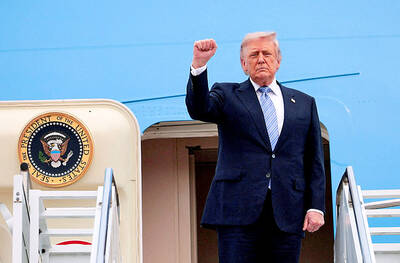
US-CHINA SUMMIT: MOFA welcomed US reassurance of no change in its Taiwan policy; Trump said he did not comment when Xi talked of opposing independence US President Donald Trump yesterday said he has not made a decision on whether to move forward with a major arms package for Taiwan after hearing concerns about it from Chinese President Xi Jinping (習近平). Trump’s comments on Taiwan came as he flew back to Washington after wrapping up critical talks in which both leaders said important progress was made in stabilizing US-China relations even as deep differences persist between the world’s two biggest powers on Iran and Taiwan. “I will make a determination,” Trump said, adding: “I’ll be making decisions. But, you know, I think the last thing we need right
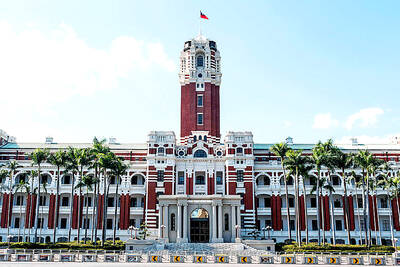
SECURITY: Taipei presses the US for arms supplies, saying the arms sales are not only a reflection of the US security commitment to Taiwan but also serve as a mutual deterrent against regional threats Taiwan is committed to preserving the cross-strait “status quo” and contributing to regional peace and stability, the Presidential Office said yesterday. “It is an undeniable fact that the Republic of China is a sovereign and independent democratic nation,” Presidential Office spokeswoman Karen Kuo (郭雅慧) reiterated, adding that Beijing has no right to claim sovereignty over Taiwan. The statements came after US President Donald Trump warned against Taiwanese independence. Trump wrapped up a state visit to Beijing on Friday, during which Chinese President Xi Jinping (習近平) had pressed him not to support Taiwan. Taiwan depends heavily on US security backing to deter China from carrying
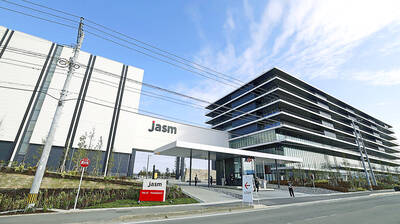
The subsidiary of Taiwan Semiconductor Manufacturing Co (TSMC, 台積電) in Kumamoto, Japan, turned a profit in the first quarter of this year, marking the first time the first fab of the unit has become profitable since mass production started at the end of 2024. According to the contract chipmaker’s financial statement released on Friday, Japan Advanced Semiconductor Manufacturing Inc (JASM), a joint venture running the fab in Kumamoto, posted NT$951 million (US$30.19 million) in profit in the January-to-March period, compared with a loss of NT$1.39 billion in the previous quarter, and a loss of NT$3.25 billion in the first quarter of
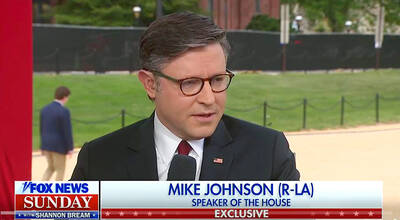
RESOLUTE BACKING: Two Republican senators are planning to introduce legislation that would impose immediate sanctions on China if it attempts to invade Taiwan US House of Representatives Speaker Mike Johnson on Sunday reaffirmed US congressional support for Taiwan, saying the US and “all freedom-loving people” have a stake in preventing China from seizing Taiwan by force. Johnson made the remarks in an interview with Fox News Sunday on US President Donald Trump’s summit with Chinese President Xi Jinping (習近平) last week. In an interview that aired on Friday on Fox News, just as Trump wrapped up a high-stakes visit to China, he said he has yet to green-light a new US$14 billion arms package to Taiwan and that it “depends on China.” “It’s a very good


 RSS
RSS