


The Control Yuan yesterday dismissed media speculation that it planned to censure President Ma Ying-jeou (馬英九) over the Taipei City Government’s decision to grant Yuanta Group (元大集團) permission to build a 23-story building near the president’s residence during Ma’s term as Taipei mayor.
“It is true that we are investigating this case, and we also found some problems as alleged by the print media [Chinese-language Next Magazine],” Control Yuan member Ma Yi-kung (馬以工) told reporters.
But Ma Yi-kung denied that the Control Yuan planned to censure the president, who was Taipei mayor when the city government issued a construction permit for the I Pin Building (一品苑), a 23-story apartment complex that has a clear view of the president’s official residence.
Ma Yi-kung made the remark after the latest issue of the magazine alleged yesterday that senior officials in the city government agreed to allow the Yuanta Group to increase the number of parking spaces in the building so that the group could increase the building bulk ratio.
The magazine alleged that the group increased the parking spaces by 200 so that the company could increase the height of the building by three floors.
Under construction regulations, the cap on the height of buildings in the Boai Special District (博愛特區) is 20 floors.
The magazine said the group could bring in another NT$500 million (US$15.5 million) as a result of the deal, adding that Control Yuan members, who launched a probe into the matter, did not rule out censuring the president in his capacity as former Taipei mayor.
The report said the Control Yuan was probing whether the contractor’s application to build more parking spaces and floors was legal and whether the city government’s approval amounted to profiteering, adding that the government watchdog intended to issue corrective measures against the city government and was likely to investigate Ma and determine responsibility for the incident.
The Presidential Office yesterday said that Ma was not personally involved in approving the construction of the building, but that he would fully cooperate with the Control Yuan investigation.
Presidential Office Spokesman Wang Yu-chi (王郁琦) said the project was approved by department heads in the Taipei City Government, not Ma.
“Everything was done according to the law,” Wang said. “If the Control Yuan wants to investigate, we will fully cooperate.”
The controversy surrounding the I Pin Building emerged in March when Chinese Nationalist Party (KMT) legislators questioned the president’s safety. The building has a clear view of the president’s official residence.
KMT legislators requested that the city government suspend a construction license and that the National Security Bureau consider relocating the presidential residence.
After the Presidential Office called a meeting in July, the city government issued a directive on Aug. 10 limiting the height of buildings in the Boai Special District to 24m.
The special district is where the Presidential Office, Ministry of National Defense and many other government buildings are located.
The Presidential Office, however, said that the decision did not amount to extending the perimeter of Boai Special District nor ban the construction of new buildings.
Instead, the city would reduce incentives to discourage contractors from building taller buildings or ask them to build lower buildings inside the district while offering them incentives for projects outside the district.
DIFFERENCES
Taipei Mayor Hau Lung-bin (郝龍斌) offered a different account, saying the city government’s directive on the expansion of the district was issued in accordance with the Presidential Office’s plan.
Seeking to prevent the matter from escalating, Presidential Office Secretary-General Liao Liou-yi (廖了以) summoned Taipei Deputy Mayor Lee Yong-ping (李永萍) and Department of Urban Development Commissioner Ting Yu-chun (丁育群) to discuss the matter on Sept. 30.
Hau revoked the new restriction on the height of buildings in the special district shortly after the meeting.
KMT Legislator Lo Shu-lei (羅淑蕾) said the Control Yuan should censure the president if he broke the law, adding that this was how such matters were resolved in democracies. The Control Yuan, however, is not empowered to censure a sitting president.
BODYGUARD
Meanwhile, Wang yesterday refused to comment on the magazine’s report of a presidential bodyguard who allegedly fathered a child out of wedlock.
Saying that he would not comment on personal issues, Wang said they would only consider making adjustments to the bodyguard’s job if his personal life interfered with his work.
The allegation came on the heels of other problems involving Ma’s security detail.
The Presidential Office last month confirmed that one of Ma’s bodyguards had acted “inappropriately” while under the influence of alcohol onboard the presidential plane when Ma visited the nation’s diplomatic allies in Central America in June.
There were also allegations that some of Ma’s senior security detail had drinking problems and that first lady Chow Mei-ching (周美青) had witnessed their bad behavior.

CREDIT-GRABBER: China said its coast guard rescued the crew of a fishing vessel that caught fire, who were actually rescued by a nearby Taiwanese boat and the CGA Maritime search and rescue operations do not have borders, and China should not use a shipwreck to infringe upon Taiwanese sovereignty, the Coast Guard Administration (CGA) said yesterday. The coast guard made the statement in response to the China Coast Guard (CCG) saying it saved a Taiwanese fishing boat. The Chuan Yu No. 6 (全漁6號), a fishing vessel registered in Keelung, on Thursday caught fire and sank in waters northeast of Diaoyutai Islands (釣魚台). The vessel left Keelung’s Badouzih Fishing Harbor (八斗子漁港) at 3:35pm on Sunday last week, with seven people on board — a 62-year-old Taiwanese captain surnamed Chang (張) and six
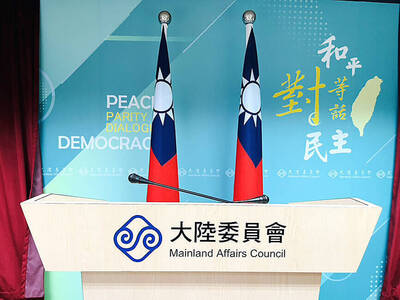
RISKY BUSINESS: The ‘incentives’ include initiatives that get suspended for no reason, creating uncertainty and resulting in considerable losses for Taiwanese, the MAC said China’s “incentives” failed to sway sentiment in Taiwan, as willingness to work in China hit a record low of 1.6 percent, a Ministry of Labor survey showed. The Directorate-General of Budget, Accounting and Statistics (DGBAS) also reported that the number of Taiwanese workers in China has nearly halved from a peak of 430,000 in 2012 to an estimated 231,000 in 2024. That marked a new low in the proportion of Taiwanese going abroad to work. The ministry’s annual survey on “Labor Life and Employment Status” includes questions respondents’ willingness to seek employment overseas. Willingness to work in China has steadily declined from
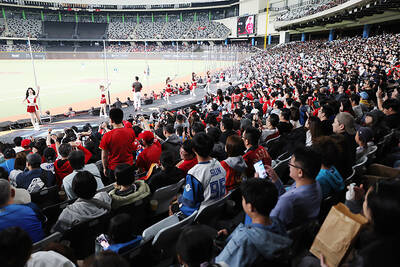
The Legislative Yuan’s Finance Committee yesterday approved proposed amendments to the Amusement Tax Act (娛樂稅法) that would abolish taxes on films, cultural activities and competitive sporting events, retaining the fee only for dance halls and golf courses. The proposed changes would set the maximum tax rate for dance halls and golf courses at 50 and 20 percent respectively, with local governments authorized to suspend the levies. Article 2 of the act says that “amusement tax shall be levied on tickets sold or fees charged by amusement places, facilities or activities” in six categories: “Cinema; professional singing, story-telling, dancing, circus, magic show, acrobatics
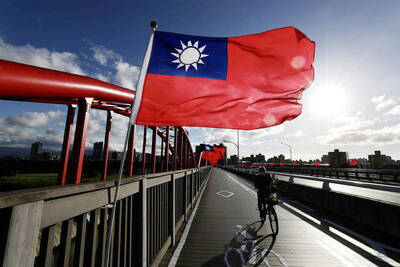
INFLATION UP? The IMF said CPI would increase to 1.5 percent this year, while the DGBAS projected it would rise to 1.68 percent, with GDP per capita of US$44,181 The IMF projected Taiwan’s real GDP would grow 5.2 percent this year, up from its 2.1 percent outlook in January, despite fears of global economic disruptions sparked by the US-Iran conflict. Taiwan’s consumer price index (CPI) is projected to increase to 1.5 percent, while unemployment would be 3.4 percent, roughly in line with estimates for Asia as a whole, the international body wrote in its Global Economic Outlook Report published in the US on Monday. The figures are comparatively better than the IMF outlook for the rest of the world, which pegged real GDP growth at 3.1 percent, down from 3.3 percent


 RSS
RSS