


The US government is covertly testing technology in China and Iran that lets residents break through screens set up by their governments to limit access to news on the Internet.
The “feed over e-mail” (FOE) system delivers news, podcasts and data via technology that evades Web-screening protocols of restrictive regimes, said Ken Berman, head of IT at the US government’s Broadcasting Board of Governors, which is testing the system.
The news feeds are sent through e-mail accounts, including those operated by Google Inc, Microsoft Corp’s Hotmail and Yahoo Inc.
“We have people testing it in China and Iran,” said Berman, whose agency runs Voice of America.
He provided few details on the new system, which is in the early stages of testing. He said some secrecy was important to avoid detection by the two governments.
The Internet has become a powerful tool for citizens in countries where governments regularly censor news media, enabling them to learn about and react to major social and political events.
Young Iranians used social networking services Facebook and Twitter as well as mobile phones to coordinate protests and report on demonstrations in the wake of the country’s disputed presidential election in June.
In May, ahead of the 20th anniversary of the Tiananmen Square crackdown, the Chinese government blocked access to Twitter and Hotmail.
Sho Ho, who helped develop FOE, said in an e-mail that the system could be tweaked easily to work on most types of mobile phone.
The US government also offers a free service that allows overseas users to access virtually any site on the Internet, including those opposing the US.
“We don’t make any political statement about what people visit,” Berman said. “We are trying to impart the value: ‘The more you know, the better.’ People can look for themselves.”
In addition to China and Iran, targets for the FOE technology include Myanmar, Tajikistan, Uzbekistan and Vietnam, he said.
Berman, however, said there would be modest filtering of pornography on the system.
“There is a limit to how much [US] taxpayers should have to pay for,” he said.
Meanwhile, a top Beijing official said on Thursday that a controversial Internet filter software was optional for all users after plans to install it on computers sold in China triggered a storm of protest.
“After you install the software, you can use it or you can decide not to use it,” said Li Yizhong (李毅中), minister of industry and information technology.
“When you buy a computer, a floppy disk or CD [with the software] is included, and the right to choose resides with the parent, with society,” he told reporters in Beijing.

‘UNFRIENDLY’: Changing the nationality listing of Taiwanese residents to ‘China’ goes against EU foreign policy as well as democratic and human rights principles, MOFA said Taiwan yesterday called on Denmark to correct its designation of the nationality of Taiwanese residents as “China” or face retaliatory measures. The Danish government in 2024 changed the nationality of Taiwanese citizens on their residence permits from “Taiwan” to “China.” The decision goes against EU foreign policy and contravenes democratic and human rights principles, Ministry of Foreign Affairs (MOFA) spokesman Hsiao Kuang-wei (蕭光偉) said. Denmark should present a solution acceptable to Taiwan as soon as possible and correct the erroneous designation to preserve the longstanding friendship between the two nations, Hsiao said. The issue could damage Denmark’s image and business reputation in Taiwan,

KEY INDUSTRY: The vice premier discussed a plan to create a non-red drone supply chain by next year, which has been allocated a budget of more than NT$7.2 billion The government has budgeted NT$44.2 billion (US$1.38 billion) to cultivate Taiwan’s uncrewed aerial vehicle (UAV) industry over the next five years, which would make the nation a major player in the industry’s democratic supply chain in the Asia-Pacific region, Premier Cho Jung-tai (卓榮泰) said yesterday. Cho made the remarks during a visit to the facilities of Cub Elecparts Inc (為升電裝). Democratic Progressive Party (DPP) Legislator Chen Su-yueh (陳素月) and Chinese Nationalist Party (KMT) Legislator Hsieh Yi-fong (謝依鳳) also participated in the trip. Cub Elecparts has transitioned from the automotive industry to the defense industry, which is the top priority among the nation’s
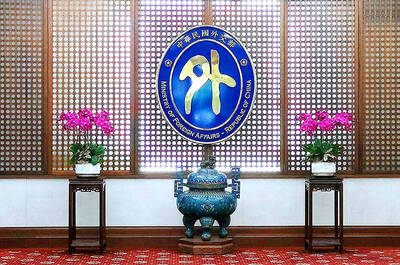
SOUTH KOREA DISPUTE: If Seoul continues to ignore its request, Taiwan would change South Korea’s designation on its arrival cards, the foreign ministry said If South Korea does not reply appropriately to a request to correct Taiwan’s name on its e-Arrival card system before March 31, the government would take corresponding measures to change how South Korea is labeled on the online Taiwan Arrival Card system, the Ministry of Foreign Affairs said yesterday. South Korea’s e-Arrival card system lists Taiwan as “China (Taiwan)” in the “point of departure” and “next destination” fields. Taipei has asked Seoul to change the wording. Since March 1, South Koreans who hold government-issued Alien Resident Certificates (ARC) have been identified as from “South Korea” rather than the “Republic of Korea,” the
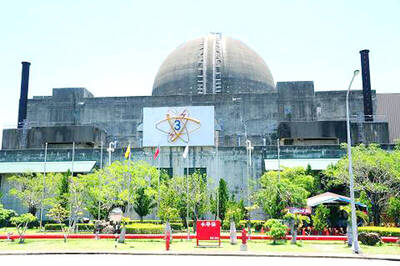
SUFFICIENT: The president said Taiwan has enough oil for next month, with reserves covering more than 100 days and natural gas enough for 12 to 14 days A restart plan for the Guosheng Nuclear Power Plant in New Taipei City’s Wanli District (萬里) and the Ma-anshan Nuclear Power Plant in Pingtung County’s Hengchun Township (恆春) would be submitted to the Nuclear Safety Commission by the end of the month, President William Lai (賴清德) said yesterday, reversing the government’s policy to abolish nuclear energy. On May 17 last year, Taiwan shut down its last nuclear reactor and became the first non-nuclear nation in East Asia, fulfilling the Democratic Progressive Party (DPP) government’s pledge of a “nuclear-free homeland.” Even without nuclear power, Taiwan can maintain a stable electricity supply until 2032,


 RSS
RSS