


Criticism poured in for Myanmar yesterday over the sentencing of Aung San Suu Kyi as the EU promised more sanctions and one of its key regional partners called for the democracy icon's immediate release.
After the authorities ordered the Nobel laureate to remain under house arrest for a further 18 months following a trial in Yangon, protesters rallied outside Myanmar's diplomatic missions to denounce the outcome.
With the sentence effectively ruling out any possibility of the 64-year-old standing in polls next year, there were immediate calls for a hardening of sanctions against the military rulers who prevented Suu Kyi from taking power after her party won elections in 1990.
“The EU will respond with additional targeted measures against those responsible for the verdict,” the EU's Swedish presidency said in a statement on behalf of the 27-nation bloc.
European Commission President Jose Manuel Barroso said Suu Kyi's continued detention is “unjustified and unacceptable on all accounts.”
An EU source said a “written procedure” had been launched to beef up the sanctions which will be able to come into force on Friday, as long as there is no opposition from the bloc's members.
French President Nicolas Sarkozy said any new EU sanctions had to hit the junta where it hurt.
The new measures “must in particular target the resources that they directly profit from, in the wood and ruby sector,” a statement from his office said.
British Prime Minister Gordon Brown said he was “saddened and angry” at the verdict in the “sham trial.”
Brown said her “monstrous” prosecution, designed to stop her from taking part in next year's planned elections, meant the poll would have no legitimacy.
He said it was time an arms embargo was slapped on the junta by the UN Security Council, whose permanent members include Myanmar's traditional ally China.
Criticism was more muted closer to home, but Malaysia's foreign minister said Suu Kyi should be released immediately and called for an urgent meeting of the ASEAN.
“We were hoping that the junta will release her unconditionally and will hold an election to enable Suu Kyi and other political detainees to participate in that election,” Anifah Aman said.
Fellow ASEAN member Indonesia also expressed concern, with the foreign ministry saying it was “very disappointed” at the verdict.
ASEAN last month rejected US calls to expel Myanmar and opposed sanctions on Myanmar.
Australia also called for tougher sanctions, expressing “dismay” at the conviction and urging the junta to release Suu Kyi.

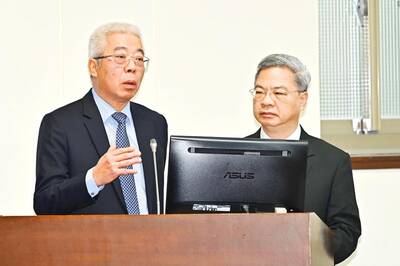
Taiwan has arranged for about 8 million barrels of crude oil, or about one-third of its monthly needs, to be shipped from the Red Sea this month to bypass the Strait of Hormuz and ease domestic supply pressures, CPC Corp, Taiwan (CPC, 台灣中油) said yesterday. The state-run oil company has worked with Middle Eastern suppliers to secure routes other than the Strait of Hormuz, through which about 20 percent of the world’s oil and liquefied natural gas typically passes, CPC chairman Fang Jeng-zen (方振仁) said at a meeting of the legislature’s Economics Committee in Taipei. Suppliers in Saudi Arabia have indicated they
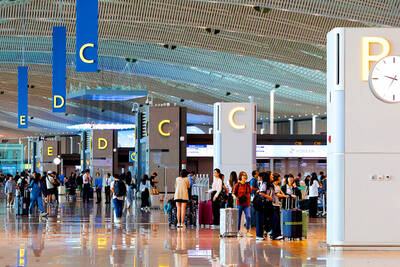
South Korea has adjusted its electronic arrival card system to no longer list Taiwan as a part of China, a move that the Ministry of Foreign Affairs said would help facilitate exchanges between the two sides. South Korea previously listed “Taiwan” as “Taiwan (China)” in the drop-down menus of its online arrival card system, where people had to fill out where they came from and their next destination. The ministry had requested South Korea make a revision and said it would change South Korea’s name on Taiwan’s online immigration system from “Republic of Korea” to “Korea (South),” should the issue not be

Tainan, Taipei and New Taipei City recorded the highest fines nationwide for illegal accommodations in the first quarter of this year, with fines issued in the three cities each exceeding NT$7 million (US$220,639), Tourism Administration data showed. Among them, Taipei had the highest number of illegal short-term rental units, with 410. There were 3,280 legally registered hotels nationwide in the first quarter, down by 14 properties, or 0.43 percent, from a year earlier, likely indicating operators exiting the market, the agency said. However, the number of unregistered properties rose to 1,174, including 314 illegal hotels and 860 illegal short-term rental

AIR ALERT: China’s reservation of airspace over the Yellow Sea and East China Sea could be an attempt to test the US’ response ahead of a Trump-Xi meeting, the NSB head said China’s attempts to infiltrate Taiwan are systematic, planned and targeted, with activity shifting from recruiting mid-level military officers to rank-and-file enlisted personnel, National Security Bureau (NSB) Director-General Tsai Ming-yen (蔡明彥) said yesterday. The Chinese Communist Party’s (CCP) integrates national security, intelligence operations and “united front” efforts into a dense network to conduct intelligence gathering and espionage in Taiwan, Tsai said at a meeting of the legislature’s Foreign Affairs and National Defense Committee. It uses specific networks to screen targets through exchange activities and recruiting local collaborators to establish intelligence-gathering organizations, he said. China is also shifting who it targets to lower-ranking military personnel,


 RSS
RSS