


The Straits Exchange Foundation (SEF) yesterday downplayed the fact that Mainland Affairs Council (MAC) Chairwoman Lai Shin-yuan (賴幸媛) beat the SEF by one day in announcing that a preparatory meeting for the upcoming cross-strait high-level talks would be held on Saturday.
SEF Deputy Secretary-General Maa Shaw-chang (馬紹章) laughed after reporters asked him whether they had been surprised by Lai’s announcement on Tuesday.
In an attempt to smooth things over, Maa said they had originally planned to make the announcement yesterday.
While China’s Taiwan Affairs Office (TAO) did not confirm Lai’s announcement, Maa yesterday said the TAO had said it would “carefully consider and study” the proposal.
Maa said that Association for Relations Across the Taiwan Strait (ARATS) Deputy Chairman Zheng Lizhong (鄭立中) was scheduled to lead a delegation of about 20 officials that is scheduled to arrive in Taipei tomorrow afternoon.
Maa said every effort would be made to keep the visit safe, comfortable, dignified and smooth.
The preparatory meeting will discuss the time, place and agenda for the upcoming meeting between SEF Chairman Chiang Pin-kung (江丙坤) and his counterpart, ARATS Chairman Chen Yunlin (陳雲林).
They are also expected to discuss the content of the three agreements both sides plan to sign during the Chiang-Chen meeting as well as a joint statement about Chinese investment in the local market.
Maa said the details of the preparatory meeting would be made public if both sides reached an agreement.
The delegation is scheduled to leave on Sunday.
While the upcoming meeting is scheduled for next month or in June, Lai said it would be held sooner rather than later if both sides could reach a consensus.
Maa yesterday echoed comments by the TAO, saying that both sides were aiming for the Chiang-Chen meeting to be held at the end of this month or at the beginning of next month.
As both sides agreed at their last meeting that the next one would be held outside Beijing, Taipei has proposed that it be held in Nanjing.
Ma yesterday said the meeting would likely last five days, with talks between Chiang and Chen scheduled for the second day. Chiang was scheduled to visit Taiwanese businesspeople on the third and fourth days before he and his delegation return home the following day.
Recent reports have speculated that Ma was seeking to replace Wu as party chief, while Wu would replace Chiang at the SEF.
Meanwhile, amid speculation that Chinese Nationalist Party (KMT) Chairman Wu Poh-hsiung (吳伯雄) would take over the SEF after being replaced by President Ma Ying-jeou (馬英九), a KMT legislator close to Chiang said yesterday that Chiang was very disappointed to be involved in a party power struggle.
KMT Legislator Lee Chia-chin (李嘉進), who spoke to Chiang on Tuesday, told reporters in the legislature that Chiang was also saddened by media allegations that Chiang’s son had obtained a special permit from China to sell steel.
Lee said the controversy was fueled by “a well-organized group of people within the party” who did not want to see warming cross-strait relations, without giving names.
While meeting Wu at party headquarters on Tuesday, Ma said he would not make a final decision about the chairmanship until June, but did not deny the possibility that he could run in the election scheduled to be held in July.
The possibility had drawn criticism from the Democratic Progressive Party and a number of KMT lawmakers.
Lee said that if Ma was interested in the position, he should have dealt with the matter “more delicately.”
Lee urged Ma to consider Chiang for premier, saying that Chiang would devote himself to serving the president.
Meanwhile, KMT Vice Chairman Wu Den-yih (吳敦義) dismissed a report by the Chinese-language China Times that said Wu Poh-hsiung had promised he would hand over the chairmanship to Ma “peacefully.”
Wu Den-yih told reporters in the legislature that the speculation was fueled by “elements outside the KMT.”
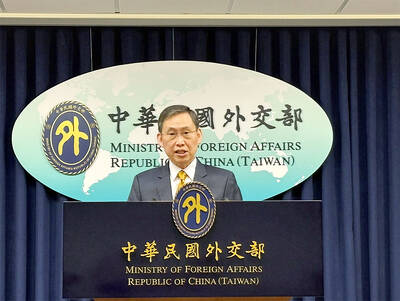
A Ministry of Foreign Affairs official yesterday said that a delegation that visited China for an APEC meeting did not receive any kind of treatment that downgraded Taiwan’s sovereignty. Department of International Organizations Director-General Jonathan Sun (孫儉元) said that he and a group of ministry officials visited Shenzhen, China, to attend the APEC Informal Senior Officials’ Meeting last month. The trip went “smoothly and safely” for all Taiwanese delegates, as the Chinese side arranged the trip in accordance with long-standing practices, Sun said at the ministry’s weekly briefing. The Taiwanese group did not encounter any political suppression, he said. Sun made the remarks when
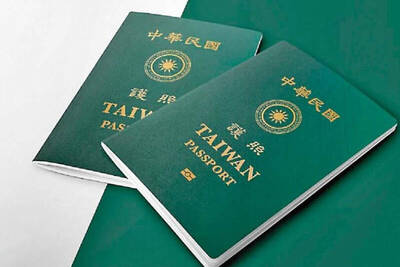
The Taiwanese passport ranked 33rd in a global listing of passports by convenience this month, rising three places from last month’s ranking, but matching its position in January last year. The Henley Passport Index, an international ranking of passports by the number of designations its holder can travel to without a visa, showed that the Taiwan passport enables holders to travel to 139 countries and territories without a visa. Singapore’s passport was ranked the most powerful with visa-free access to 192 destinations out of 227, according to the index published on Tuesday by UK-based migration investment consultancy firm Henley and Partners. Japan’s and
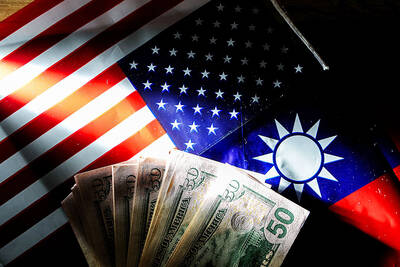
BROAD AGREEMENT: The two are nearing a trade deal to reduce Taiwan’s tariff to 15% and a commitment for TSMC to build five more fabs, a ‘New York Times’ report said Taiwan and the US have reached a broad consensus on a trade deal, the Executive Yuan’s Office of Trade Negotiations said yesterday, after a report said that Washington is set to reduce Taiwan’s tariff rate to 15 percent. The New York Times on Monday reported that the two nations are nearing a trade deal to reduce Taiwan’s tariff rate to 15 percent and commit Taiwan Semiconductor Manufacturing Co (TSMC, 台積電) to building at least five more facilities in the US. “The agreement, which has been under negotiation for months, is being legally scrubbed and could be announced this month,” the paper said,
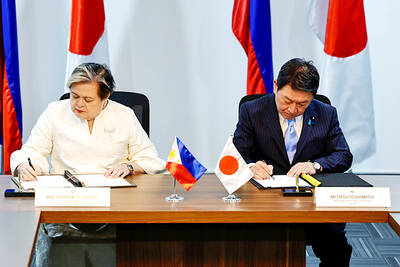
Japan and the Philippines yesterday signed a defense pact that would allow the tax-free provision of ammunition, fuel, food and other necessities when their forces stage joint training to boost deterrence against China’s growing aggression in the region and to bolster their preparation for natural disasters. Japan has faced increasing political, trade and security tensions with China, which was angered by Japanese Prime Minister Sanae Takaichi’s remark that a Chinese attack on Taiwan would be a survival-threatening situation for Japan, triggering a military response. Japan and the Philippines have also had separate territorial conflicts with Beijing in the East and South China


 RSS
RSS