


Lebanese Prime Minister Fuad Saniora called on the army yesterday to restore law and order across the country and remove gunmen from the streets, accusing Hezbollah of staging an armed coup.
But Saniora also appeared to be backing away from the government decisions that triggered the street confrontation, offering a compromise that is unlikely to be accepted by Hezbollah. A similar offer from Sunni majority leader Saad Hariri earlier was rejected.
Hezbollah seized the Sunni neighborhoods of Beirut on Thursday after its leader Hassan Nasrallah accused the US-backed government of “declaring war” on his group with its recent decision to consider the group’s communications network illegal and remove the airport security chief for alleged ties to the militants.
Saniora said he did not declare war on Hezbollah and the decision on the communications issue would be handed over the army to deal with, a position that the opposition had already rejected.
“The decisions have not been [officially] issued and will be referred to the army command,” he said.
Saniora also said Lebanon can no longer tolerate Hezbollah keeping its weapons — signaling that the government was toughening its stand against the Shiite militant opposition group despite the government coalition’s loss of ground in street fighting in Beirut in the past few days.
Saniora’s harsh criticism of Hezbollah, his first since the fighting began, was bound to further escalate the fierce power struggle between the government and Syrian and Iranian-backed opposition.
“I call on it once again to impose security on all, in all areas, deter the gunmen and immediately remove them from the street ... to restore normal life,” he said in an address to the army.
While he talked tough, his embattled government appears unable to move against Hezbollah or force the army to act. The army has stayed out of the fighting and has deployed troops in the last 24 hours in some areas to protect besieged leaders of the pro-government factions. But it has not intervened with the Shiite fighters who seized large areas of Muslim west Beirut from pro-government Sunnis.
Saniora has been holed up at his government headquarters protected by Lebanese troops after Hezbollah and its allies swept through the Muslim sector of the capital after sectarian clashes that killed 25 people.
“We can no longer accept that Hezbollah and its weapons be kept like this,” he said in a nationally televised addressed.
But he said the government was not planning on forcefully attempting to disarm the group. He said the fate of the weapons would have to be decided through state institutions and dialogue.

CROSS-STRAIT COLLABORATION: The new KMT chairwoman expressed interest in meeting the Chinese president from the start, but she’ll have to pay to get in Beijing allegedly agreed to let Chinese Nationalist Party (KMT) Chairwoman Cheng Li-wun (鄭麗文) meet with Chinese President Xi Jinping (習近平) around the Lunar New Year holiday next year on three conditions, including that the KMT block Taiwan’s arms purchases, a source said yesterday. Cheng has expressed interest in meeting Xi since she won the KMT’s chairmanship election in October. A source, speaking on condition of anonymity, said a consensus on a meeting was allegedly reached after two KMT vice chairmen visited China’s Taiwan Affairs Office Director Song Tao (宋濤) in China last month. Beijing allegedly gave the KMT three conditions it had to

‘BALANCE OF POWER’: Hegseth said that the US did not want to ‘strangle’ China, but to ensure that none of Washington’s allies would be vulnerable to military aggression Washington has no intention of changing the “status quo” in the Taiwan Strait, US Secretary of Defense Pete Hegseth said on Saturday, adding that one of the US military’s main priorities is to deter China “through strength, not through confrontation.” Speaking at the annual Reagan National Defense Forum in Simi Valley, California, Hegseth outlined the US Department of Defense’s priorities under US President Donald Trump. “First, defending the US homeland and our hemisphere. Second, deterring China through strength, not confrontation. Third, increased burden sharing for us, allies and partners. And fourth, supercharging the US defense industrial base,” he said. US-China relations under
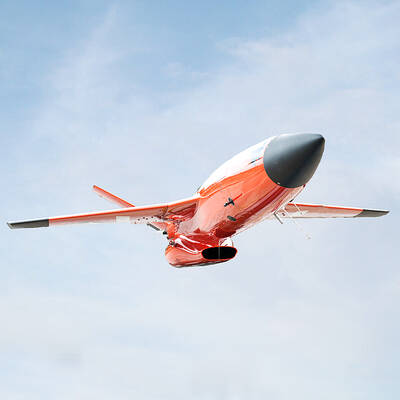
The Chien Feng IV (勁蜂, Mighty Hornet) loitering munition is on track to enter flight tests next month in connection with potential adoption by Taiwanese and US armed forces, a government source said yesterday. The kamikaze drone, which boasts a range of 1,000km, debuted at the Taipei Aerospace and Defense Technology Exhibition in September, the official said on condition of anonymity. The Chungshan Institute of Science and Technology and US-based Kratos Defense jointly developed the platform by leveraging the engine and airframe of the latter’s MQM-178 Firejet target drone, they said. The uncrewed aerial vehicle is designed to utilize an artificial intelligence computer
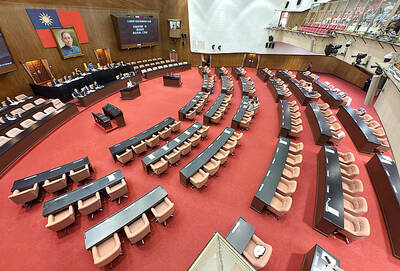
The Chinese Nationalist Party (KMT) caucus yesterday decided to shelve proposed legislation that would give elected officials full control over their stipends, saying it would wait for a consensus to be reached before acting. KMT Legislator Chen Yu-jen (陳玉珍) last week proposed amendments to the Organic Act of the Legislative Yuan (立法院組織法) and the Regulations on Allowances for Elected Representatives and Subsidies for Village Chiefs (地方民意代表費用支給及村里長事務補助費補助條例), which would give legislators and councilors the freedom to use their allowances without providing invoices for reimbursement. The proposal immediately drew criticism, amid reports that several legislators face possible charges of embezzling fees intended to pay


 RSS
RSS