


The Chen Shui-bian (陳水扁) administration is considering further relaxing cross-strait economic policy before Chen steps down in May, a plan which is supported by Democratic Progressive Party (DPP) presidential candidate Frank Hsieh (謝長廷), an official at the Presidential Office who wished to remain anonymous said yesterday.
The official said that further opening of cross-strait trade had always been the government's policy. Measures being considered include expanding the "small three links" and granting amnesty to Taiwanese businesspeople defying government bans on investment in China.
Asked whether the measures would be implemented before Chen's term ends on May 20, the official said: "There is no point in delaying if we can do it now."
As long as the "effective opening, active management" principle is upheld, the measures would be prioritized as long as they do not require bilateral negotiations or legal revisions, the official said.
The Economic Daily News reported in yesterday's edition that in order to lure China-based Taiwanese businesspeople home, Chen intends to ease cross-strait economic policy before he steps down on May 20.
Measures would include granting an amnesty to China-based Taiwanese businesspeople who have defied government bans on investment, adjusting the taxation system and expanding the "small three links" before direct cross-strait transportation takes place, the report said.
The report said that Chen made the decision on Friday, when he met Taiwanese businesspeople based in China at the Presidential Office.
The official said China-based Taiwanese businesspeople wanted the government to establish a mechanism to allow them to return and that they were willing to pay taxes, but they would like to see the government grant an amnesty to those investing in China before they would return.
While the "small three links" cover travel to Fujian Province, the government was considering expanding it to other areas which would allow more people to take advantage of the routes, the official said.
Meanwhile, Cheng Wen-tsang (
The aim was to upgrade Taiwan's competitiveness, not to court potential voters for the presidential election, he said, emphasizing that it would be a gradual process and must be achieved step by step.
Hsieh Hsin-ni (謝欣霓), another spokesperson for Hsieh, said that Hsieh supports any policy that serves the best interests of the public.
Cabinet Spokesman Shieh Jhy-wey (
Emphasizing that the policy had nothing to do with the upcoming election, Shieh said the administration, regardless of who was in power, was duty bound to create an environment attractive to China-based Taiwanese businesspeople.
In related news, Frank Hsieh yesterday invited Chinese President Hu Jintao (胡錦濤) to visit Taiwan and negotiate on cross-strait relations in Kinmen if he is elected next month.
Dubbing it the "Kinmen declaration," Frank Hsieh, who was in Kinmen yesterday, said that he would like to see Taiwan become a "no-war zone" and Kinmen a "special peace area."
He would also like to see the nation help to advance China's democratization.
Hsieh said he would like to invite Hu to visit Kinmen, where they could sit down and talk about bilateral economic development, peaceful co-existence and their responsibility to the international community.
He urged both sides to put aside their disputes and refrain from letting complicated issues hamper the development of ones that are easier to solve.
When asked for comment, Chinese Nationalist Party (KMT) presidential candidate Ma Ying-jeou (馬英九) applauded the president's plans to relax cross-strait policies and urged Chen to begin by arranging charter flights starting on March 1 for Taiwanese based in China to return to vote in next month's presidential election.
Asked to comment on a campaign to boycott the two UN referendums, Ma reiterated his stance that he does not oppose the referendums, but he is against holding the referendums in conjunction with an election.
Additional reporting by Flora Wang
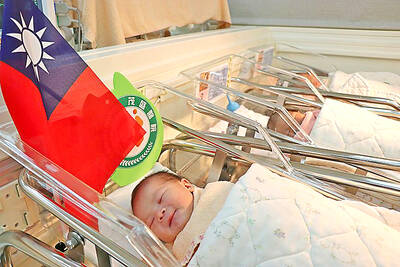
AGING: As of last month, people aged 65 or older accounted for 20.06 percent of the total population and the number of couples who got married fell by 18,685 from 2024 Taiwan has surpassed South Korea as the country least willing to have children, with an annual crude birthrate of 4.62 per 1,000 people, Ministry of the Interior data showed yesterday. The nation was previously ranked the second-lowest country in terms of total fertility rate, or the average number of children a woman has in her lifetime. However, South Korea’s fertility rate began to recover from 2023, with total fertility rate rising from 0.72 and estimated to reach 0.82 to 0.85 by last year, and the crude birthrate projected at 6.7 per 1,000 people. Japan’s crude birthrate was projected to fall below six,
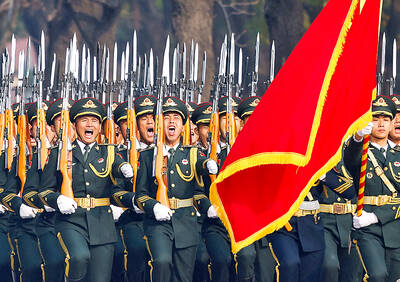
Conflict with Taiwan could leave China with “massive economic disruption, catastrophic military losses, significant social unrest, and devastating sanctions,” a US think tank said in a report released on Monday. The German Marshall Fund released a report titled If China Attacks Taiwan: The Consequences for China of “Minor Conflict” and “Major War” Scenarios. The report details the “massive” economic, military, social and international costs to China in the event of a minor conflict or major war with Taiwan, estimating that the Chinese People’s Liberation Army (PLA) could sustain losses of more than half of its active-duty ground forces, including 100,000 troops. Understanding Chinese
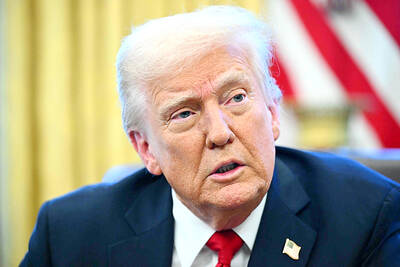
US President Donald Trump in an interview with the New York Times published on Thursday said that “it’s up to” Chinese President Xi Jinping (習近平) what China does on Taiwan, but that he would be “very unhappy” with a change in the “status quo.” “He [Xi] considers it to be a part of China, and that’s up to him what he’s going to be doing, but I’ve expressed to him that I would be very unhappy if he did that, and I don’t think he’ll do that. I hope he doesn’t do that,” Trump said. Trump made the comments in the context
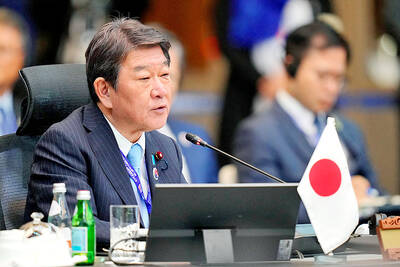
SELF-DEFENSE: Tokyo has accelerated its spending goal and its defense minister said the nation needs to discuss whether it should develop nuclear-powered submarines China is ramping up objections to what it sees as Japan’s desire to acquire nuclear weapons, despite Tokyo’s longstanding renunciation of such arms, deepening another fissure in the two neighbors’ increasingly tense ties. In what appears to be a concerted effort, China’s foreign and defense ministries issued statements on Thursday condemning alleged remilitarism efforts by Tokyo. The remarks came as two of the country’s top think tanks jointly issued a 29-page report framing actions by “right-wing forces” in Japan as posing a “serious threat” to world peace. While that report did not define “right-wing forces,” the Chinese Ministry of Foreign Affairs was


 RSS
RSS