


Cypriots were voting for a new president yesterday in an election seen as pivotal to the decades-old search for a deal to reunify the ethnically divided island.
The election is billed as either a confidence vote in, or a repudiation of, center-right incumbent Tassos Papadopoulos, 74, who led the 2004 rejection of a UN reunification plan.
Polls suggest a neck-and-neck race between Papadopoulos and Demetris Christofias, 61, head of the reformed communist Progressive Party of the Working People.
For the first time since Cyprus gained independence from Britain in 1960, there is a strong third candidate in former foreign minister Ioannis Kasoulides, 59, a member of the right-wing Democratic Rally party. The contest is likely to be settled in a Feb. 24 runoff.
With a new peace drive likely to start after the election, Papadopoulos said a renewed mandate for him would ensure an improved agreement that Cypriots could embrace.
"Today, Cyprus is stronger than ever before," Papadopoulos told reporters after casting his ballot near his Nicosia home. "I hope, with the help of the people, we can achieve the [reunification] solution that we desire and deserve. The future rests in our hands."
Cyprus is internationally represented by the Greek Cypriot government in the south, while the breakaway Turkish Cypriot north is recognized only by Ankara.
Despite Turkish Cypriot approval of the 2004 UN plan, its rejection by Greek Cypriots in separate referendums meant the island joined the EU in 2004 still divided.
All three candidates claim to be best qualified to head negotiations with the Turkish Cypriot community, separated from the Greek south since 1974 when a failed bid to unite the island with Greece triggered a Turkish invasion.
Some 516,000 voters, including 390 Turkish Cypriots living in the south, are registered to vote.
Voting began at 7am and no problems were reported, chief election officer Lazaros Savvides said.

The Legislative Yuan’s Finance Committee yesterday approved proposed amendments to the Amusement Tax Act (娛樂稅法) that would abolish taxes on films, cultural activities and competitive sporting events, retaining the fee only for dance halls and golf courses. The proposed changes would set the maximum tax rate for dance halls and golf courses at 50 and 20 percent respectively, with local governments authorized to suspend the levies. Article 2 of the act says that “amusement tax shall be levied on tickets sold or fees charged by amusement places, facilities or activities” in six categories: “Cinema; professional singing, story-telling, dancing, circus, magic show, acrobatics

Tainan, Taipei and New Taipei City recorded the highest fines nationwide for illegal accommodations in the first quarter of this year, with fines issued in the three cities each exceeding NT$7 million (US$220,639), Tourism Administration data showed. Among them, Taipei had the highest number of illegal short-term rental units, with 410. There were 3,280 legally registered hotels nationwide in the first quarter, down by 14 properties, or 0.43 percent, from a year earlier, likely indicating operators exiting the market, the agency said. However, the number of unregistered properties rose to 1,174, including 314 illegal hotels and 860 illegal short-term rental
INFLATION UP? The IMF said CPI would increase to 1.5 percent this year, while the DGBAS projected it would rise to 1.68 percent, with GDP per capita of US$44,181 The IMF projected Taiwan’s real GDP would grow 5.2 percent this year, up from its 2.1 percent outlook in January, despite fears of global economic disruptions sparked by the US-Iran conflict. Taiwan’s consumer price index (CPI) is projected to increase to 1.5 percent, while unemployment would be 3.4 percent, roughly in line with estimates for Asia as a whole, the international body wrote in its Global Economic Outlook Report published in the US on Monday. The figures are comparatively better than the IMF outlook for the rest of the world, which pegged real GDP growth at 3.1 percent, down from 3.3 percent
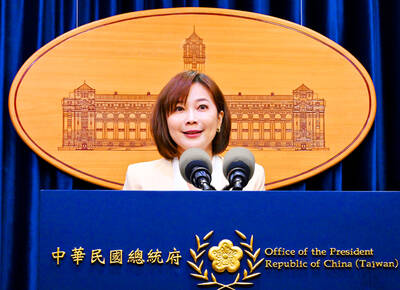
ECONOMIC COERCION: Such actions are often inconsistently applied, sometimes resumed, and sometimes just halted, the Presidential Office spokeswoman said The government backs healthy and orderly cross-strait exchanges, but such arrangements should not be made with political conditions attached and never be used as leverage for political maneuvering or partisan agendas, Presidential Office spokeswoman Karen Kuo (郭雅慧) said yesterday. Kuo made the remarks after China earlier in the day announced 10 new “incentive measures” for Taiwan, following a landmark meeting between Chinese President Xi Jinping (習近平) and Chinese Nationalist Party (KMT) Chairwoman Cheng Li-wun (鄭麗文) in Beijing on Friday. The measures, unveiled by China’s Xinhua news agency, include plans to resume individual travel by residents of Shanghai and China’s Fujian


 RSS
RSS