


APEC leaders called yesterday for "urgent" efforts to salvage global trade talks as they wrapped up a key summit in Sydney that was also marked by heated wrangling over a plan to tackle climate change.
Representing economies that account for nearly half the world's trade, they predicted remaining differences could be bridged in talks aimed at breaking down tariffs and other barriers to global commerce.
PAPERED OVER
The call came a day after leaders of 21 Pacific Rim economies papered over their differences to hammer out an agreement setting goals on curbing greenhouse gas emissions.
Australian Prime Minister John Howard, closing the summit, also said APEC would not consider admitting any new members until at least 2010, meaning that India will not be admitted until then at the earliest.
Standing in the gardens of Australia's Government House with most of the other APEC leaders -- US President George W. Bush had left a day early to return to Washington -- Howard said that the leaders wanted all countries to reach a compromise.
He said they were sending "an urgent request for all countries involved in the Doha round to renew their efforts to achieve an outcome, emphasizing that agriculture and industrial products are the two priority areas."
Taken together, the APEC economies, including many of the biggest trading nations such as the US, China and Japan, account for 56 percent of global output and more than 40 percent of its population.
WTO Director-General Pascal Lamy has been in Sydney for the group's annual meeting to attempt to persuade the WTO's 151 members to reach a compromise.
They are arguing over the size of cuts in barriers to trade in agriculture, industrial goods and services amid fierce disagreements between rich and poor countries over the concessions they need to make.
Bush was not in Sydney for Howard's comments, having left on Saturday to return home to prepare for a landmark report on the war in Iraq.
Howard, one of Bush's closest allies in Iraq, said the summit had left APEC "in great shape."
"We are particularly pleased with the progress made with the climate change declaration and the reaffirmation of the central importance of trade liberalization," he said.
`LAST BEST HOPE'
The Doha Round of negotiations "still represent the last best hope for an aggregate multilateral trade agreement," he said at a news conference later.
The leaders also promised to increase cooperation on a range of other concerns, from contaminated foods, pandemics and intellectual piracy to regional security and the fight against terrorism.
Conference sources said the reference to contaminated products, while long an APEC concern, had become more significant amid international fears over a spate of recalls of Chinese food and other goods.
On Saturday, APEC leaders issued the summit's flagship announcement, an agreement setting non-binding goals on reducing energy intensity and increasing forest cover as part of the wider fight against global warming.
Howard hailed it at the closing news conference as "by far the most important statement" to come out of the summit.
He described the agreement as a "milestone" in the fight against climate change that drew in rich and poor countries for the first time, but environmental groups dismissed it as meaningless.
"It is a political stunt," Greenpeace Southeast Asia energy campaigner Abigail Jabines said. "Developing nations of the Asia Pacific region cannot afford to accept lip service instead of action."
Despite suggestions that such summits produce little in the way of action, regional analyst Charles Morrison said that he had been "pleasantly surprised."
"I think there's not much in the way of ... a big concrete output, but the spirit was good," said Morrison, director of the Hawaii-based East-West Center on Asia-Pacific relations.
HEADING FOR HOME
As the leaders headed for the airport and home, Howard apologized for the security lockdown that had seen a huge steel and concrete fence snaking through Sydney's streets and security forces patrolling land, sea and air.
He said that the APEC summit would be hosted by the US in 2011 and Russia a year later, after summits in Peru next year, Singapore in 2009 and Japan in 2010.
See stories:

The Legislative Yuan’s Finance Committee yesterday approved proposed amendments to the Amusement Tax Act (娛樂稅法) that would abolish taxes on films, cultural activities and competitive sporting events, retaining the fee only for dance halls and golf courses. The proposed changes would set the maximum tax rate for dance halls and golf courses at 50 and 20 percent respectively, with local governments authorized to suspend the levies. Article 2 of the act says that “amusement tax shall be levied on tickets sold or fees charged by amusement places, facilities or activities” in six categories: “Cinema; professional singing, story-telling, dancing, circus, magic show, acrobatics

Tainan, Taipei and New Taipei City recorded the highest fines nationwide for illegal accommodations in the first quarter of this year, with fines issued in the three cities each exceeding NT$7 million (US$220,639), Tourism Administration data showed. Among them, Taipei had the highest number of illegal short-term rental units, with 410. There were 3,280 legally registered hotels nationwide in the first quarter, down by 14 properties, or 0.43 percent, from a year earlier, likely indicating operators exiting the market, the agency said. However, the number of unregistered properties rose to 1,174, including 314 illegal hotels and 860 illegal short-term rental
INFLATION UP? The IMF said CPI would increase to 1.5 percent this year, while the DGBAS projected it would rise to 1.68 percent, with GDP per capita of US$44,181 The IMF projected Taiwan’s real GDP would grow 5.2 percent this year, up from its 2.1 percent outlook in January, despite fears of global economic disruptions sparked by the US-Iran conflict. Taiwan’s consumer price index (CPI) is projected to increase to 1.5 percent, while unemployment would be 3.4 percent, roughly in line with estimates for Asia as a whole, the international body wrote in its Global Economic Outlook Report published in the US on Monday. The figures are comparatively better than the IMF outlook for the rest of the world, which pegged real GDP growth at 3.1 percent, down from 3.3 percent
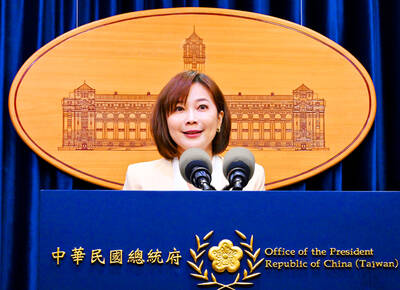
ECONOMIC COERCION: Such actions are often inconsistently applied, sometimes resumed, and sometimes just halted, the Presidential Office spokeswoman said The government backs healthy and orderly cross-strait exchanges, but such arrangements should not be made with political conditions attached and never be used as leverage for political maneuvering or partisan agendas, Presidential Office spokeswoman Karen Kuo (郭雅慧) said yesterday. Kuo made the remarks after China earlier in the day announced 10 new “incentive measures” for Taiwan, following a landmark meeting between Chinese President Xi Jinping (習近平) and Chinese Nationalist Party (KMT) Chairwoman Cheng Li-wun (鄭麗文) in Beijing on Friday. The measures, unveiled by China’s Xinhua news agency, include plans to resume individual travel by residents of Shanghai and China’s Fujian


 RSS
RSS