


The coast guard yesterday confronted a Chinese fishing boat carrying 173 smuggled birds when it attempted to enter Kinmen, as health experts warned of the potential for a devastating outbreak of avian flu in Taiwan.
The birds were immediately destroyed.
The Coast Guard Administration said in a press statement that at 4:30am yesterday, the coast guard discovered a Chinese fishing boat attempting to come ashore at Hsiaokinmen.
20 boxes
As a coast guard vessel approached the boat, two Chinese fishermen threw 20 boxes of birds toward the shore and fled.
The coast guard was unable to intercept the boat, but 173 live birds were found in the boxes. They included Japanese white-eyes, redthroats and daurian redstarts.
Upon discovering the birds, the coast guard called in epidemic prevention experts. The coast guard said that the birds were judged to be potential carriers of avian flu and were destroyed.
The site of the attempted landing was also disinfected.
The birds would have ended up in Taiwanese bird markets if it had not seized the shipment, the coast guard said.
The coast guard warned the public against helping smugglers bring birds into the country, and not to buy birds if their origin was unclear.
Flu risk
President Chen Shui-bian (陳水扁) has expressed concern over smuggling from China through the "small three links" -- direct trade and transport between Kinmen, Matsu and China -- saying that Taiwanese and Chinese fishermen might spark an outbreak of avian flu or other diseases in Taiwan by circumventing health and sanitary controls.
The president therefore ordered the government to conduct strict surveillance and interception operations in the area, focusing on illegally imported animals and animal products.
The Coast Guard Administration has launched a crackdown on Chinese vessels entering waters off the outlying islands of Kinmen, Matsu and Penghu to counter smuggling.
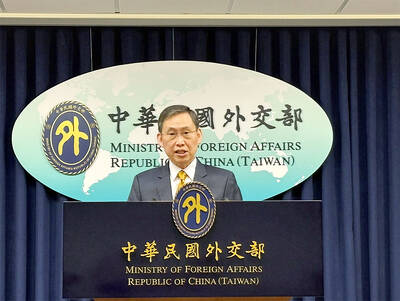
A Ministry of Foreign Affairs official yesterday said that a delegation that visited China for an APEC meeting did not receive any kind of treatment that downgraded Taiwan’s sovereignty. Department of International Organizations Director-General Jonathan Sun (孫儉元) said that he and a group of ministry officials visited Shenzhen, China, to attend the APEC Informal Senior Officials’ Meeting last month. The trip went “smoothly and safely” for all Taiwanese delegates, as the Chinese side arranged the trip in accordance with long-standing practices, Sun said at the ministry’s weekly briefing. The Taiwanese group did not encounter any political suppression, he said. Sun made the remarks when
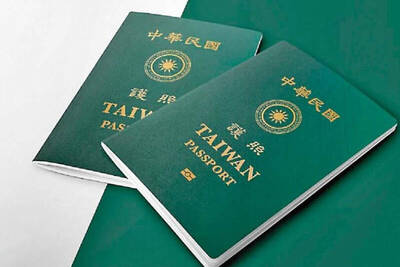
The Taiwanese passport ranked 33rd in a global listing of passports by convenience this month, rising three places from last month’s ranking, but matching its position in January last year. The Henley Passport Index, an international ranking of passports by the number of designations its holder can travel to without a visa, showed that the Taiwan passport enables holders to travel to 139 countries and territories without a visa. Singapore’s passport was ranked the most powerful with visa-free access to 192 destinations out of 227, according to the index published on Tuesday by UK-based migration investment consultancy firm Henley and Partners. Japan’s and
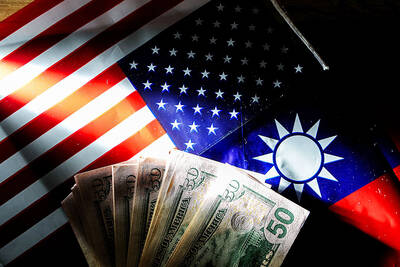
BROAD AGREEMENT: The two are nearing a trade deal to reduce Taiwan’s tariff to 15% and a commitment for TSMC to build five more fabs, a ‘New York Times’ report said Taiwan and the US have reached a broad consensus on a trade deal, the Executive Yuan’s Office of Trade Negotiations said yesterday, after a report said that Washington is set to reduce Taiwan’s tariff rate to 15 percent. The New York Times on Monday reported that the two nations are nearing a trade deal to reduce Taiwan’s tariff rate to 15 percent and commit Taiwan Semiconductor Manufacturing Co (TSMC, 台積電) to building at least five more facilities in the US. “The agreement, which has been under negotiation for months, is being legally scrubbed and could be announced this month,” the paper said,

MIXED SOURCING: While Taiwan is expanding domestic production, it also sources munitions overseas, as some, like M855 rounds, are cheaper than locally made ones Taiwan and the US plan to jointly produce 155mm artillery shells, as the munition is in high demand due to the Ukraine-Russia war and should be useful in Taiwan’s self-defense, Armaments Bureau Director-General Lieutenant General Lin Wen-hsiang (林文祥) told lawmakers in Taipei yesterday. Lin was responding to questions about Taiwan’s partnership with allies in producing munitions at a meeting of the legislature’s Foreign Affairs and National Defense Committee. Given the intense demand for 155mm artillery shells in Ukraine’s defense against the Russian invasion, and in light of Taiwan’s own defensive needs, Taipei and Washington plan to jointly produce 155mm shells, said Lin,


 RSS
RSS