


Health authorities imposed a quarantine on poultry farms across northern Nigeria yesterday after one state in the vast region reported Africa's first documented case of the bird flu virus, officials said.
The H5N1 strain of bird flu was first reported on Wednesday in Kaduna state. In neighboring Kano state, some 60,000 farm-raised birds have died, but so far no cases of bird flu have been confirmed there.
Bird farms across the entire north of Africa's most-populous nation are now under quarantine and a special assessment team was traveling around the region yesterday, said Junaidu Maina, director of Nigeria's livestock department. He didn't say how many of Nigeria's 36 states were under the quarantine order.
Nigeria's Agriculture Minister Adamu Bello on Wednesday confirmed findings by the Paris-based World Organization for Animal Health (OIE) of an outbreak of the H5N1 virus on a poultry farm in the northern Nigerian state of Kaduna. No human infections were reported, but 40,000 birds died of bird flu there, according to the OIE.
The farm had a total of 46,000 chicken, geese and ostriches, and all those that escaped bird flu were destroyed, the OIE said. Nigeria ordered the quarantine and culling of any fowl suspected of carrying bird flu in hopes of halting its spread, officials said.
"The significance is that it's a completely new continent that we need to be looking at," Alex Thiermann, an expert for OIE, said of H5N1's arrival in Africa.
Experts fear that H5N1, which has caused human as well as bird deaths in Asia and spread to Europe and the Middle East, might mutate into a form spread easily among humans, triggering a human flu pandemic that could kill millions.
So far, the virus has passed only from birds to humans, not from human to human.
Thiermann said some African countries have "very weak" veterinary systems.
"It is absolutely essential to strengthen the veterinary infrastructures in order to have the capability for early detection and a rapid response," he said.
Meanwhile, China was investigating the cause of its 11th confirmed human bird flu case yesterday while pressing on with efforts to stamp out the country's latest outbreak among poultry.
A 26-year-old woman from Fujian Province tested positive for the H5N1 strain after being hospitalized with fever and pneumonia on Jan. 10, the health ministry said in a statement.
"After medical treatment, the patient's condition is currently stable," the statement said, without explaining the delay in reporting the case.
Bird flu has killed seven people in China. Like most of the other human cases in China, no outbreak among animals was detected in Zhangpu County where Lin lived, emphasizing the inability of authorities to effectively monitor the disease.
In related news, Hong Kong authorities yesterday investigated two new suspected cases of bird flu, a dead chicken and a wild bird found near a local school, and Health Secretary York Chow (
The government announced late on Wednesday that a dead egret found earlier this week in an urban area has tested positive for the H5N1 strain.
A spokesman for the Agricultural, Fisheries and Conservation Department said final test results on the dead chicken and on a Japanese White-eye, a small wild bird found near the school, weren't available yet.
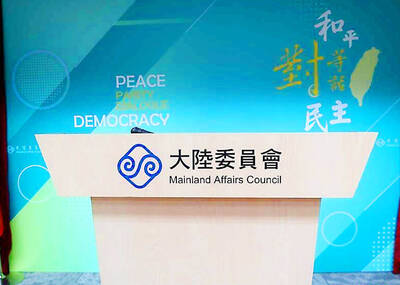
NO RECIPROCITY: Taipei has called for cross-strait group travel to resume fully, but Beijing is only allowing people from its Fujian Province to travel to Matsu, the MAC said The Mainland Affairs Council (MAC) yesterday criticized an announcement by the Chinese Ministry of Culture and Tourism that it would lift a travel ban to Taiwan only for residents of China’s Fujian Province, saying that the policy does not meet the principles of reciprocity and openness. Chinese Deputy Minister of Culture and Tourism Rao Quan (饒權) yesterday morning told a delegation of Chinese Nationalist Party (KMT) lawmakers in a meeting in Beijing that the ministry would first allow Fujian residents to visit Lienchiang County (Matsu), adding that they would be able to travel to Taiwan proper directly once express ferry

FAST RELEASE: The council lauded the developer for completing model testing in only four days and releasing a commercial version for use by academia and industry The National Science and Technology Council (NSTC) yesterday released the latest artificial intelligence (AI) language model in traditional Chinese embedded with Taiwanese cultural values. The council launched the Trustworthy AI Dialogue Engine (TAIDE) program in April last year to develop and train traditional Chinese-language models based on LLaMA, the open-source AI language model released by Meta. The program aims to tackle the information bias that is often present in international large-scale language models and take Taiwanese culture and values into consideration, it said. Llama 3-TAIDE-LX-8B-Chat-Alpha1, released yesterday, is the latest large language model in traditional Chinese. It was trained based on Meta’s Llama-3-8B

STUMPED: KMT and TPP lawmakers approved a resolution to suspend the rate hike, which the government said was unavoidable in view of rising global energy costs The Ministry of Economic Affairs yesterday said it has a mandate to raise electricity prices as planned after the legislature passed a non-binding resolution along partisan lines to freeze rates. Chinese Nationalist Party (KMT) lawmakers proposed the resolution to suspend the price hike, which passed by a 59-50 vote. The Taiwan People’s Party (TPP) voted with the KMT. Legislative Speaker Han Kuo-yu (韓國瑜) of the KMT said the resolution is a mandate for the “immediate suspension of electricity price hikes” and for the Executive Yuan to review its energy policy and propose supplementary measures. A government-organized electricity price evaluation board in March

NOVEL METHODS: The PLA has adopted new approaches and recently conducted three combat readiness drills at night which included aircraft and ships, an official said Taiwan is monitoring China’s People’s Liberation Army (PLA) exercises for changes in their size or pattern as the nation prepares for president-elect William Lai’s (賴清德) inauguration on May 20, National Security Bureau (NSB) Director-General Tsai Ming-yen (蔡明彥) said yesterday. Tsai made the comment at a meeting of the Legislative Yuan’s Foreign Affairs and National Defense Committee, in response to Democratic Progressive Party (DPP) Legislator Wang Ting-yu’s (王定宇) questions. China continues to employ a carrot-and-stick approach, in which it applies pressure with “gray zone” tactics, while attempting to entice Taiwanese with perks, Tsai said. These actions aim to help Beijing look like it has


 RSS
RSS