


Japan's ruling party prepared new legislation yesterday to solidify Tokyo's claim to undersea gas fields at the center of a dispute with China and give the Coast Guard the right to protect Japanese drilling facilities there.
The proposed law, to be submitted to Parliament in January, would establish a 500m safety zone around Japanese facilities on the country's continental shelf or in its exclusive economic zone, said Yoshiharu Makino, policy secretary for the bill's sponsor, Liberal Democratic Party (LDP) lawmaker Keizo Takemi.
Feud
The concept bill aims to protect Japanese development of ocean-based natural resources and will likely fuel an ongoing feud between Tokyo and China over natural gas deposits claimed by both nations in the East China Sea.
China has already extracted gas from one field, triggering protests from Japan that the reserves might run dry.
Under the UN Convention on the Law of the Sea, which both Japan and China have signed, coastal countries can claim an economic zone extending 370km from their shores.
The disputed reserves lie within both countries' claims, and the UN has until May 2009 to issue a ruling on the matter.
Unauthorized entrants to Japan's safety zone would face up to a year in prison or fines of ¥500,000 (US$4,200). While the bill doesn't mention the East China Sea, it would allow Japan's Coast Guard to better protect Japanese interests there.
"Without this bill, the Coast Guard must wait until facilities are attacked," Makino said. "With this bill, they don't have to wait."
`Serious attitude'
LDP lawmaker Yasutoshi Nishimura was quoted by Kyodo News as saying the bill will "represent Japan's serious attitude" toward the gas dispute and promote governmental talks between Japan and China.
The sides have met on the issue three times in the past year, most recently in September, but have reached no breakthrough.
Japan wants China to stop drilling operations immediately until an agreement can be worked out for joint development.
Beijing says it is within its rights to develop the region's resources.
China bases its claim, in part, on a separate international treaty that lets coastal countries extend their borders to the edges of their undersea continental shelves.
In July, Beijing formally protested Tokyo's decision to give private oil company Teikoku Oil Co drilling rights in the disputed area, calling it a severe provocation.
Teikoku and several other Japanese oil companies had first applied for drilling rights in the late 1960s, following a UN report about possible rich undersea deposits. The Japanese companies have not yet begun drilling in the waters.
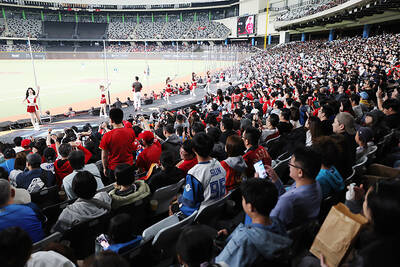
The Legislative Yuan’s Finance Committee yesterday approved proposed amendments to the Amusement Tax Act (娛樂稅法) that would abolish taxes on films, cultural activities and competitive sporting events, retaining the fee only for dance halls and golf courses. The proposed changes would set the maximum tax rate for dance halls and golf courses at 50 and 20 percent respectively, with local governments authorized to suspend the levies. Article 2 of the act says that “amusement tax shall be levied on tickets sold or fees charged by amusement places, facilities or activities” in six categories: “Cinema; professional singing, story-telling, dancing, circus, magic show, acrobatics

Tainan, Taipei and New Taipei City recorded the highest fines nationwide for illegal accommodations in the first quarter of this year, with fines issued in the three cities each exceeding NT$7 million (US$220,639), Tourism Administration data showed. Among them, Taipei had the highest number of illegal short-term rental units, with 410. There were 3,280 legally registered hotels nationwide in the first quarter, down by 14 properties, or 0.43 percent, from a year earlier, likely indicating operators exiting the market, the agency said. However, the number of unregistered properties rose to 1,174, including 314 illegal hotels and 860 illegal short-term rental
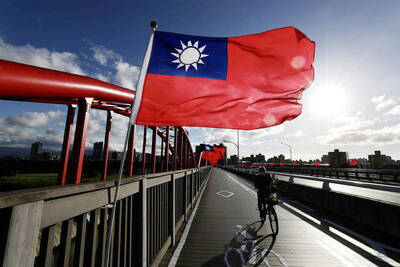
INFLATION UP? The IMF said CPI would increase to 1.5 percent this year, while the DGBAS projected it would rise to 1.68 percent, with GDP per capita of US$44,181 The IMF projected Taiwan’s real GDP would grow 5.2 percent this year, up from its 2.1 percent outlook in January, despite fears of global economic disruptions sparked by the US-Iran conflict. Taiwan’s consumer price index (CPI) is projected to increase to 1.5 percent, while unemployment would be 3.4 percent, roughly in line with estimates for Asia as a whole, the international body wrote in its Global Economic Outlook Report published in the US on Monday. The figures are comparatively better than the IMF outlook for the rest of the world, which pegged real GDP growth at 3.1 percent, down from 3.3 percent
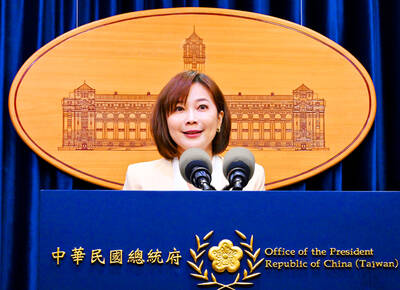
ECONOMIC COERCION: Such actions are often inconsistently applied, sometimes resumed, and sometimes just halted, the Presidential Office spokeswoman said The government backs healthy and orderly cross-strait exchanges, but such arrangements should not be made with political conditions attached and never be used as leverage for political maneuvering or partisan agendas, Presidential Office spokeswoman Karen Kuo (郭雅慧) said yesterday. Kuo made the remarks after China earlier in the day announced 10 new “incentive measures” for Taiwan, following a landmark meeting between Chinese President Xi Jinping (習近平) and Chinese Nationalist Party (KMT) Chairwoman Cheng Li-wun (鄭麗文) in Beijing on Friday. The measures, unveiled by China’s Xinhua news agency, include plans to resume individual travel by residents of Shanghai and China’s Fujian


 RSS
RSS