


Montreal-based Bombardier Inc, the world's largest maker of railway equipment, has withdrawn its bid for the construction of the MRT system linking CKS International Airport to Taipei City, citing safety issues, according to a company document obtained by the Taipei Times.
"We cannot afford to be associated with a project which, if performed in accordance with the current specifications and conditions, will compromise passenger safety, system efficiency, and the ability of the project to be completed on time and within the specified budget," Raymond Betler, president of Bombardier's total transit system, said in a letter sent to Wu Fu-hsiang (
"We therefore regretfully inform you that we will not bid the project as currently specified in the RFP [request for proposal]," Betler said in the letter.
The NT$26 billion (US$793.9 million) tender for the project's mechanical and electrical system has opened for bidders and is due to close on Wednesday.
Wu said he received Betler's letter, which also mentioned that the bureau had neglected the company's previous safety concerns, including a report by Brian Mellitt, a former president of the Institution of Electrical Engineers in the UK.
"Our consultants to the project said there is no problem with the design of the project," Wu said yesterday in a phone interview.
The report was unveiled by Mellitt at a public hearing at the MOTC on Aug. 26.
According to Betler's letter, the report says the RFP uses a technology that has been rejected for steep grade alignments by many developed countries.
The bureau said the problem can be solved by using track brakes, but the brakes are not provided for in the RFP's Bill of Quantities, Betler wrote.
He also noted that the current RFP will result in an inefficient system that causes accidents, station overshoots and switch overshoots. Any company that wins the bid will require substantial additional change orders, which will increase the cost and waste taxpayers' money, the letter said.
In response to the letter, Pang Jar-hua (
Pang said the project has been endorsed by high-speed railway consultants from Germany, the US and France, and that the specifications will not be changed at this late date because of Mellitt's report.
Bombardier has in the past offered suggestions on the project, Pang said, but many of its suggested changes would require patent technology and products that only Bombardier has, which would make it the only qualified bidder.
The construction conditions cited in Mellitt's report are not in accordance with Taiwan's conditions, he said.
Two years ago Bombardier was mentioned as the apparent contractor when lawmakers questioned Minister of Transportation and Communications Lin Ling-san (
Suspicion were heightened by mention of a "public hearing" in the letter. The "hearing" was actually a closed-door meeting that Democratic Progressive Party (DPP) Legislator Chang Chuan-tien (
DPP Legislator Chen Tsiao-long (
"First, I don't think legislators should get involved in public construction projects, thereby raising doubts about an under-the-table deal," Chen said. "Second, a public hearing should be open to the public and in the legislature rather than in the MOTC."
Kathryn Nickerson, director at Bombardier's communications division, said under Taiwanese procurement law, suppliers must be totally compliant with the RFP, including the technical specifications.
The current technical specifications call for rotary propulsion and precludes Bombardier from bidding its linear-induction-motor Advanced Rapid Transit technology.
"We suggested that the technical specifications be opened up to permit all bidders can bid for the most appropriate technology in terms of safety and operational performance. This, in turn, would have given the customer the opportunity to evaluate the merits of all the proposed transit-system technologies," Nickerson said by e-mail yesterday.
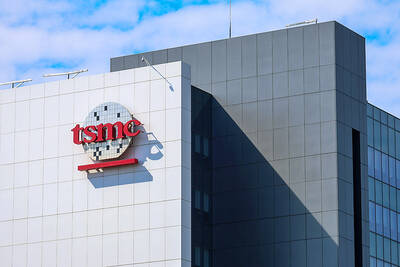
Taiwan Semiconductor Manufacturing Co (TSMC, 台積電), the world’s largest foundry service provider, yesterday said that global semiconductor revenue is projected to hit US$1.5 trillion in 2030, after the figure exceeds US$1 trillion this year, as artificial intelligence (AI) demand boosts consumption of token and compute power. “We are still at the beginning of the AI revolution, but we already see a significant impact across the whole semiconductor ecosystem,” TSMC deputy cochief operating officer Kevin Zhang (張曉強) said at the company’s annual technology symposium in Hsinchu City. “It is fair to say that in the past decade, smartphones and other mobile devices were
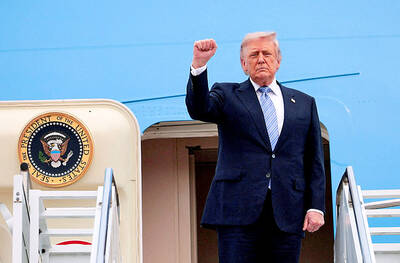
US-CHINA SUMMIT: MOFA welcomed US reassurance of no change in its Taiwan policy; Trump said he did not comment when Xi talked of opposing independence US President Donald Trump yesterday said he has not made a decision on whether to move forward with a major arms package for Taiwan after hearing concerns about it from Chinese President Xi Jinping (習近平). Trump’s comments on Taiwan came as he flew back to Washington after wrapping up critical talks in which both leaders said important progress was made in stabilizing US-China relations even as deep differences persist between the world’s two biggest powers on Iran and Taiwan. “I will make a determination,” Trump said, adding: “I’ll be making decisions. But, you know, I think the last thing we need right
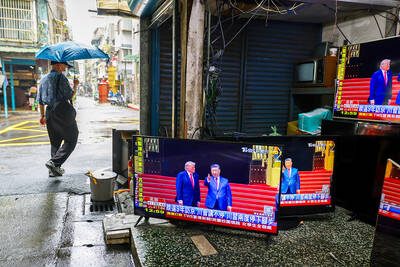
TAIWAN ISSUE: US treasury secretary Scott Bessent said on the first day of meetings that ‘it wouldn’t be a US-China summit without the Taiwan issue coming up’ There were no surprises on the first day of the summit between US President Donald Trump and Chinese President Xi Jinping (習近平), the Mainland Affairs Council (MAC) said yesterday, as the government reiterated that cross-strait stability is crucial to the Asia-Pacific region, as well as the world. As the two presidents met for a highly anticipated summit yesterday, Chinese state media reported that Xi warned Trump that missteps regarding Taiwan could push their two countries into “conflict.” Trump arrived in China with accolades for his host, calling Xi a “great leader” and “friend,” and extending an invitation to visit the White House
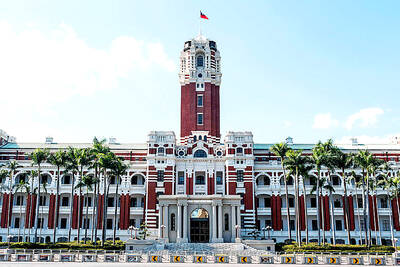
SECURITY: Taipei presses the US for arms supplies, saying the arms sales are not only a reflection of the US security commitment to Taiwan but also serve as a mutual deterrent against regional threats Taiwan is committed to preserving the cross-strait “status quo” and contributing to regional peace and stability, the Presidential Office said yesterday. “It is an undeniable fact that the Republic of China is a sovereign and independent democratic nation,” Presidential Office spokeswoman Karen Kuo (郭雅慧) reiterated, adding that Beijing has no right to claim sovereignty over Taiwan. The statements came after US President Donald Trump warned against Taiwanese independence. Trump wrapped up a state visit to Beijing on Friday, during which Chinese President Xi Jinping (習近平) had pressed him not to support Taiwan. Taiwan depends heavily on US security backing to deter China from carrying


 RSS
RSS