


Three rockets were fired at two US Navy ships in Jordan's Aqaba port yesterday, but they missed their targets and hit a warehouse and a hospital, killing a Jordanian soldier, and striking the Israeli port of Eilat.
The Katyusha rockets, weapons routinely used by Palestinian militants and Lebanon's Hezbollah group in attacks against Israel, were fired from an Aqaba warehouse which was rented this week by four people holding Egyptian and Iraqi nationalities, Jordan's state-run Petra news agency reported, citing preliminary investigations.
A Jordanian security source said authorities were searching for three men in connection with the attack, a Syrian and two Iraqis.
Immediately after the attack, the two US amphibious assault ships, which had been on a joint training exercise with the Jordanian navy, weighed anchor and headed for the safety of open water.
Israeli Defense Minister Shaul Mofaz said "one or two" Katyusha rockets fell in the airport and hotel area of Eilat, which is about 9km across the Red Sea from Aqaba, but no one was hurt.
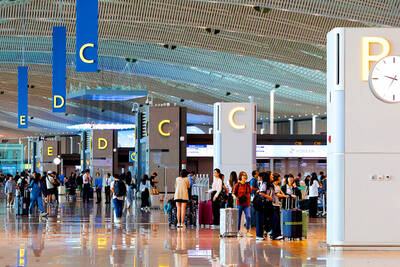
South Korea has adjusted its electronic arrival card system to no longer list Taiwan as a part of China, a move that the Ministry of Foreign Affairs said would help facilitate exchanges between the two sides. South Korea previously listed “Taiwan” as “Taiwan (China)” in the drop-down menus of its online arrival card system, where people had to fill out where they came from and their next destination. The ministry had requested South Korea make a revision and said it would change South Korea’s name on Taiwan’s online immigration system from “Republic of Korea” to “Korea (South),” should the issue not be
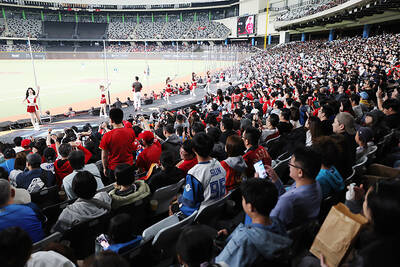
The Legislative Yuan’s Finance Committee yesterday approved proposed amendments to the Amusement Tax Act (娛樂稅法) that would abolish taxes on films, cultural activities and competitive sporting events, retaining the fee only for dance halls and golf courses. The proposed changes would set the maximum tax rate for dance halls and golf courses at 50 and 20 percent respectively, with local governments authorized to suspend the levies. Article 2 of the act says that “amusement tax shall be levied on tickets sold or fees charged by amusement places, facilities or activities” in six categories: “Cinema; professional singing, story-telling, dancing, circus, magic show, acrobatics

Tainan, Taipei and New Taipei City recorded the highest fines nationwide for illegal accommodations in the first quarter of this year, with fines issued in the three cities each exceeding NT$7 million (US$220,639), Tourism Administration data showed. Among them, Taipei had the highest number of illegal short-term rental units, with 410. There were 3,280 legally registered hotels nationwide in the first quarter, down by 14 properties, or 0.43 percent, from a year earlier, likely indicating operators exiting the market, the agency said. However, the number of unregistered properties rose to 1,174, including 314 illegal hotels and 860 illegal short-term rental
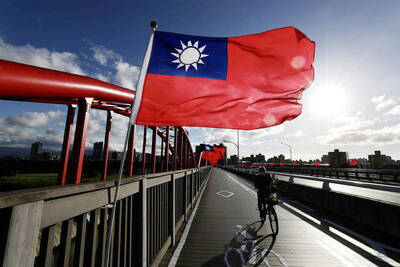
INFLATION UP? The IMF said CPI would increase to 1.5 percent this year, while the DGBAS projected it would rise to 1.68 percent, with GDP per capita of US$44,181 The IMF projected Taiwan’s real GDP would grow 5.2 percent this year, up from its 2.1 percent outlook in January, despite fears of global economic disruptions sparked by the US-Iran conflict. Taiwan’s consumer price index (CPI) is projected to increase to 1.5 percent, while unemployment would be 3.4 percent, roughly in line with estimates for Asia as a whole, the international body wrote in its Global Economic Outlook Report published in the US on Monday. The figures are comparatively better than the IMF outlook for the rest of the world, which pegged real GDP growth at 3.1 percent, down from 3.3 percent


 RSS
RSS