


Hundreds of Gaza pullout opponents barricaded themselves behind rolls of barbed wire in the synagogue of this hardline Jewish settlement yesterday, as security forces dragged screaming residents out of homes and settlers elsewhere burned houses, fields and tires in protest.
On the second day of removing settlers by force, troops encountered stiffer resistance than at the start of the operation. However, security officials said they expected to clear out all 21 Gaza settlements by Tuesday, more than two weeks ahead of schedule.
By nightfall, troops planned to have cleared out 18 of Gaza's 21 settlements, police said.
Yesterday, troops entered several of the most hardline Gaza communities.
In the farming settlement of Netzer Hazani, protesters set fire to barricades, fields and houses, sending a huge plume of black smoke into the air. Youths in Shirat Hayam, a hardline beachfront outpost, burned tires and garbage. In Neve Dekalim, Gaza's largest settlement, a standoff with hundreds of teenage extremists, continued into a second day.
There was relatively little violence in Gaza on Wednesday -- though a Jewish extremist in the West Bank shot dead four Palestinians in an apparent attempt to disrupt the Gaza pullout.
In Kfar Darom, where protesters barricaded themselves inside a synagogue, the army set up a special command center, and the army chief, Lieutenant General Dan Halutz, personally oversaw the operation. Soldiers formed several cordons around him to shield him from shouting settlers.
Thousands of soldiers had entered the settlement at dawn and quickly encircled the synagogue and two nearby buildings.
Just a few meters outside Kfar Darom, dozens of Palestinians stood on the roofs of their houses watching the evacuation.
"For the first time in the last few years I'm standing here without any fear that Israelis will shoot at me because their battle today is against themselves," said Mohammed Bashir, a Palestinian farmer.
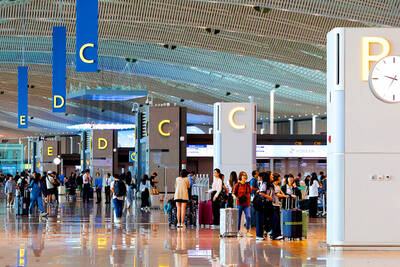
South Korea has adjusted its electronic arrival card system to no longer list Taiwan as a part of China, a move that the Ministry of Foreign Affairs said would help facilitate exchanges between the two sides. South Korea previously listed “Taiwan” as “Taiwan (China)” in the drop-down menus of its online arrival card system, where people had to fill out where they came from and their next destination. The ministry had requested South Korea make a revision and said it would change South Korea’s name on Taiwan’s online immigration system from “Republic of Korea” to “Korea (South),” should the issue not be
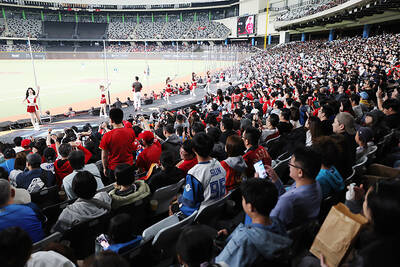
The Legislative Yuan’s Finance Committee yesterday approved proposed amendments to the Amusement Tax Act (娛樂稅法) that would abolish taxes on films, cultural activities and competitive sporting events, retaining the fee only for dance halls and golf courses. The proposed changes would set the maximum tax rate for dance halls and golf courses at 50 and 20 percent respectively, with local governments authorized to suspend the levies. Article 2 of the act says that “amusement tax shall be levied on tickets sold or fees charged by amusement places, facilities or activities” in six categories: “Cinema; professional singing, story-telling, dancing, circus, magic show, acrobatics

Tainan, Taipei and New Taipei City recorded the highest fines nationwide for illegal accommodations in the first quarter of this year, with fines issued in the three cities each exceeding NT$7 million (US$220,639), Tourism Administration data showed. Among them, Taipei had the highest number of illegal short-term rental units, with 410. There were 3,280 legally registered hotels nationwide in the first quarter, down by 14 properties, or 0.43 percent, from a year earlier, likely indicating operators exiting the market, the agency said. However, the number of unregistered properties rose to 1,174, including 314 illegal hotels and 860 illegal short-term rental
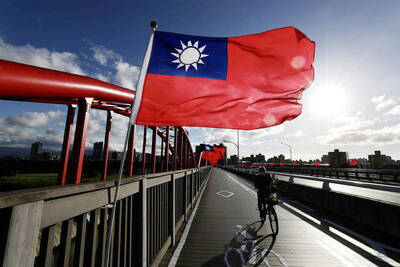
INFLATION UP? The IMF said CPI would increase to 1.5 percent this year, while the DGBAS projected it would rise to 1.68 percent, with GDP per capita of US$44,181 The IMF projected Taiwan’s real GDP would grow 5.2 percent this year, up from its 2.1 percent outlook in January, despite fears of global economic disruptions sparked by the US-Iran conflict. Taiwan’s consumer price index (CPI) is projected to increase to 1.5 percent, while unemployment would be 3.4 percent, roughly in line with estimates for Asia as a whole, the international body wrote in its Global Economic Outlook Report published in the US on Monday. The figures are comparatively better than the IMF outlook for the rest of the world, which pegged real GDP growth at 3.1 percent, down from 3.3 percent


 RSS
RSS