


China will keep controversial exchange-rate controls and hold down industrial investment this year as it tries to rein in surging growth and restrain inflation, officials said yesterday.
Chinese Premier Wen Jiabao (
Yesterday, officials said they would tighten controls on land use, both to conserve scarce farmland and to defuse public anger over seizures of land and housing, and warned that wasteful spending and inflation could endanger China's economic boom.
The country's foreign exchange regulator defended Beijing's fixed exchange rate, which ties the yuan's value to the US dollar, rejecting charges that the controls give Chinese exporters an unfair price advantage.
Accusations that China is manipulating the exchange rate to help its exporters are "completely a rumor," the official Xinhua News Agency quoted Guo Shuqing (
China's trading partners, especially the US, have pushed Beijing to let the yuan trade freely, arguing that its value is up to 40 percent too low and hurts foreign competitors.
Chinese leaders say they plan to eventually relax foreign exchange controls, but say that doing so now would cause financial turmoil and hurt the country's banks.
Also yesterday, an official in charge of economic reform warned of dangers from excess industrial investment and complained that the power-generation industry in particular suffers from severe problems.
"The system is weak. The structure is irrational," Ma Kai (
Ma noted that excess investment in construction and factory projects remained a risk, noting that 150,000 building projects were started last year, with 20,000 of them launched in December alone.
"There are new problems cropping up as we go along," he said.
Along with credit controls the government will limit approvals for land use, said Li Yuan (
Meanwhile, government advisors are pushing for an economic zone facing Taiwan in hopes of building closer ties and paving the way for peaceful unification, state media said yesterday.
The idea of building the zone, which would cover Fujian, Zhejiang and Guangdong provinces, was broached several years ago and is now gathering steam, the China Daily said.
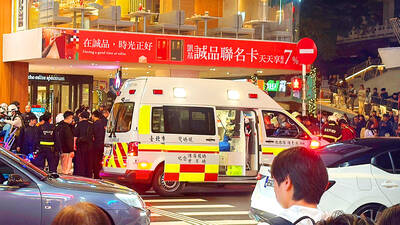
TRAGEDY STRIKES TAIPEI: The suspect died after falling off a building after he threw smoke grenades into Taipei Main Station and went on a killing spree in Zhongshan A 27-year-old suspect allegedly threw smoke grenades in Taipei Main Station and then proceeded to Zhongshan MRT Station in a random killing spree that resulted in the death of the suspect and two other civilians, and seven injured, including one in critical condition, as of press time last night. The suspect, identified as a man surnamed Chang Wen (張文), allegedly began the attack at Taipei Main Station, the Taipei Fire Department said, adding that it received a report at 5:24pm that smoke grenades had been thrown in the station. One man in his 50s was rushed to hospital after a cardiac arrest
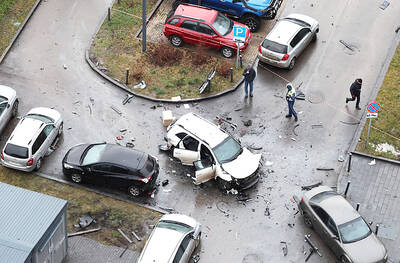
A car bomb killed a senior Russian general in southern Moscow yesterday morning, the latest high-profile army figure to be blown up in a blast that came just hours after Russian and Ukrainian delegates held separate talks in Miami on a plan to end the war. Kyiv has not commented on the incident, but Russian investigators said they were probing whether the blast was “linked” to “Ukrainian special forces.” The attack was similar to other assassinations of generals and pro-war figures that have either been claimed, or are widely believed to have been orchestrated, by Ukraine. Russian Lieutenant General Fanil Sarvarov, 56, head
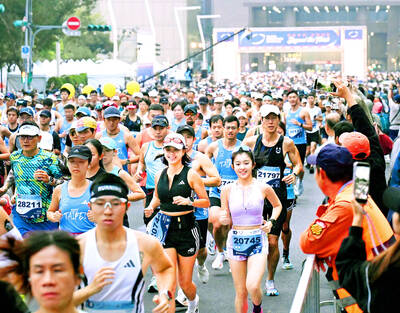
SAFETY FIRST: Double the number of police were deployed at the Taipei Marathon, while other cities released plans to bolster public event safety Authorities across Taiwan have stepped up security measures ahead of Christmas and New Year events, following a knife and smoke bomb attack in Taipei on Friday that left four people dead and 11 injured. In a bid to prevent potential copycat incidents, police deployments have been expanded for large gatherings, transport hubs, and other crowded public spaces, according to official statements from police and city authorities. Taipei Mayor Chiang Wan-an (蔣萬安) said the city has “comprehensively raised security readiness” in crowded areas, increased police deployments with armed officers, and intensified patrols during weekends and nighttime hours. For large-scale events, security checkpoints and explosives
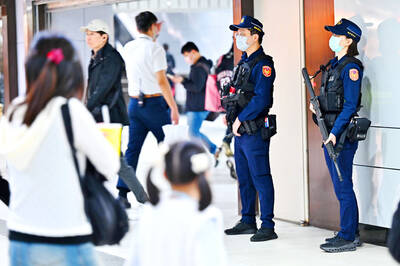
PUBLIC SAFETY: The premier said that security would be tightened in transport hubs, while President Lai commended the public for their bravery The government is to deploy more police, including rapid response units, in crowded public areas to ensure a swift response to any threats, President William Lai (賴清德) said yesterday after a knife attack killed three people and injured 11 in Taipei the previous day. Lai made the remarks following a briefing by the National Police Agency on the progress of the investigation, saying that the attack underscored the importance of cooperation in public security between the central and local governments. The attack unfolded in the early evening on Friday around Taipei Main Station’s M7 exit and later near the Taipei MRT’s Zhongshan


 RSS
RSS