


Two ships full of marines and heavy equipment steaming toward Sri Lanka were diverted due to a reduced need for aid, officials said, and instead bolstered the US task force off western Sumatra, the area hardest-hit by last week's tsunami.
But the highly sensitive nature of the US relief mission in southern Asia was highlighted when a spokesman for Sri Lanka's rebels, the Tamil Tigers -- considered a terrorist organization by Washington -- said Tuesday that the troops were being sent as spies to help put down their insurgency.
US officials insisted that the diversion of two ships had nothing to do with the Tamil Tigers' allegations, and that rerouting the USS Bonhomme Richard and the USS Duluth followed the Sri Lankan government scaling down its request for help.
The ships will join the aircraft carrier USS Abraham Lincoln and its battlegroup off the Indonesian island of Sumatra, where navy helicopters have flown dozens of relief and evacuation missions.
The USS Mount Rushmore, carrying a smaller contingent of marines, will travel on to Sri Lanka alone. It was expected to cross the Indian Ocean by the weekend.
US Embassy spokesman Philip Frayne said the change of plans was "purely a function of allocating the right resources in the right place."
"The military presence is strictly for humanitarian purposes," Frayne said. "The military will be operating in the south of the country to clear rubble and rebuild infrastructure and help Sri Lankans to recover from the tragedy."
But a Tamil rebel leader claimed that American troops, and those from neighboring India, being sent to help in the relief effort might use the operation as a cover to spy on the rebels, handing over intelligence to the government to help it fight the insurgents.
"The attempt by the American and Indian troops to land in Sri Lanka ... is totally based on their political and military interests," Nallathamby Srikantha told Voice of Tigers radio, the official rebel mouthpiece.
"They may try to collect details to help the government crush the Tamil national struggle in a future conflict," Srikantha said.
"We have to think how America ... will use its troops here," he said.
The US and India both officially consider the Tamil Tigers, which control a large portion of Sri Lanka's north and east, to be a terrorist group.
Frayne said that the US troops had no intention of going to Tiger-controlled zones.
The area of operations in Sumatra's Aceh Province is also highly sensitive because of a long-standing insurgency there and severed military ties between Indonesia and the US following East Timor's violent separation from the Southeast Asian country in 1999.
Previously restricted to outsiders, the Indonesian government was quick to open Aceh after the tsunami because it needed the help, but the image of large numbers of marines pouring ashore would be politically sensitive in the predominantly Muslim nation.
Colonel Thomas Greenwood, commanding officer of the 15th Marine Expeditionary Unit aboard the Bonhomme Richard, said the marines were aware of the concerns.
"We don't want to offend anybody's sensitivities," he said. "The alleviation of suffering and the loss of human lives should trump politics. We want to be helpful without being bothersome."
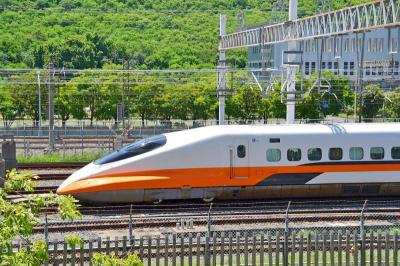
A signaling system malfunction disrupted high-speed rail (HSR) services beginning at 8am today, with trains temporarily reduced to three northbound and three southbound trains per hour as authorities conduct inspections. The malfunction occurred on a section of track in Miaoli County during pre-operation checks early this morning, forcing northbound and southbound trains to use a single track, the HSR operator said. The regular schedule has been replaced with three hourly trains offering only nonreserved seating in each direction, stopping at every station, it said, adding that business class cars would still have reserved seating. Departures from terminal stations are scheduled at the top

‘NO SECURITY RISK’: The Railway Bureau reassured the public that the technicians’ activities were limited to technical guidance and did not involve sensitive systems The Railway Bureau yesterday said it had invited eight Chinese technicians to assist with an airport MRT construction project. The bureau issued the confirmation after an Internet user said Chinese nationals had entered the construction zone of Taiwan Taoyuan International Airport’s Terminal 3 project. They asked why “individuals from an enemy state” were allowed access to such a major national infrastructure project, which raised serious concerns over Taiwan’s industrial safety, sensitive systems and information security. The bureau’s Northern Region Engineering Branch Office said subcontractor Taiwan Handle Industrial Co (台灣手把工業) of the Taoyuan airport MRT’s “Contract No. CU05 Project A14 Station Civil, MEP &
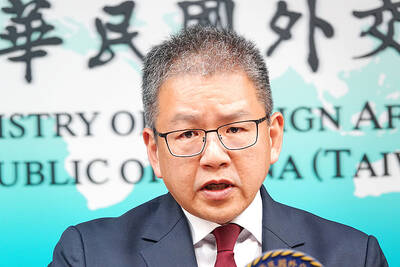
Taiwan is still in the process of assessing the possibility of recruiting workers from Eswatini, the Ministry of Foreign Affairs said yesterday, adding that its goal is to help Eswatini upgrade its vocational training centers. If there are plans to recruit workers from Eswatini, safeguarding national security, protecting public health and ensuring the employment rights of Taiwanese would be prerequisites, Department of West Asian and African Affairs Director-General Yen Chia-liang (顏嘉良) told a news conference. Key considerations would also include filling labor shortages in specific industries, and fostering bilateral professional and technical exchanges, he said. Yen was asked about the progress of labor

A US uncrewed surface vessel (USV) encountered multiple Chinese warships during an autonomous transit of the Taiwan Strait, US defense company Seasats said in a statement on Wednesday. Seasats announced that a Lightfish USV had completed the first autonomous transit of the Taiwan Strait. Over five days, the USV traversed the entire length of the Strait while constantly monitoring surface vessel traffic, the company said. The Lightfish encountered multiple Chinese warships, one of which was a Chinese People’s Liberation Army Navy (PLAN) Type 056 corvette, it said. The Chinese vessels were operating “well within Taiwan’s exclusive economic zone without transmitting their identity via the


 RSS
RSS