


The US military was re-examining security measures at bases across Iraq yesterday, a day after saying an attack that killed 22 people at a camp near Mosul was likely carried out by a suicide bomber who may have had inside information.
The explosion on Monday at the tightly guarded US base raised questions about how the attacker infiltrated the compound, which is surrounded by blast walls and barbed wire and watched by US troops who search every person going in and check his identity.
However Iraqis do a variety of jobs at the base, including translation, cleaning, cooking, construction and office duties.
A spokesman for the US military command in Baghdad said yesterday security measures are subjected to changes when needed.
"It is a fluid situation where our security measures and plans are constantly being adapted and reworked," said First Sergeant Steve Valley.
The apparent sophistication of Tuesday's operation -- the deadliest single attack on a US base -- indicated the attacker probably had inside knowledge of the base's layout and the soldiers' schedule. The blast came at lunchtime.
"We always have force protection keeping their eyes out," Lieutenant Colonel Paul Hastings, spokesman for Task Force Olympia, the main force that controls northern Iraq, said yesterday. "For somebody that wants to take his life and kill himself, it's very difficult to stop those people."
Asked how will they act following the attack, Hastings said that now that the cause of the attack is known, "a full investigation is now ongoing and from that full investigation we will act according[ly]."
At the Pentagon Wednesday, General Richard Myers, the chairman of the Joint Chiefs of Staff, said a suicide bomber had apparently strapped an explosive device to his body and entered the dining hall where the blast occurred.
In western Baghdad, a US soldier was killed and two were wounded by a roadside bomb, the US command said. The attack occurred at 8am Thursday and the victims were members of the US Army's Task Force Baghdad, which is in charge of security in the Iraqi capital.
The death raises the number of US troops who have died since the start of the war in March last year to at least 1,322 members, according to an unofficial count by reporters.
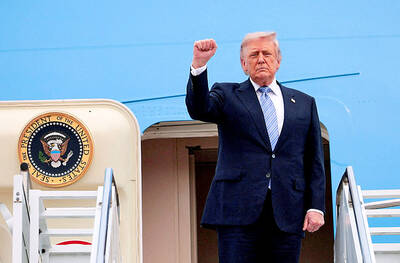
US-CHINA SUMMIT: MOFA welcomed US reassurance of no change in its Taiwan policy; Trump said he did not comment when Xi talked of opposing independence US President Donald Trump yesterday said he has not made a decision on whether to move forward with a major arms package for Taiwan after hearing concerns about it from Chinese President Xi Jinping (習近平). Trump’s comments on Taiwan came as he flew back to Washington after wrapping up critical talks in which both leaders said important progress was made in stabilizing US-China relations even as deep differences persist between the world’s two biggest powers on Iran and Taiwan. “I will make a determination,” Trump said, adding: “I’ll be making decisions. But, you know, I think the last thing we need right
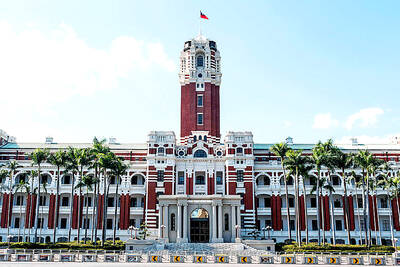
SECURITY: Taipei presses the US for arms supplies, saying the arms sales are not only a reflection of the US security commitment to Taiwan but also serve as a mutual deterrent against regional threats Taiwan is committed to preserving the cross-strait “status quo” and contributing to regional peace and stability, the Presidential Office said yesterday. “It is an undeniable fact that the Republic of China is a sovereign and independent democratic nation,” Presidential Office spokeswoman Karen Kuo (郭雅慧) reiterated, adding that Beijing has no right to claim sovereignty over Taiwan. The statements came after US President Donald Trump warned against Taiwanese independence. Trump wrapped up a state visit to Beijing on Friday, during which Chinese President Xi Jinping (習近平) had pressed him not to support Taiwan. Taiwan depends heavily on US security backing to deter China from carrying
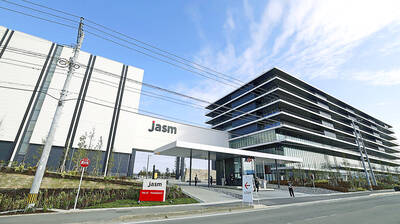
The subsidiary of Taiwan Semiconductor Manufacturing Co (TSMC, 台積電) in Kumamoto, Japan, turned a profit in the first quarter of this year, marking the first time the first fab of the unit has become profitable since mass production started at the end of 2024. According to the contract chipmaker’s financial statement released on Friday, Japan Advanced Semiconductor Manufacturing Inc (JASM), a joint venture running the fab in Kumamoto, posted NT$951 million (US$30.19 million) in profit in the January-to-March period, compared with a loss of NT$1.39 billion in the previous quarter, and a loss of NT$3.25 billion in the first quarter of
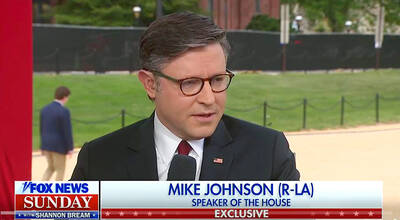
RESOLUTE BACKING: Two Republican senators are planning to introduce legislation that would impose immediate sanctions on China if it attempts to invade Taiwan US House of Representatives Speaker Mike Johnson on Sunday reaffirmed US congressional support for Taiwan, saying the US and “all freedom-loving people” have a stake in preventing China from seizing Taiwan by force. Johnson made the remarks in an interview with Fox News Sunday on US President Donald Trump’s summit with Chinese President Xi Jinping (習近平) last week. In an interview that aired on Friday on Fox News, just as Trump wrapped up a high-stakes visit to China, he said he has yet to green-light a new US$14 billion arms package to Taiwan and that it “depends on China.” “It’s a very good


 RSS
RSS