


President Chen Shui-bian (
"I will pay a visit to all opposition party leaders after the Dec. 11 elections and consult with them on various matters, such as constitutional reforms," Chen said at a campaign stop last night in Tao-yuan County, which is known for its large numbers of Hakka residents.
To mend the conflict between the central and local governments, Chen said that he would take the initiative to invite all local offi-cials, included those of the pan-blue camp, to the Presidential Office for tea after next Saturday's elections.
Chen reiterated his determination to push for a constitutional reform, to hold a referendum on a new constitution in 2006 and to have the new constitution implemented in 2008.
Winning a pan-green majority in the next legislature would boost the chances of reopening cross-strait negotiations, Chen said.
He said this would provide an opportunity for the two sides to seek and adopt concrete measures to reduce tensions across the Taiwan Strait, such as the establishment of code of conduct across the Strait and a military buffer zone to separate both sides' military activities.
Democratic reforms and economic development will also be among the task he will work with the new legislature to achieve, he said.
Telling the crowd that he knew not all the DPP supporters in Taoyuan County had been planning to support the party's candidates there, Chen urged voters to transform their moral support into action to ensure that all seven DPP candidates in the county are elected.
Among the other political heavyweights who took the stage last night to root for the seven DPP candidates were Vice President Annette Lu (
In other developments, the DPP announced earlier yesterday that the president will join the pan-green camp's parade in Taipei tomorrow in spite of the approach of Typhoon Nanmadol, which is expected to bring torrential rains over the next few days
DPP Deputy Secretary-General Lee Ying-yuan (
An estimated 100,000 supporters living in the north and center of the country are expected to join the parade, which will begin from Taipei's old Sungshan Tobacco Factory.
The DPP's four campaign man-agers -- party Secretary-General Chang Chun-hsiung (
Lu be at the starting point to announce the start of the parade, Lee said, and Chen will join the marchers before they arrive at Ketagalan Boulevard in front of the Presidential Office.
More marchers will be seen on Taipei streets on Sunday as pro-independence groups and the Taiwan Solidarity Union (TSU) are scheduled to hold a parade to promote the campaign for a new constitution and to rectify the country's official name.
The Chinese Nationalist Party (KMT) has also organized a large-scale march in Taipei on Sunday to boost is legislative campaign.
PROVOCATIVE: Chinese Deputy Ambassador to the UN Sun Lei accused Japan of sending military vessels to deliberately provoke tensions in the Taiwan Strait China denounced remarks by Japan and the EU about the South China Sea at a UN Security Council meeting on Monday, and accused Tokyo of provocative behavior in the Taiwan Strait and planning military expansion. Ayano Kunimitsu, a Japanese vice foreign minister, told the Council meeting on maritime security that Tokyo was seriously concerned about the situation in the East China and South China seas, and reiterated Japan’s opposition to any attempt to change the “status quo” by force, and obstruction of freedom of navigation and overflight. Stavros Lambrinidis, head of the EU delegation to the UN, also highlighted South China Sea
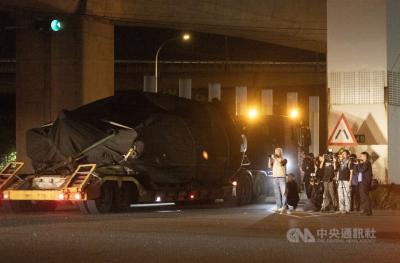
The final batch of 28 M1A2T Abrams tanks purchased from the US arrived at Taipei Port last night and were transported to the Armor Training Command in Hsinchu County’s Hukou Township (湖口), completing the military’s multi-year procurement of 108 of the tanks. Starting at 12:10am today, reporters observed more than a dozen civilian flatbed trailers departing from Taipei Port, each carrying an M1A2T tank covered with black waterproof tarps. Escorted by military vehicles, the convoy traveled via the West Coast Expressway to the Armor Training Command, with police implementing traffic control. The army operates about 1,000 tanks, including CM-11 Brave Tiger
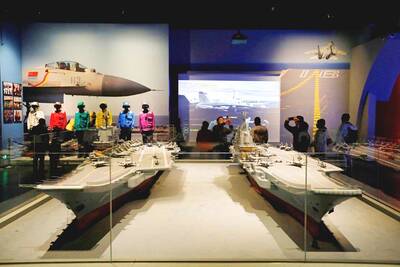
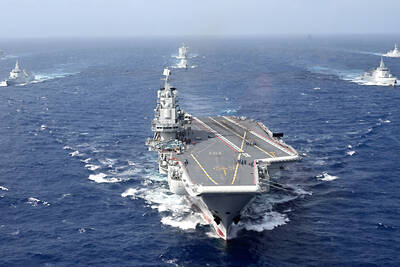
China on Wednesday teased in a video an aircraft carrier that could be its fourth, and the first using nuclear power, while making an allusion to Taiwan and vowing to further build up its islands, as it looks to boost maritime power, secure resources and bolster territorial claims. The video, issued on the eve of the 77th founding anniversary of the Chinese People’s Liberation Army Navy, featured fictional officers with names that are homophones of three commissioned aircraft carriers, the Liaoning (遼寧), Shandong (山東) and Fujian (福建). Titled Into the Deep, it showed a 19-year-old named “Hejian” (何劍) joining the group, sparking
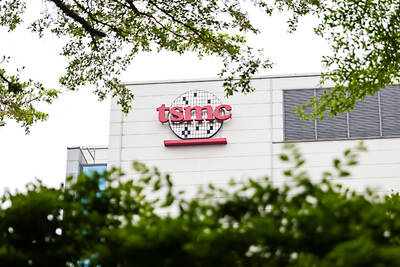
Taiwan Semiconductor Manufacturing Co (TSMC, 台積電), the world’s largest contract chipmaker, said it expects its 2-nanometer (2nm) chip capacity to grow at a compound annual rate of 70 percent from this year to 2028. The projection comes as five fabs begin volume production of 2-nanometer chips this year — two in Hsinchu and three in Kaohsiung — TSMC senior vice president and deputy cochief operating officer Cliff Hou (侯永清) said at the company’s annual technology symposium in Silicon Valley, California, last week. Output in the first year of 2-nanometer production, which began in the fourth quarter of last year, is expected to


 RSS
RSS