

Police said yesterday that DNA analysis linked a 26-year old ex-marine to the notorious "rice bomber" explosions and the suspect had admitted to 17 incidents.
Officials said the analysis confirmed that Changhua native Yang Ju-man (楊儒門) was the man that police have been trying to find for several months.
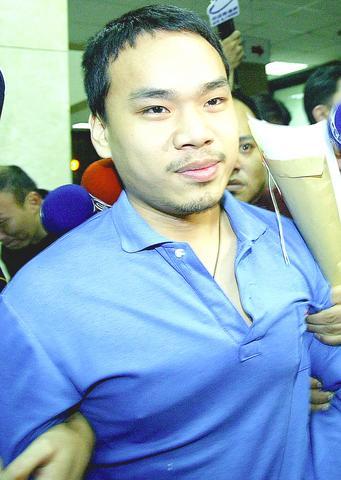
PHOTO: WANG YI-SUNG, TAIPEI TIMES
But they say they are still trying to figure out all the details before they can officially announce that the "rice bomber" case is closed, because Yang, a chicken vendor in Keelung, might not be the only person involved.
"Forensic scientists discovered that the bombs used in the 17 cases were not exactly alike and could have been produced by different people. We have to be careful with this," said Criminal Investigation Bureau Commissioner Hou You-yi (侯友宜).
According to the police, the break in the "rice bomber" mystery began at 7:30pm Thursday, when the duty officer at the Chungcheng First Precinct tried to stop a man who was trying to illegally park his compact pickup in front of the precinct station.
The man then walked into the precinct and told the duty officer that he knew who "rice bomber" was and wanted the NT$500,000 reward police had put up.
The man was later identified as Yang Ju-tsai (楊儒才), Yang Ju-man's younger brother.
Yang Ju-tsai told the police that he had seen the picture of the "rice bomber" released by the police on Thursday and thought that it was his brother. So he decided to go to the police and apply for the reward.
When police officers were set to leave the precinct with Yang Ju-tsai to go and search for Yang Ju-man, they discovered the suspect standing in front of the precinct door. He was reportedly wearing the same clothes as the man in the picture, which had been taken by a security camera on Zhongshan S. Rd.
Police said that Yang Ju-man refused to be interrogated Thursday night so he wasn't questioned until yesterday morning. The interrogation was conducted at the Taipei City Police Department's Criminal Investigation Division (CID) and lasted for more than 12 hours.
Officials said Yang Ju-man admitted to 17 bomb incidents before the police decided to transfer him to the Taipei District Prosecutors' Office for further questioning. He was transferred around 5:30pm and the interrogation was still underway as of press time last night.
Meanwhile, Taipei Prosecutor Cheng Ker-sheng (鄭克盛) led a team of police officers on a raid of the Yang brothers' residence in Keelung yesterday. Officials said a timer had been found in the home, along with drafts of the letters that the "rice bomber" had written to the police and the media.
According to the police, Yang Ju-man completed his term of military service with the marines' Amphibious Reconnaissance and Patrol Unit (ARPU). The unit's members daily physical training includes a 10km-swim with fully-loaded weapons and 30km-run. Every member is trained in judo and taekwondo, as well as special combat skills such as demolition, scuba diving and parachuting. Team members must gain a basic knowledge of maneuvering different vehicles, aircraft and boats.
The police also discovered Yang Ju-man regularly donated NT$1,700 to World Vision Taiwan and the organization confirmed this.
"According to the contradictions in his behavior, I feel that he really hates the world," Hou said.
Meanwhile, police said it would up to the prosecutors to decide whether Yang Ju-tsai meets the criteria for receiving the reward offered in the "rice bomber" case.
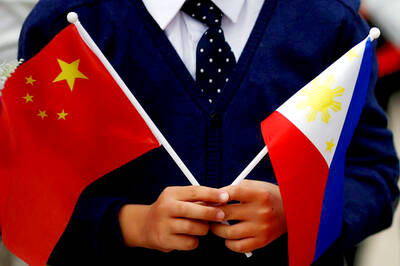
The Philippine Coast Guard yesterday said it has deployed its largest vessel and an aircraft to challenge a Chinese research ship operating off northern Batanes near Taiwan, adding that a Chinese coast guard vessel had also moved in. The Philippine operation “disrupted the vessel’s unauthorized marine scientific research and compelled it to leave its loitering position,” said Jay Tarriela, Philippine Coast Guard spokesperson on South China Sea issues. The Philippine Coast Guard said the BRP Teresa Magbanua and an aircraft were deployed to counter the Chinese vessel, which it said had remained about 37 nautical miles northwest of Itbayat Island since Monday. The
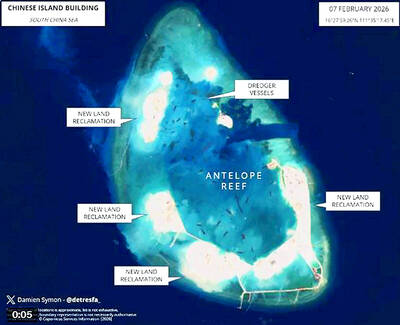
RUNWAY: Analysts said the first aircraft landing is expected by the middle of next year, while Chinese state media said it would serve civilian needs Chinese construction of a runway on Antelope Reef (Lingyang Reef, 羚羊礁) in the Paracel Islands (Xisha Islands, 西沙群島), is well under way with analysts estimating it could be completed by the middle of next year, strengthening Beijing’s military control over the disputed South China Sea. Satellite images reviewed by Reuters show grading work, piles of gravel and concrete, and compaction cranes in operation to build a full-scale runway that military attaches and security analysts say could be one of China’s most important offshore bases in the region. The images, taken on Friday last week by commercial satellite imagery provider Vantor, also show

SHIFTING COOPERATION: With the new arrangement, US representatives would be able to participate directly in defense discussions, including weapons procurement Taiwan-US military cooperation is deepening, with the Pentagon expected to station personnel at the Ministry of National Defense (MND), sources said. The NT$470 million (US$14.77 million) joint program is scheduled to run from this year through 2028, under which the Pentagon would dispatch representatives from the Office of the Under Secretary of Defense for Policy and the Institute for Defense Analyses, a senior military official said on condition of anonymity, adding that one representative from each organization would be stationed at the ministry’s headquarters. The Office of the Under Secretary of Defense for Policy is one of the US’ bodies responsible for
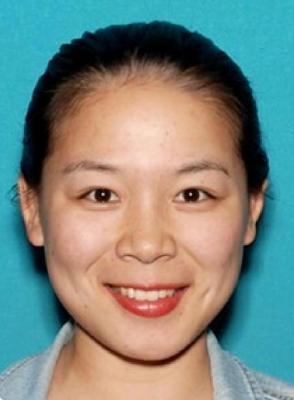
The Presidential Office today condemned China's transnational repression after an alleged Chinese foreign agent was arrested in California yesterday on suspicion of surveilling President William Lai's (賴清德) son, Lai Ting-yu (賴廷與), the FBI said. The 34-year-old woman, named Wanying Heather Zhang (張婉瑩), was arrested on suspicion of acting as an unregistered foreign agent, US news agency CBS reported. She was apprehended at Los Angeles International Airport yesterday attempting to fly to Shanghai, it said. This represents a “typical case” of China’s transnational repression, Presidential Office spokeswoman Karen Kuo (郭雅慧) said today. "Our country expresses the strongest condemnation of such barbaric conduct that


 RSS
RSS