


China said yesterday it firmly opposed a US move to slap new import quotas on Chinese clothing and hinted it could take the issue up with the WTO.
"The Chinese government expresses deep regret and firmly opposes this decision," the Commerce Ministry said on its Web site.
Beijing reserved the right to protect its interests through the world trade body it joined in late 2001, it said. It did not elaborate.
The Bush administration said on Tuesday it would impose new import quotas on Chinese clothing, opening a new line of attack against Beijing's trade policies.
Fears Washington might be shifting toward more protectionist policies pushed the dollar to record lows against the euro overnight.
China's shares staged a moderate technical rebound yesterday morning, with the quotas having no immediate impact, brokers said.
US manufacturers have accused China of pumping up its trade surplus with the US -- over US$100 billion -- by keeping the yuan unfairly low, leading to job losses in US factories.
The Commerce Ministry made no mention of possible retaliation despite calls for action by local business groups.
Chinese businesses still trying to work out likely damage to their bottom line said the government should do something.
"I think we should react somehow and call on the government to do something," Shi Jianwei, executive vice president of the China Cotton Association, said.
"This will reduce our exports," said Shi, who is also director of China's Cotton and Jute Bureau.
Next year's presidential elections in the US appeared to be the main motivation behind Tuesday's announcement, he said.
Another association representing textile exporters, the China Chamber of Commerce for Import and Export of Textiles, said the move would "ruin the fundamental interest of Chinese textile exporters, as well as the American consumers and traders."
It did not give estimates for likely economic losses to China's textile industry, which it said employed more than 15 million people directly and over 100 million indirectly.
Highlighting China's growing imports from countries like the US to keep its economy booming, it said that, from January to September, imports of US fabric and textile raw materials and products had risen 148 percent over the previous year to US$787 million.

PROVOCATIVE: Chinese Deputy Ambassador to the UN Sun Lei accused Japan of sending military vessels to deliberately provoke tensions in the Taiwan Strait China denounced remarks by Japan and the EU about the South China Sea at a UN Security Council meeting on Monday, and accused Tokyo of provocative behavior in the Taiwan Strait and planning military expansion. Ayano Kunimitsu, a Japanese vice foreign minister, told the Council meeting on maritime security that Tokyo was seriously concerned about the situation in the East China and South China seas, and reiterated Japan’s opposition to any attempt to change the “status quo” by force, and obstruction of freedom of navigation and overflight. Stavros Lambrinidis, head of the EU delegation to the UN, also highlighted South China Sea

SILENCING CRITICS: In addition to blocking Taiwan, China aimed to prevent rights activists from speaking out against authoritarian states, a Cabinet department said The Ministry of Foreign Affairs (MOFA) yesterday condemned transnational repression by Beijing after RightsCon, a major digital human rights conference scheduled to be held in Zambia this week, was abruptly canceled due to Chinese pressure over Taiwanese participation. This year’s RightsCon, the world’s largest conference discussing issues “at the intersection of human rights and technology,” was scheduled to take place from tomorrow to Friday in Lusaka, and expected to draw 2,600 in-person attendees from 150 countries, along with 1,100 online participants. However, organizers were forced to cancel the event due to behind-the-scenes pressure from China, the ministry said, expressing its “strongest condemnation”
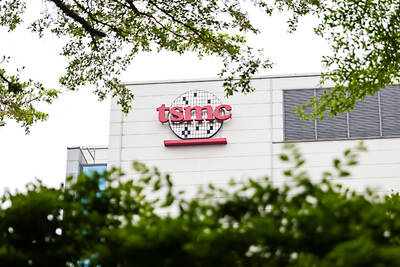
Taiwan Semiconductor Manufacturing Co (TSMC, 台積電), the world’s largest contract chipmaker, said it expects its 2-nanometer (2nm) chip capacity to grow at a compound annual rate of 70 percent from this year to 2028. The projection comes as five fabs begin volume production of 2-nanometer chips this year — two in Hsinchu and three in Kaohsiung — TSMC senior vice president and deputy cochief operating officer Cliff Hou (侯永清) said at the company’s annual technology symposium in Silicon Valley, California, last week. Output in the first year of 2-nanometer production, which began in the fourth quarter of last year, is expected to
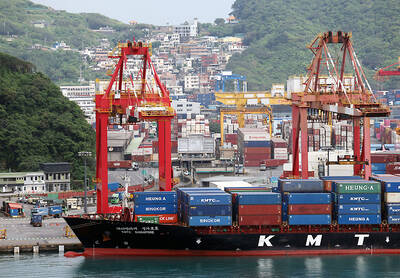
Taiwan’s economy grew far faster than expected in the first quarter, as booming demand for artificial intelligence (AI) applications drove a surge in exports, spilling over into investment and consumption, the Directorate-General of Budget, Accounting and Statistics (DGBAS) said yesterday. GDP growth was 13.69 percent year-on-year during the January-to-March period, beating the DGBAS’ February forecast by 2.23 percentage points and marking the most robust growth in nearly four decades, DGBAS senior official Chiang Hsin-yi (江心怡) told a news conference in Taipei. The result was powered by exports, which remain the backbone of Taiwan’s economy, Chiang said. Outbound shipments jumped 51.12 percent year-on-year to


 RSS
RSS