


Susceptibility to SARS could be related to genetics, a hematologist at Mackay Memorial Hospital said yesterday.
Dr. Marie Lin (林媽利), of Mackay's Transfusion Medicine Laboratory, said no theories expounded during the height of the SARS outbreaks could explain why some people did not contract the illness even though they had close contact with SARS patients, while others fell victim to the epidemic easily with only short and vaguely defined encounters with patients.
Doctors have had little idea of why some people only developed slight flu-like symptoms after being infected by SARS while others died, Lin said at a press conference to make public her findings about the relationship between SARS and human genes.
Lin said that after comparing hundreds of blood samples from SARS patients, she and her team found that people with the human leucocype antigen (HLA)-B46 gene are most likely to fall victim to SARS, while people with the HLA-B13 gene are relatively immune to the SARS virus.
Lin said that about 10 percent of Taiwan's population have the HLA-B46 gene. These people share the gene with "southern Asians," including people from China's southern coastal provinces of Guangdong and Fujian, Hong Kong, Singapore and part of Vietnam, where people have maintained close genetic connections over the past 400 years, she added.
She said many SARS patients were relatives or members of the same families, indicating that blood relations might have been one of the factors causing the transmission of the disease.
Meanwhile, she continued, none of Taiwan's Aboriginal people fell victim to SARS.
Aborigines were unaffected by SARS because this group of people have genetic make-ups totally different from those of the "southern Asians" and do not have the SARS-prone HLA-B46 gene, Lin said.
She said that although some Canadian nationals were hit by SARS, a great majority of them were of Chinese descent, originating from Hong Kong or southern China.
Explaining why many people in Beijing contracted SARS, Lin attributed this development to demographic changes in the capital city as a result of the Cultural Revolution, during which the entire Chinese population experienced forced immigration, and the fact that many residents of southern China have migrated to Beijing for business or education purposes in recent years.
Lin said the purpose of her laboratory's blood research is mainly to find an effective method of SARS prevention before the disease can make a reappearance this winter.
If necessary, medical care workers can contact the Mackay Transfusion Medicine Lab for test doses that can screen blood to find out who has the HLA-B46 gene so that they can take precautions to avoid being infected, she added.

CROSS-STRAIT COLLABORATION: The new KMT chairwoman expressed interest in meeting the Chinese president from the start, but she’ll have to pay to get in Beijing allegedly agreed to let Chinese Nationalist Party (KMT) Chairwoman Cheng Li-wun (鄭麗文) meet with Chinese President Xi Jinping (習近平) around the Lunar New Year holiday next year on three conditions, including that the KMT block Taiwan’s arms purchases, a source said yesterday. Cheng has expressed interest in meeting Xi since she won the KMT’s chairmanship election in October. A source, speaking on condition of anonymity, said a consensus on a meeting was allegedly reached after two KMT vice chairmen visited China’s Taiwan Affairs Office Director Song Tao (宋濤) in China last month. Beijing allegedly gave the KMT three conditions it had to

‘BALANCE OF POWER’: Hegseth said that the US did not want to ‘strangle’ China, but to ensure that none of Washington’s allies would be vulnerable to military aggression Washington has no intention of changing the “status quo” in the Taiwan Strait, US Secretary of Defense Pete Hegseth said on Saturday, adding that one of the US military’s main priorities is to deter China “through strength, not through confrontation.” Speaking at the annual Reagan National Defense Forum in Simi Valley, California, Hegseth outlined the US Department of Defense’s priorities under US President Donald Trump. “First, defending the US homeland and our hemisphere. Second, deterring China through strength, not confrontation. Third, increased burden sharing for us, allies and partners. And fourth, supercharging the US defense industrial base,” he said. US-China relations under
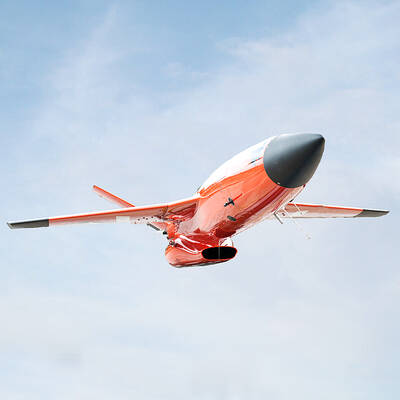
The Chien Feng IV (勁蜂, Mighty Hornet) loitering munition is on track to enter flight tests next month in connection with potential adoption by Taiwanese and US armed forces, a government source said yesterday. The kamikaze drone, which boasts a range of 1,000km, debuted at the Taipei Aerospace and Defense Technology Exhibition in September, the official said on condition of anonymity. The Chungshan Institute of Science and Technology and US-based Kratos Defense jointly developed the platform by leveraging the engine and airframe of the latter’s MQM-178 Firejet target drone, they said. The uncrewed aerial vehicle is designed to utilize an artificial intelligence computer

The Chinese Nationalist Party (KMT) caucus yesterday decided to shelve proposed legislation that would give elected officials full control over their stipends, saying it would wait for a consensus to be reached before acting. KMT Legislator Chen Yu-jen (陳玉珍) last week proposed amendments to the Organic Act of the Legislative Yuan (立法院組織法) and the Regulations on Allowances for Elected Representatives and Subsidies for Village Chiefs (地方民意代表費用支給及村里長事務補助費補助條例), which would give legislators and councilors the freedom to use their allowances without providing invoices for reimbursement. The proposal immediately drew criticism, amid reports that several legislators face possible charges of embezzling fees intended to pay


 RSS
RSS