


Search teams brought back the first dead yesterday from a capsized ferry with hundreds of victims believed trapped aboard, and rushed to retrieve the rest before the vessel sank into the Atlantic Ocean.
More than 760 passengers and crew are believed to have perished when the crowded MS Joola, a state-run Senegalese ferry, heaved to its side shortly before midnight Thursday in a fierce gale. Only 32 people are known to have escaped, clinging to the vessel for two hours before fishing boats rescued them.
"It was horrible, because we were hearing people screaming from underneath," said one survivor, Senegalese Moussa Ndong, speaking from his hospital ward.
"The boat went down so fast. It was so unbelievable -- in just three minutes, the boat went down," he said.
Search boats returned to the port in Senegal's capital, Dakar, with 37 bodies. Three boats left port after sunrise to join the retrieval effort off the former English colony of Gambia, a thin strip of a nation that divides north and south Senegal.
The majority of the first 37 brought back to port were believed Senegalese, with two Europeans -- their country of origin not known -- among them, military police commandant Matar Kane said Saturday at Dakar's main naval base.
Grim-faced crowds waited by the hundreds outside the base's closed gates Saturday. As the sun rose, glare and heat beat down on them as they waited for news of their loved ones.
"Tell us whether she's alive," one sobbing woman -- seeking news of her daughter -- shouted Friday, when frantic and increasingly angry crowds sought an accounting of the names of the dead. "Can we please know whether she's alive?"
Families also demanded an accounting of the cause. Media reports said the Joola, carrying 796, was designed to bear fewer than 600.
The ferry had recently returned into service after long repair, and some witnesses claimed it already had been listing heavily on one side when it headed out Thursday from the southern Senegalese region of Casamance, bound for Dakar.
Senegal President Abdoulaye Wade, cutting short a trip to Paris at news of the disaster, pledged an investigation.
Many of those aboard were traders, carrying dried fish, mangos, and other items from Casamance for sale in the capital.
Ferries are the main way of transportation between north and south Senegal, in part because travel by road is slowed by border checks passing through Gambia.
Sporadic attacks by separatists seeking independence for Casa-mance also make many view the roads as unsafe.
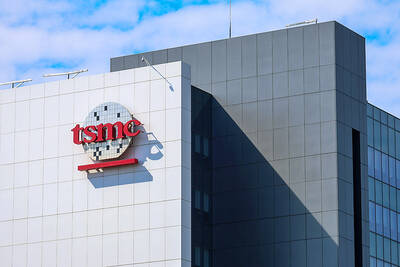
Taiwan Semiconductor Manufacturing Co (TSMC, 台積電), the world’s largest foundry service provider, yesterday said that global semiconductor revenue is projected to hit US$1.5 trillion in 2030, after the figure exceeds US$1 trillion this year, as artificial intelligence (AI) demand boosts consumption of token and compute power. “We are still at the beginning of the AI revolution, but we already see a significant impact across the whole semiconductor ecosystem,” TSMC deputy cochief operating officer Kevin Zhang (張曉強) said at the company’s annual technology symposium in Hsinchu City. “It is fair to say that in the past decade, smartphones and other mobile devices were
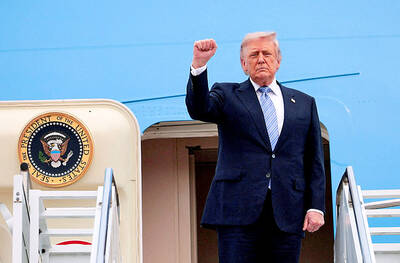
US-CHINA SUMMIT: MOFA welcomed US reassurance of no change in its Taiwan policy; Trump said he did not comment when Xi talked of opposing independence US President Donald Trump yesterday said he has not made a decision on whether to move forward with a major arms package for Taiwan after hearing concerns about it from Chinese President Xi Jinping (習近平). Trump’s comments on Taiwan came as he flew back to Washington after wrapping up critical talks in which both leaders said important progress was made in stabilizing US-China relations even as deep differences persist between the world’s two biggest powers on Iran and Taiwan. “I will make a determination,” Trump said, adding: “I’ll be making decisions. But, you know, I think the last thing we need right

TAIWAN ISSUE: US treasury secretary Scott Bessent said on the first day of meetings that ‘it wouldn’t be a US-China summit without the Taiwan issue coming up’ There were no surprises on the first day of the summit between US President Donald Trump and Chinese President Xi Jinping (習近平), the Mainland Affairs Council (MAC) said yesterday, as the government reiterated that cross-strait stability is crucial to the Asia-Pacific region, as well as the world. As the two presidents met for a highly anticipated summit yesterday, Chinese state media reported that Xi warned Trump that missteps regarding Taiwan could push their two countries into “conflict.” Trump arrived in China with accolades for his host, calling Xi a “great leader” and “friend,” and extending an invitation to visit the White House
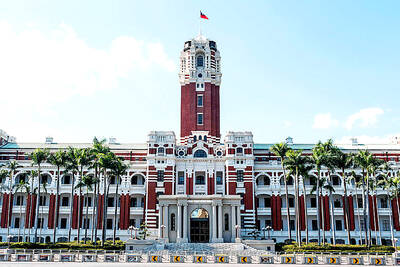
SECURITY: Taipei presses the US for arms supplies, saying the arms sales are not only a reflection of the US security commitment to Taiwan but also serve as a mutual deterrent against regional threats Taiwan is committed to preserving the cross-strait “status quo” and contributing to regional peace and stability, the Presidential Office said yesterday. “It is an undeniable fact that the Republic of China is a sovereign and independent democratic nation,” Presidential Office spokeswoman Karen Kuo (郭雅慧) reiterated, adding that Beijing has no right to claim sovereignty over Taiwan. The statements came after US President Donald Trump warned against Taiwanese independence. Trump wrapped up a state visit to Beijing on Friday, during which Chinese President Xi Jinping (習近平) had pressed him not to support Taiwan. Taiwan depends heavily on US security backing to deter China from carrying


 RSS
RSS