


Oct. 28 to Nov. 4
Naosuke Tomita was a retired major general when he left Japan; by the time he arrived in Taiwan on Nov. 1, 1949, he was known as Pai Hung-liang (白鴻亮). His companion, captain Kunimitsu Aratake, also assumed a new identity as Lin Kuang (林光).
Chinese Nationalist Party (KMT) leader Chiang Kai-shek (蔣介石), who had been staying in Taipei’s Yangmingshan since June, met with Tomita on Nov. 3, according to a single-sentence entry in his diary. They met again on Nov. 13, where they “drank tea and chatted freely.”
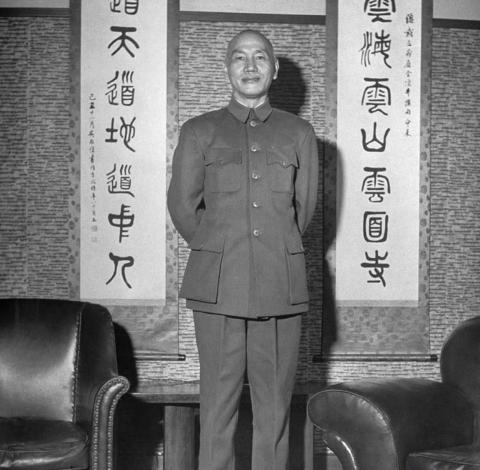
Photo courtesy of Wikimedia Commons
This was the tail end of the Chinese Civil War, and Chiang headed back to China for one last time on Nov. 14. Tomita and Aratake followed him a few days later, and were assigned to the frontlines in western China.
Tomita would become the leader of what would be known as the White Group (白團), a clandestine team of Japanese military advisers to the KMT. After the war, he remained in Taiwan even after the White Group disbanded in 1969, dying on vacation in Tokyo in 1979. Half of his ashes were kept in Japan, with the other half being stored upon his request at Haiming Temple (海明寺) in New Taipei City’s Shulin District (樹林).
CHIANG’S MOTIVES
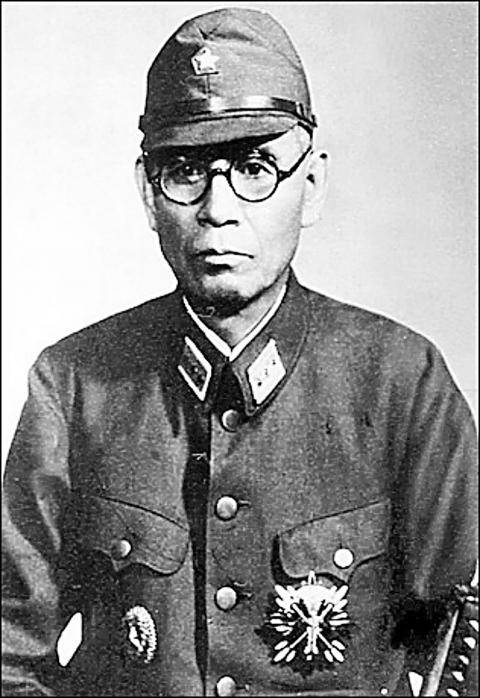
Photo courtesy of Wikimedia Commons
Aside from the Communists, the Japanese were probably Chiang’s most hated enemies, as the two sides fought for eight years in China. So it seems unusual that Chiang would ask for their help after the war, especially when the KMT actively tried to root out all Japanese influence among the Taiwanese, who they described as “deeply poisoned” by foreign imperialism.
The common explanation is that the Japanese soldiers wanted to repay Chiang for his kindness toward Japan, as he did not ask for war reparations and allowed Japanese civilians and soldiers to leave China and Taiwan peacefully.
“But when you really start digging, you start wondering, were these people really operating under such pure and naive motives and principles?” writes Tsuyoshi Nojima in the introduction to his book, The Last Imperial Soldiers: Chiang Kai-shek and the White Group (最後的帝國軍人:蔣介石與白團).
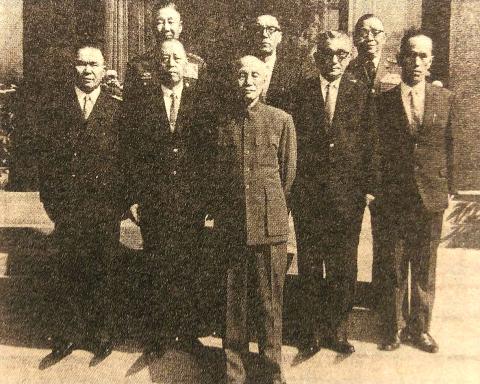
Photo courtesy of Wikimedia Commons
In fact, Chiang’s connection with Japan goes beyond his conflict with them, as he attended military school in Tokyo and served in the Imperial Japanese Army from 1909 to 1911 before returning to China to help overthrow the Qing Dynasty.
Nojima writes that Chiang was impressed by the Japanese army’s rigorous and spartan training, which played a key role in the establishment of the White Group. The Chinese army was weak in comparison, and he believed that military education was one of the main differences.
This belief persisted even after the Japanese defeat.
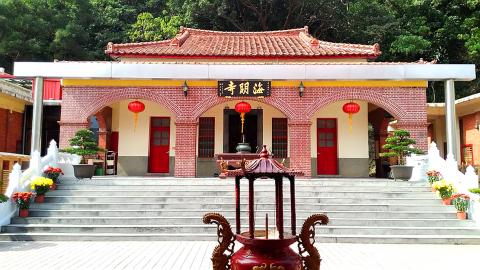
Photo courtesy of Wikimedia Commons
“Politically, Japan was the KMT’s former enemy, and anti-Japanese sentiments were still high among the Chinese,” Nojima writes. “Chiang could not act openly, but as the situation worsened for the KMT [against the Communists], survival was a priority. Thus, asking the Japanese for military assistance after he retreated to Taiwan was his secret plan out of all his secret plans.”
UNITED AGAINST THE RED DEVILS
Despite commanding the China Expeditionary Army during the Japanese invasion of China and being responsible for countless atrocities, General Yasuji Okamura was found not guilty by the Shanghai War Crimes Tribunal after World War II. Instead, Chiang recruited him as a military adviser.
The day after Japanese surrender, Okamura pondered the future of East Asia in his diary, writing: “Right now, the only hope is for China to be strong and prosperous. For Japan, the losers, all we can do is provide technical help and share our experience.”
Among the KMT officers sent to discuss the Japanese surrender ceremony with Okamura was Tsao Shih-cheng (曹士澂), who would later become the White Group’s contact person in Taiwan. Nojima postulates that the idea of “working with Japanese soldiers to fight the communists” was likely sown during this time.
Tsao’s role was kept top secret until he handed his personal account of the White Group formation to historian Chen Peng-jen (陳鵬仁), who passed it on to Nojima. Tsao headed to Japan in April 1949 nominally to work at the Republic of China Embassy. But he had a secret mission to work with the Japanese military to find ways the KMT could turn the tide against the Communists.
Tsao’s first idea was to recruit Japanese soldiers into a “International Anti-Communist United Army,” but he scrapped the plan in fear of angering the US. Instead, he suggested forming a military consultant group, which Chiang approved in July 1949.
On Sept. 10, 1949, the two sides signed the cooperation agreement with the goal of “defeating the Red Devils,” with Tsao as the KMT representative and Tomita as his counterpart. Okamura signed his name as the guarantor. To avoid detection, the words “military” and location of service were blotted out in the contract. The members were offered a lucrative salary with additional money provided to their families.
Tomita, who was hailed as a military genius during his cadet years and fought in southern China during the war, was appointed leader of the group. He shaved off his mustache — considered a uniquely Japanese feature — and adopted the surname Pai (白), which means “white,” to contrast with their “red” enemies. This also gave rise to the group’s name.
Tomita and Aratake surveyed the KMT troops at the frontlines and submitted a report to the KMT top brass in Chongqing, who highly valued their opinion and engaged them in many discussions. However, the exercise was futile. They were ordered to fly to Taiwan on Nov. 28, 1949, and Chongqing fell two days later. On Dec. 10, Chiang also fled to Taiwan, never to set foot in China again.
The rest of the White Group had arrived in Taiwan just a few days before Chiang, beginning their work immediately.
Taiwan in Time, a column about Taiwan’s history that is published every Sunday, spotlights important or interesting events around the nation that have anniversaries this week.

The race for New Taipei City mayor is being keenly watched, and now with the nomination of former deputy mayor of Taipei Hammer Lee (李四川) as the Chinese Nationalist Party’s (KMT) candidate, the battle lines are drawn. All polling data on the tight race mentioned in this column is from the March 12 Formosa poll. On Christmas Day 2010, Taipei County merged into one mega-metropolis of four million people, making it the nation’s largest city. The same day, the winner of the mayoral race, Eric Chu (朱立倫) of the Chinese Nationalist Party (KMT), took office and insisted on the current
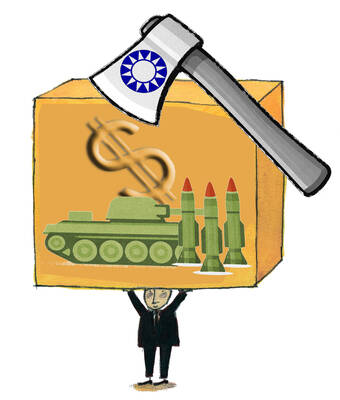
Last week the government announced that by year’s end Taiwan will have the highest density of anti-ship missiles in the world. Its inventory could exceed 1,400, or enough for the opening two hours of an invasion from the People’s Republic of China (PRC). Snark aside, it sounds impressive. But an important piece is missing. Lost in all the “dialogues” and “debates” and “discussions” whose sole purpose is simply to dawdle and delay is what the Chinese Nationalist Party (KMT) alternative special defense budget proposal means for the defense of Taiwan. It is a betrayal of both Taiwan and the US. IT’S
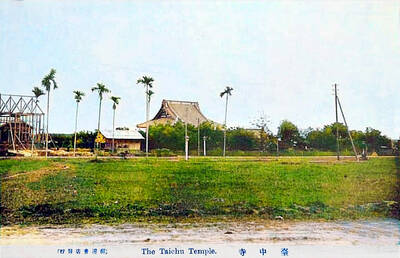
March 16 to March 22 Hidden for decades behind junk-filled metal shacks, trees and overgrowth, a small domed structure bearing a Buddhist swastika resurfaced last June in a Taichung alley. It was soon identified as a remnant of the 122-year-old Gokokuzan Taichuu-ji (Taichung Temple, 護國山台中寺), which was thought to have been demolished in the 1980s. In addition, a stone stele dedicated to monk Hoshu Ono, who served as abbot from 1914 to 1930, was discovered in the detritus. The temple was established in 1903 as the local center for the Soto school

Paul Thomas Anderson’s “One Battle After Another” was crowned best picture at the 98th Academy Awards, handing Hollywood’s top honor to a comic, multi-generational American saga of political resistance. The ceremony Sunday, which also saw Michael B. Jordan win best actor and “Sinners” cinematographer Autumn Durald Arkapaw make Oscar history as the first female director of photography to win the award, was a long-in-coming coronation for Anderson, a San Fernando Valley native who made his first short at age 18 and has been one of America’s most lionized filmmakers for decades. Before Sunday, Anderson had never won an Oscar. But “One Battle


 RSS
RSS