


Last year was one in which drinkers around the world broadened their palates and outlooks, and tired old certainties were cast aside in favor of exploration and reconsideration. This year looks set to be even better. Here are three trends that I predict will shape what we will drink over the course of 2018.
HAPPY HOUR GETS HAPPIER
Last year, Australian expat bartender Sam Ross threw a large batch of his Penicillin cocktail — possibly the most successful modern classic cocktail to emerge since the Cosmopolitan — into a slushie machine to create the “Penichillin” for his bar, Diamond Reef. No moment could better exemplify the recent turn towards fun in the drinks world — a very serious drink, born in the fussy, genteel and rule-loving bar Milk and Honey, had suddenly been reborn as a party animal, ready to be dispensed with the flick of a plastic tap.
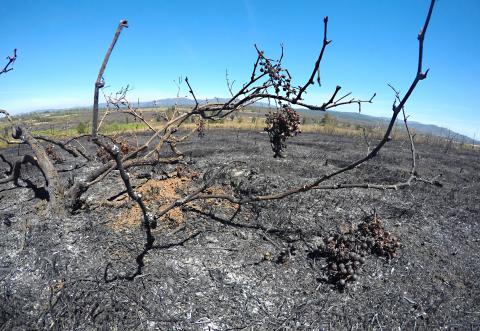
Photo: Reuters
One of the easiest ways to signal your bar’s fun-loving nature is to offer a series of goofy disco drinks rehabilitated with craft cocktail techniques. Already a number of high-profile bartenders have set out to revive drinks such as the grasshopper, the amaretto sour, the pina colada and the stinger by rejigging proportions and focusing on quality ingredients. My money’s on the Japanese slipper and the Long Island iced tea to be next. Similarly, once-derided ingredients will likely have a moment in the sun this year: Jagermeister, Goldschlager, Southern Comfort (especially now it is once again made with whiskey) and even creme de menthe will stage modest comebacks.
If you want to take a little slice of drinking fun and bring it home, consider whipping up a planter’s punch (a cocktail I had high hopes for in last year’s drinks predictions).
CLIMATE CHANGES THE WINE MAP
No image from last year underscores the threat of climate change to good drinking more than the wildfires that devastated California’s wine country. Wine is, of course, an agricultural product first and foremost — to make wine, grapes have to be grown, and some parts of the world are better suited to that than others. But the planet’s changing climate is rapidly redrawing the map of what grows well where, with troubling consequences for wine lovers.
There is a very small silver lining to climate change, at least as far as wines are concerned: it opens up new areas to grape growing. The recent surge of interest in English sparkling wine has been driven by rapidly growing quality — and climate change has had a role to play there by bringing warmer weather and increased ripeness and yields.
Similarly, grapes are now being grown as far north as Sweden, and things are looking pretty rosy in the immediate future for places such as Nova Scotia .
Wine lovers can’t become complacent, though. While winemakers are looking to technological and scientific advances to help mitigate the negative effects of increased ripeness levels in their wines, as well as planting grape varieties that better suit hotter and drier growing regions, a crisis still looms. Climate change wreaks havoc on established weather patterns, bringing rain and cold at unexpected times and heat and drought at others. This is disastrous for grapes, which means there’s no happy ending for wine in a warming world.
NEED FOR SPEED
The days of having to wait 12 minutes for a meticulously prepared cocktail made by a dude in suspenders and a waxed mustache are, mercifully, over. We can chalk this one up to the continuing success of the craft cocktail movement — where once a certain amount of nerdy rigamarole behind the bar was required to justify the comparatively steep price of mixed drinks made with care and attention, now bar-goers are aware it’s perfectly possible to get a great drink within a few moments of ordering it and are willing to pay for the privilege.
We can therefore expect to see more drinks that have been extensively prepared before the customer arrives — whether through interesting techniques such as milk-washing a punch to clarify it, or through the more mundane practice of pre-mixing the non-volatile components of a cocktail. This will hopefully have the added benefit of allowing bartenders to focus less on nailing their eighth-ounce pours and more on the guest’s experience.
This can translate to home cocktails too. If you like a stirred cocktail, such as a Manhattan or martini, but find it a little onerous to prepare from scratch whenever the mood strikes, consider batching it up in advance and keeping it in the freezer. I’ve used the perpetually fashionable Negroni, but you can use any stirred cocktail: simply scale up the recipe and add a quarter of the drink’s volume in water.

Jason Han says that the e-arrival card spat between South Korea and Taiwan shows that Seoul is signaling adherence to its “one-China” policy, while Taiwan’s response reflects a reciprocal approach. “Attempts to alter the diplomatic status quo often lead to tit-for-tat responses,” the analyst on international affairs tells the Taipei Times, adding that Taiwan may become more cautious in its dealings with South Korea going forward. Taipei has called on Seoul to correct its electronic entry system, which currently lists Taiwan as “China (Taiwan),” warning that reciprocal measures may follow if the wording is not changed before March 31. As of yesterday,

The Portuguese never established a presence on Taiwan, but they must have traded with the indigenous people because later traders reported that the locals referred to parts of deer using Portuguese words. What goods might the Portuguese have offered their indigenous trade partners? Among them must have been slaves, for the Portuguese dealt slaves across Asia. Though we often speak of “Portuguese” ships, imagining them as picturesque vessels manned by pointy-bearded Iberians, in Asia Portuguese shipping between local destinations was crewed by Asian seamen, with a handful of white or Eurasian officers. “Even the great carracks of 1,000-2,000 tons which plied
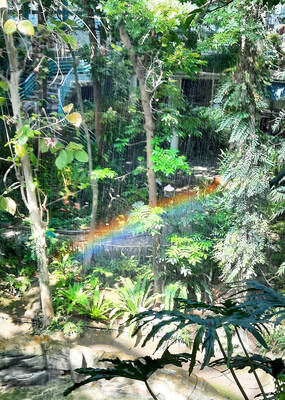
It’s only half the size of its more famous counterpart in Taipei, but the Botanical Garden of the National Museum of Nature Science (NMNS, 國立自然科學博物館植物園) is surely one of urban Taiwan’s most inviting green spaces. Covering 4.5 hectares immediately northeast of the government-run museum in Taichung’s North District (北區), the garden features more than 700 plant species, many of which are labeled in Chinese but not in English. Since its establishment in 1999, the site’s managers have done their best to replicate a number of native ecosystems, dividing the site into eight areas. The name of the Coral Atoll Zone might
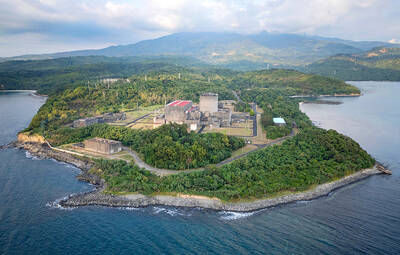
Nuclear power is getting a second look in Southeast Asia as countries prepare to meet surging energy demand as they vie for artificial intelligence-focused data centers. Several Southeast Asian nations are reviving mothballed nuclear plans and setting ambitious targets and nearly half of the region could, if they pursue those goals, have nuclear energy in the 2030s. Even countries without current plans have signaled their interest. Southeast Asia has never produced a single watt of nuclear energy, despite long-held atomic ambitions. But that may soon change as pressure mounts to reduce emissions that contribute to climate change, while meeting growing power needs. The


 RSS
RSS