


Japanese rice farmer Masatsugu Tanimoto doesn’t think of himself as a Christian, and you’d almost never find him in a church. But every so often, he and others meet to recite prayers drawn from another time and place.
The group, dressed in sober kimonos and sandals, rapidly make the sign of the cross as they sing a mish-mash of Portuguese, Latin and Japanese — evoking the memory of their ancestors, the so-called ‘hidden Christians’, who were brutally persecuted in the 17th century, when Shoguns ruled Japan.
Oscar-winning director Martin Scorsese is bringing their harrowing story to the big screen just before Christmas in his newest movie Silence, based on the 1966 novel by famed Japanese novelist Shusaku Endo.
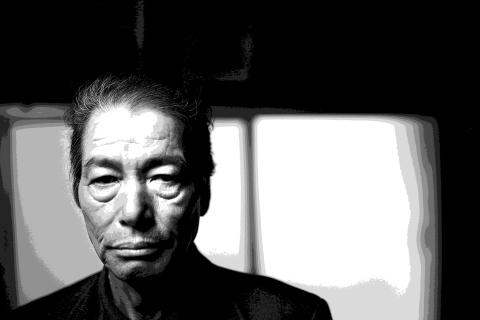
Photo: AFP
“If the film properly recounts the story of my ancestors, I’d gladly go see it,” Tanimoto told AFP after singing with several other descendants.
The group, from the town of Ikitsuki, near Nagasaki, meet at a local museum to conduct these rituals.
Despite their Christian roots, the multilingual prayers, known as orasho, are not meant to honor God or any Christian figure, the 60-year-old added.
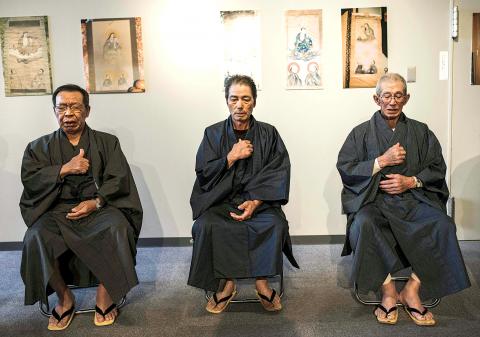
Photo:AFP
“We say ‘Mary’ several times but we’re not praying to her. We don’t refer to a specific god either, but rather to our ancestors,” he added.
The link to modern day Japan, where Christians make up less than one percent of the population, stretches back more than four centuries.
The first missionary, Jesuit Francis-Xavier arrived in Japan with two companions in 1549 and was followed by Portuguese missionaries who drew tens of thousands more Japanese to the faith. The priests were expelled in the 17th century by military leaders who feared their growing influence.
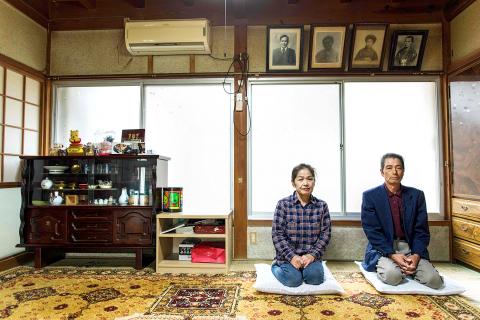
Photo: AFP
For Japanese converts, hiding their religion became a matter of life and death for the next 250 years, as Christianity was banned and Japan closed itself off from the outside world.
Some suspects were forced to trample on holy images to prove they were not Christians. Many went into hiding or disguised their faith.
Those who refused to give up Christianity faced being burned to death, crucified, or slowly drowned.
ALTERED PRACTICES
Whether it was to camouflage their beliefs or adapt to an environment without priests and bibles, the hidden Christians created a blended faith that left its mark on traditions still honored by their descendants.
The Virgin Mary took the form of Kannon, the buddhist goddess of mercy. Ave Maria became the somewhat similar “Abe Maruya”.
“Isolated, they had no choice but to recreate their beliefs as faithfully as possible,” said Shigeo Nakazono, an ethnologist at the local Ikitsuki Island Museum.
Fisherman Masaichi Kawasaki’s home has four altars in his living room, including one devoted to Buddhism, another for his ancestors — common in rural Japanese homes — and a third for the Shinto faith.
The last one, stuffed with flasks, apples, flowers, a melon, a cross and candles, features a kimono-clad woman with long black hair holding a child — is unmistakeable as an image of the Virgin Mary.
On a table lay tiny white paper crosses like the ones Kawasaki’s ancestors would hide in the ears of deceased converts.
“It was only natural that I would learn this practice as it was part of my daily life growing up as a child, a bit like one assimilates a habit into everyday life,” the 66-year-old said.
DISAPPEARING TRADITIONS
Many descendants, known as Kakure Kirishitan (hidden Christians in Japanese), in the small community about 1,000km southwest of Tokyo have never joined the church and struggle to identify with Christianity.
Some of earlier underground Christians converted to Catholicism after priests returned in the mid-19th century, when Japan lifted over two centuries of self-imposed isolation.
In 1865, a group of nervous peasants approached a Christian missionary working in Japan. One woman whispered “ours hearts are the same as yours,” revealing the previously unknown existence of what turned out to be tens of thousands of the original Christians’ ancestors.
Some think the Catholic church should reach out to help ensure the story doesn’t fade into the mists of time.
“It is something that happened here in Japan and is a unique thing in the world,” said Father Renzo de Luca, director of Nagasaki’s Twenty-six Martyrs Museum and Monument, which commemorates Christians executed on the site in the late 1500s.
But there are just a few hundred known descendants of the hidden Christians left, and many younger people don’t show much interest in carrying on traditions to honor the long-dead converts.
“It’s really sad,” said 64-year-old carpenter Yoshitaka Oishi, his eyes welling up with tears.
“If this doesn’t get passed down, it’s finished.”
Feb. 9 to Feb.15 Growing up in the 1980s, Pan Wen-li (潘文立) was repeatedly told in elementary school that his family could not have originated in Taipei. At the time, there was a lack of understanding of Pingpu (plains Indigenous) peoples, who had mostly assimilated to Han-Taiwanese society and had no official recognition. Students were required to list their ancestral homes then, and when Pan wrote “Taipei,” his teacher rejected it as impossible. His father, an elder of the Ketagalan-founded Independence Presbyterian Church in Xinbeitou (自立長老會新北投教會), insisted that their family had always lived in the area. But under postwar
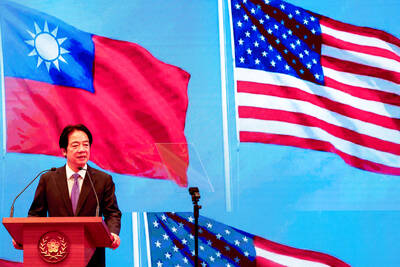
In 2012, the US Department of Justice (DOJ) heroically seized residences belonging to the family of former president Chen Shui-bian (陳水扁), “purchased with the proceeds of alleged bribes,” the DOJ announcement said. “Alleged” was enough. Strangely, the DOJ remains unmoved by the any of the extensive illegality of the two Leninist authoritarian parties that held power in the People’s Republic of China (PRC) and Taiwan. If only Chen had run a one-party state that imprisoned, tortured and murdered its opponents, his property would have been completely safe from DOJ action. I must also note two things in the interests of completeness.
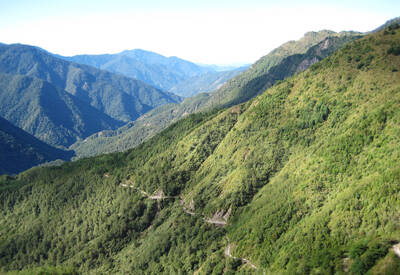
Taiwan is especially vulnerable to climate change. The surrounding seas are rising at twice the global rate, extreme heat is becoming a serious problem in the country’s cities, and typhoons are growing less frequent (resulting in droughts) but more destructive. Yet young Taiwanese, according to interviewees who often discuss such issues with this demographic, seldom show signs of climate anxiety, despite their teachers being convinced that humanity has a great deal to worry about. Climate anxiety or eco-anxiety isn’t a psychological disorder recognized by diagnostic manuals, but that doesn’t make it any less real to those who have a chronic and
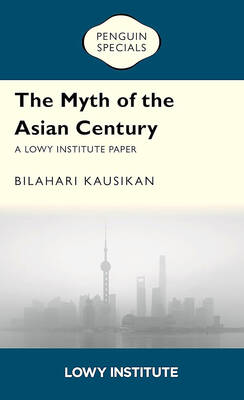
When Bilahari Kausikan defines Singapore as a small country “whose ability to influence events outside its borders is always limited but never completely non-existent,” we wish we could say the same about Taiwan. In a little book called The Myth of the Asian Century, he demolishes a number of preconceived ideas that shackle Taiwan’s self-confidence in its own agency. Kausikan worked for almost 40 years at Singapore’s Ministry of Foreign Affairs, reaching the position of permanent secretary: saying that he knows what he is talking about is an understatement. He was in charge of foreign affairs in a pivotal place in


 RSS
RSS