


The year was 1991. American film critic Jonathan Rosenbaum was experiencing his first authentic night out in Taipei at a late night karaoke party hosted by renowned Taiwanese film director Hou Hsiao-Hsien (侯孝賢). Fueled by bottles of cognac and a generous supply of betel nuts, the duo belted out Beatles songs until 3am before stumbling home.
Having reviewed Dust in the Wind (戀戀風塵, 1986) and A City of Sadness (悲情城市, 1989) for the Chicago Reader, long-time film critic Rosenbaum was no stranger to Hou’s work. But being in Taipei for the Asia-Pacific Film Festival gave him a better appreciation of the local culture, history and setting.
“I was able to spend my 19 days there less as a tourist than as a part of everyday life in Taipei,” said Rosenbaum, who was in New York this past week for the retrospective “Also Like Life: The Films of Hou Hsiao-hsien” at the Museum of the Moving Image.
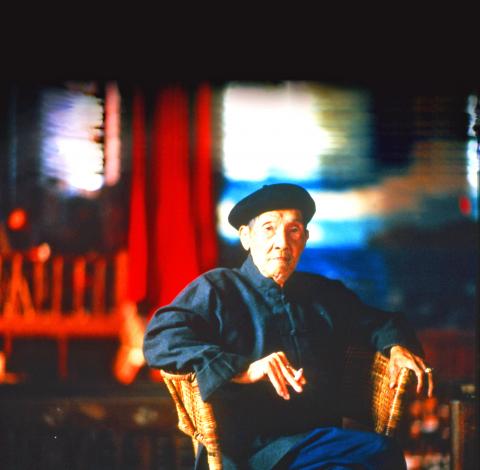
Photo Courtesy of Center for Moving Image Arts, Bard College
TAIWANESE NEW WAVE
The early 1990s was a crucial time for a film critic to be visiting Taiwan since the industry had recently undergone major changes. In contrast to kungfu and melodrama, the New Wave of the 1980s introduced an element of realism to Taiwanese cinema akin to Italian neorealism, and Hou was the central figure driving the movement.
Rather than presenting viewers with drawn-out fight scenes or heart-wrenching tragedies, films of this period dealt with the everyday realities of working class life in Taiwan. Concentrating on such banalities may not seem too exciting, but the movement was groundbreaking because up until then, the films being produced lacked an emphasis on Taiwanese history.
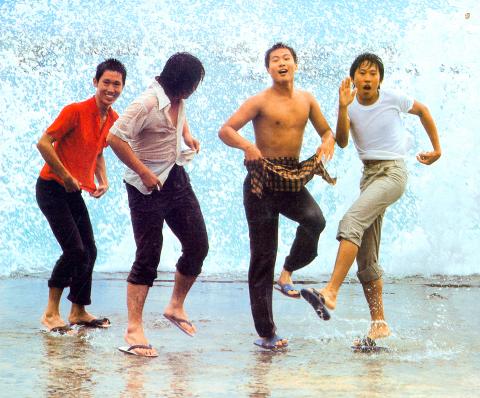
Photo Courtesy of Center for Moving Image Arts, Bard College
As Rosenbaum told the Taipei Times, “Taiwanese history is such a taboo subject that when it gets ‘discovered’ it’s very important.”
RETROSPECTIVE
Organized by Taiwan’s Ministry of Culture, the Taiwan Film Institute, Taipei Cultural Center in New York and the Center for Moving Image Arts at Bard College, the touring retrospective “Also Like Life” is currently in New York until Oct. 17 before making stops in other US cities.
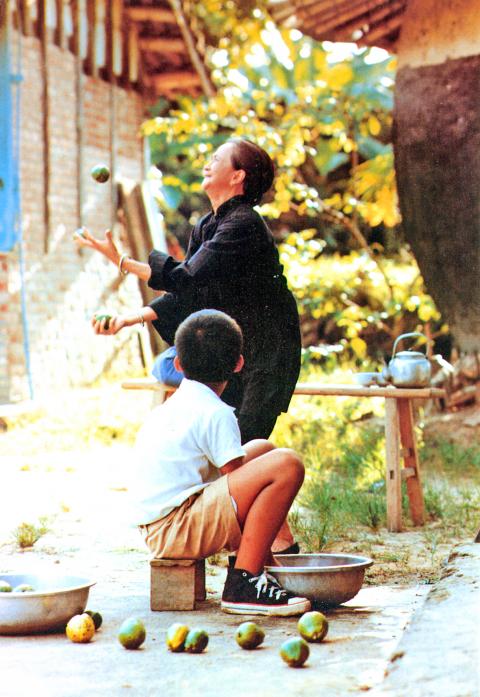
Photo Courtesy of Center for Moving Image Arts, Bard College
Film critics and organizers of the retrospective are hoping that it will raise awareness of Taiwanese history amongst American audiences.
“Although Hou is very widely recognized among American cinephiles as a master, his mainstream reputation in the US remains unfortunately limited, because of the low distribution of his films and the confused and partial understanding in the US of Taiwanese history,” Rosenbaum said.
Richard Suchenski from Bard College also noted that the distribution of foreign art cinema in North America over the past decade in particular has been increasingly sparse. As the main organizer of the retrospective, he spent two years searching for and compiling Hou’s films on the best possible 35mm prints in preparation for the retrospective.
Suchenski told the Taipei Times that “this is a very rare opportunity to see these remarkable films projected and I am thrilled that so many people are taking advantage of it.”
He added that the screenings have been attracting “very diverse audiences that include many young cinephiles.”
‘THE SANDWICH MAN’ AND THE TAIWANESE IDENTITY (CRISIS)
The Oct. 5 screening of The Sandwich Man (兒子的大玩偶, 1983) drew a diverse mixture of film buffs. The majority of viewers were not Taiwanese. The choice of film was interesting because Hou’s segment of the three-part film is almost entirely in Hoklo (commonly known as Taiwanese). Furthermore, it presents viewers with a heads-on confrontation of the question of what it means to be Taiwanese.
A compilation of three vignettes from Hou and directors Tseng Chuang-hsiang (曾壯祥) and Wan Jen (萬仁), The Sandwich Man explores the humdrum experience of working class life in 1960s Taiwan with a simplicity that is beautiful and intriguing.
As Suchenski said, “salient features of Hou’s cinema include elegantly staged long takes and the precise delineation of quotidian life.”
In other words, each vignette is not so much about dramatizing the tragic dimensions of poverty, but rather exploring how the characters find ways to be happy despite their seemingly abject condition living in “exile.” In doing so, the subjects begin to form a new social identity — a Taiwanese identity.
“The Sandwich Man expresses the existential dilemma of being Taiwanese better than any other film — the problem that arises from pretending to be someone else temporarily and then finding that this temporary identity had become one’s main social identity,” Rosenbaum said.
Hou may not be as famous as Ang Lee (李安) is in the US, but his films, as the retrospective has shown, have played a pivotal role in the redefinition of Taiwanese identity.
As for the drunken karaoke scene which Rosenbaum recalled from his 1991 visit — it could easily have been set in present day Taipei, except the cognac would be replaced with something more local, perhaps Taiwan Beer.
Taiwan’s overtaking of South Korea in GDP per capita is not a temporary anomaly, but the result of deeper structural problems in the South Korean economy says Chang Young-chul, the former CEO of Korea Asset Management Corp. Chang says that while it reflects Taiwan’s own gains, it also highlights weakening growth momentum in South Korea. As design and foundry capabilities become more important in the AI era, Seoul risks losing competitiveness if it relies too heavily on memory chips. IMF forecasts showing Taiwan widening its lead over South Korea have fueled debate in Seoul over memory chip dependence, industrial policy and
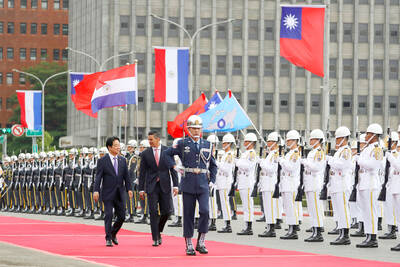
“China wants to unify with Taiwan at the lowest possible cost, and it currently believes that unification will become easier and less costly as time passes,” wrote Amanda Hsiao (蕭嫣然) and Bonnie Glaser in Foreign Affairs (“Why China Waits”) this month, describing how the People’s Republic of China (PRC) is playing the long game in its quest to seize Taiwan. This has been a favorite claim of many writers over the years, easy to argue because it is so trite. Very obviously, if the PRC isn’t attacking Taiwan, it is waiting. But for what? Hsiao and Glaser’s main point is trivial,
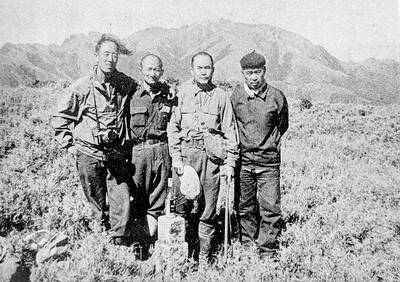
May 18 to May 24 Gathered on Yangtou Mountain (羊頭山) on Dec. 5, 1972, Taiwan’s hiking enthusiasts formally declared the formation of the “100 Peaks Club” (百岳俱樂部) and unveiled the final list of mountains. Famed mountaineer Lin Wen-an (林文安) led this effort for the Chinese Alpine Association (中華山岳協會). Working with other experienced climbers, he chose 100 peaks above 10,000 feet (3,048m) that featured triangulation points and varied in difficulty and character. The list sparked an alpine hiking craze, inspiring many to take up mountaineering and competing to “conquer” the summits. A common misconception is that the 100 Peaks represent Taiwan’s 100 tallest
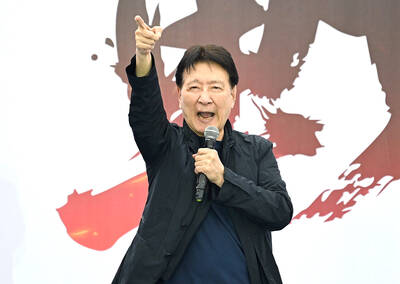
In a sudden move last week, opposition lawmakers of the Chinese Nationalist Party (KMT) and Taiwan People’s Party (TPP) passed a NT$780 billion special defense budget as a preemptive measure to stop either Chinese leader Xi Jinping (習近平) or US President Donald Trump from blocking US arms sales to Taiwan at their summit in Beijing, said KMT heavyweight Jaw Shaw-kong (趙少康), speaking to the Taipei Foreign Correspondents Club on Wednesday night in Taipei. The 76-year-old Jaw, a political talk show host who ran as the KMT’s vice presidential candidate in 2024, says that he personally brokered the deal to resolve


 RSS
RSS