


Cheng Yi-shin (鄭意馨), 26, curates a Facebook page that has garnered fans from all over Taiwan, including a young admirer who tracked her down in real life last November while she was vacationing in Greater Tainan.
The young man, surnamed Wang, located her homestay using a photograph she had posted on the Internet. In addition to stalking her on vacation, he sent thousands of explicit public and private messages via Facebook. On the strength of these messages, the Keelung District Prosecutors Office last month approved her motion to file for Offense Against Reputation and Credit (妨害名譽及信用罪) on summary judgment, a procedural device used to move a case without a trial when all the facts are undisputed.
But in the majority of stalking cases in Taiwan, proof of grievance is notoriously difficult to compile.

Photo courtesy of HLH IMAGES
“Currently, it is very rare for stalking behavior to become actionable cases,” said Wu Tzu-ying (吳姿瑩), a director at the Modern Women’s Foundation (現代婦女基金會), a non-governmental organization that provides legal and material assistance to battered women.
In one case Wu handled, a man had taken to harassing his ex-wife after she ended an abusive marriage. He phoned constantly, driving her to change her number. In the mornings, he left a hot breakfast in a bag on the handlebar of her motorcycle, and kept it up even after she quietly moved twice to avoid him. Frightened, she looked for help from social workers to help her relocate and to find a new job.
But she would not report the case to the police.
“She didn’t want to report it,” said Wu. “She didn’t think the police could help her.”
Under current laws, they probably couldn’t. When there is proof of character defamation, for instance, in the form of saved messages, the police can help the victim file a case for Offense Against Reputation and Credit. If there is a documented sexual nature to the act, it’s covered under the Sexual Harassment Prevention Act (性騷擾防治法). If the perpetrator is physically following the subject around “for no reason,” the perpetrator can be fined NT$3,000 under the Social Order Maintenance Act (社會秩序維護法).
But many actions designed to instill fear are non-sexual, non-defamatory and do not entail physical stalking. “Getting breakfast isn’t grounds for a lawsuit, so what could she do?” Wu said.
“If you wanted to sue, your lawyer could go through all the laws and still come up empty.”
CHALLENGES
The Modern Women’s Foundation is drafting a dedicated anti-stalking bill that they aim to propose in the Legislature by year’s end.
If passed, the bill would establish a definition for stalking — prolonged and sustained behavior designed to instill fear in a reasonable person — that could make it easier for victims to seek legal remedies.
But there are many hurdles ahead. One challenge is building a social consensus that stalking is serious.
“A lot of people think stalking is a small thing. Even police,” Wu said.
So far, it’s a behavior that has remained poorly understood. Neither local governments or the central government has surveyed its prevalence in the general population. (The National Center for Victims of Crime in the US considers it relatively common, affecting 1 in 4 women and 1 in 13 men in the US.)
But stalking, left uncurbed, can quickly escalate and is often the precursor to worse violations. According to the US’ National Center for the Victims of Crime, 89 percent of women who were murdered were also stalked in the year leading up to their death.
Another challenge for the bill will be mobilizing victims into a potent political force.
In 1990, California became the first US state to criminalize stalking, following the high-profile stalking cases of actresses Rebecca Schaeffer and Theresa Saldana. Saldana, who survived her attack, went on to lobby actively for California’s anti-stalking law, and by 1993 every US state had followed suit.
Singapore passed a landmark anti-stalking bill last month, after two notorious cases, including one targeting an American singer.
But for the most part, victims in Taiwan have remained silent. Women who seek help from the Modern Women’s Foundation often decline to advocate and speak publicly against abuse because they do not sense that the audience is on their side. And that’s probably true, Wu said.
“When you’re watching an abuse victim on TV, [someone] will say, ‘Oh that celebrity got too big for her britches, she talked too proudly, that’s why she got taken down a notch.’ Or they say, ‘You were beaten, why didn’t you run? You must be a masochist.’” Wu said.
“They don’t want to come out because of the social stigma,” she said.

Ajay Verma, a consultant gastroenterologist at Kettering general hospital in Northamptonshire, says our gut is a “complex machine.” “It is constantly providing us with the nutrition we need, initially to grow and develop, and then for us to survive, thrive and repair from injury and illness.” How can we keep it functioning well? Put simply: “Make sure what you put into it is balanced, and that you clear out its waste products adequately,” Verma says. “In a general gastroenterology clinic, the most common conditions we see are irritable bowel syndrome (IBS), gastroesophageal reflux disease, inflammatory bowel disease and constipation,” says Nisha
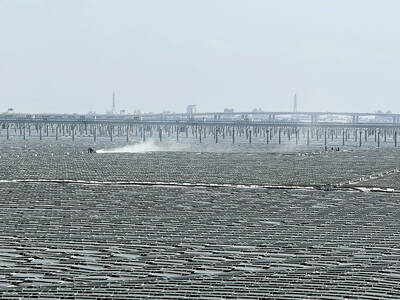
The arithmetic is straightforward and uncomfortable. By the end of 2025, Taiwan had committed itself to a 50-30-20 electricity mix — half natural gas, 30 per cent coal, 20 per cent renewables. The Ministry of Economic Affairs’s (MOEA) own monthly energy reports tell a different story. Natural gas reached 47.8 per cent of generation last year. Coal stood at 35.4 per cent, comfortably above its target ceiling. Renewables came in at 13.1 per cent, well short of the 20 per cent Taipei had pledged a decade earlier. Installed renewable capacity reached roughly half of the 12 gigawatts (GW) the government

Last week US President Donald Trump was asked by a reporter whether he would speak on the phone to the President of Taiwan. “l’ll speak to him. I speak to everybody. We have that situation very well in hand,” Trump said. This marked the second time in a couple of weeks he had said he would talk to the President of Taiwan. In 2016 he famously took a call from then-president Tsai Ing-wen (蔡英文), when he was president-elect. Despite warnings that the apocalypse was nigh because of a phone call, the world quickly forgot about the conversation between two democratically-elected presidents.

Taiwan’s drone exports are taking off, fuelled by the war in Ukraine, as Taiwanese companies seek a stake in the fast-growing global market for unmanned aerial vehicles (UAV). Low-cost drones used for reconnaissance and strikes are in high demand as governments around the world boost defense spending in the face of intensifying conflicts. A relative new player in the increasingly competitive industry, Taiwan’s pitch is to be an “Asian hub” for the production of UAVs and components free of Chinese materials, or “non-red.” That means its UAVs can be up to three times more expensive than their Chinese competitors, like the world’s biggest


 RSS
RSS