

Ripple Effect (漣漪效應), 8213 Physical Dance Theatre’s (8213 肢體舞蹈劇場) newest work, wasn’t as loud as I had expected at Saturday’s matinee at the Experimental Theater — apparently the volume was turned down after earlier audiences had complained — but its buzzy, industrial-tech soundscape enveloped without ever being obvious or over the top. It just was.
Just as Sun Chuo-tai’s (孫梲泰) choreography just was. Nothing super spectacular — deceptively simple, really, but all the elements combined for a powerful performance. So what if a dancer could stand motionless with his right leg held perpendicular to his body, his foot almost to shoulder level, for a few minutes? Big deal, let’s move on and concentrate on the small motions. The devil is in the details after all.
Sometimes I had to look really hard to see what was moving — the twitching of the fingers of one hand, the flex of a shoulder, the almost imperceptible shaking of one leg — before these movements grew into major tremor. The isolationist exercises that break down each body part turned that part into a separate performance vehicle and led the outward flow of one movement from one dancer to the next.
Sun tried to use pure energy and force to examine the impact that people have on others — through combinations of solos, duets, trios and group pieces — to show how ambitions and actions flow outward from us, creating ripples in relationships and society. Perhaps the most shocking ripple was created toward the end, when Chen Yu-jen (陳囿任) reached out and lightly touched his hand to Casey Avaunt’s cheek, which led to a series of hands to faces or hands to shoulders with all the dancers. The delicacy of the movement was a shock since with Sun’s work it’s more common to see dancers pushing and shoving one another.
The performers were all great, even though they’re not all trained dancers. Avaunt, Chen, Hsueh Hsin-yi (薛欣宜), Chiu Po-chang (邱柏昶) and Liu Yen-meng (劉彥萌) have varied backgrounds, including training in classical, contemporary dance and street dance as well as Beijing opera, gymnastics and martial arts.
Of course, the fact that the dancers were wearing yellow jumpsuits, which looked almost like neoprene, meant that even the slightest movement was sure to work up lots of sweat. Before the performance, Avaunt told me that the outfits were a lot more breathable than the scuba suits the company wore in last year’s Electron.
The costumes were the one downside to Ripple Effect. They were cartoonish, looking like a cross between a bad science-fiction movie of the 1950s and a Japanese cartoon superhero, with a bit of Thierry Mugler thrown in, and proved a lot more distracting than the platform the performers were dancing on, which was illuminated by flashing LED lights.
My only complaint about Ripple Effect was that it was too short — just an hour. I’d would have liked to see more, although I’m not sure the dancers would agree.


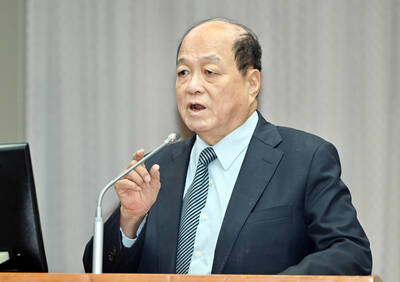
The Nuclear Safety Commission (NSC, 核安會) on Sept. 24 approved the re-operation plan that Taiwan Power Co (Taipower, 台電) filed in March for the Ma-anshan Nuclear Power Plant in Pingtung County, after three rounds of review and 589 comments. Taipower now has to carry out the work in the plan and its own inspections on ageing, radiation and seismic resistance, then report back to the commission for review and on-site checks. Minister of Economic Affairs Kung Ming-hsin (龔明鑫) has named 2028 as the earliest restart. The NSC has given no date. THE DEBATE No challenge has been identified as to whether Ma-anshan
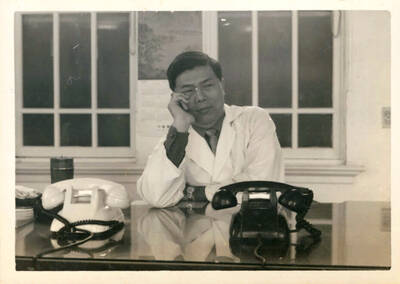
Oct. 12 to Oct. 18 After 11 years in prison on Green Island, Yen Shih-hung (顏世鴻) was finally due for release when a camp guard asked him for NT$20,000 to help pay his bride price. Yen refused. The next day, officials deemed that he had “failed to improve his thinking” and ordered him to undergo further political reeducation on Siaoliouciou (小琉球), where prisoners were also subjected to forced labor. He spent another 19 months there before regaining his freedom in January 1964. Yen’s punishment stemmed from his joining the Taiwan Provincial Student Affairs Committee

Cognitive warfare, says the Ministry of National Defense (MND), is the People’s Republic of China’s (PRC) use of “political, economic, cultural, military and legal means, with the intent to divide internal unity and undermine social stability” in Taiwan. Last week offered several examples. PRC media in October last year reported that the Chongqing Municipal Public Security Bureau had opened an investigation into Democratic Progressive Party (DPP) Legislator Puma Shen (沈伯洋), the DPP’s mayoral candidate for Taipei in next month’s election, for “Taiwan independence” activities. This was a cognitive warfare ploy, designed to unsettle the targeted person and to establish the idea
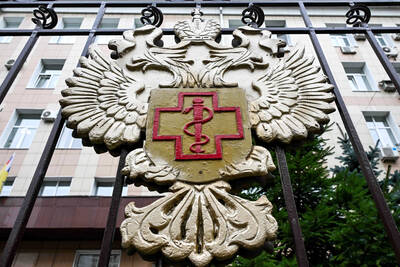
In pandemic preparedness work, scientists like to focus on the technical challenges: identifying pathogens, diagnosing infections, understanding their effects and developing vaccines and treatments. Each step promises progress through human innovation, investment and planning. The WHO, for example, brings experts together to identify and prioritize emerging disease threats and collect the evidence needed to prepare for them. But preparedness depends on more than scientific innovation. As the past week has shown, politics is the elephant in the room in all of this. No one could have predicted we would be talking about pneumonic plague, and that the death of a single


 RSS
RSS