

Melting pot or racial divide? The growth of interracial marriages is slowing among US-born Hispanics and Asians. Still, blacks are substantially more likely than before to marry whites.
The number of interracial marriages in the US has risen 20 percent since 2000 to about 4.5 million, according to the latest census figures. While still growing, that number is a marked drop-off from the 65 percent increase between 1990 and 2000.
About 8 percent of US marriages are mixed race, up from 7 percent in 2000.
The latest trend belies notions of the US as a post-racial, assimilated society. Demographers cite a steady flow of recent immigration that has given Hispanics and Asians more ethnically similar partners to choose while creating some social distance from whites due to cultural differences and foreign language.
White wariness toward a rapidly growing US minority population also may be contributing to racial divisions, experts said.
“Racial boundaries are not going to disappear anytime soon,” said Daniel Lichter, a professor of sociology and public policy at Cornell University. He noted the increase in anti-immigrant sentiment in the US after the Sept. 11, 2001, terror attacks as well as current tensions in Arizona over its new immigration law.
“With a white backlash toward immigrant groups, some immigrants are more likely to turn inward to each other for support,” Lichter said.
Broken down by race, about 40 percent of US-born Asians now marry whites — a figure unchanged since 1980. Their likelihood of marrying foreign-born Asians, meanwhile, jumped three times for men and five times for women, to roughly 20 percent.
Among US-born Hispanics, marriages with whites increased modestly from roughly 30 percent to 38 percent over the past three decades. But when it came to marriages with foreign-born Hispanics, the share doubled — to 12.5 percent for men, and 17.1 percent for women.
In contrast, blacks are now three times more likely to marry whites than in 1980. About 14.4 percent of black men and 6.5 percent of black women are currently in such mixed marriages, because of higher educational attainment, a more racially integrated military and a rising black middle class that provides more interaction with other races.
The numbers reflect in part an internal struggle that Asians and Hispanics say they feel navigating two cultural worlds — the US and their parents’ homeland.
Hai Nguyen, 37, of Houston, recalls the instant connection she felt after meeting her first Vietnamese boyfriend, Greg, in college.
Nguyen says while she had to explain herself to white boyfriends, with Greg it was a feeling that “he so gets me, because we eat the same food, we like the same things, our families know each other and there is so little that needs to be said.” With the enthusiastic support of her parents, she and Greg married. But their connection soon began to fade, due partly to Nguyen’s budding career as a business analyst, which clashed with more traditional expectations for her to “always have fresh food on the table.” The two divorced and Nguyen is now remarried to Jon, who is white.
“My parents have prejudices, but they’ve accepted it,” said Nguyen. She described occasionally feeling different from her parents and other single-race couples. “They know it’s inevitable.
“My native tongue will eventually fade, and history will take its course.”
The demographic shifts can complicate conventional notions of racial identity.
Because of increasing interracial marriages, multiracial Americans are a small but fast-growing demographic group, making up about 5 percent of the minority population. Together with blacks, Hispanics and Asians, the Census Bureau estimates they collectively will represent a majority of the US population by midcentury.
Still, many multiracial people — particularly those who are part black — shun a multilabel in favor of identifying as a single race.
By some estimates, two-thirds of those who check the single box of “black” on the census form are actually mixed, including US President Barack Obama, who identified himself as black in the 2010 census even though his mother was white.
Census figures also show: Hawaii had the highest share of mixed marriages, about 32 percent. It was followed by Alaska, Oklahoma, New Mexico and Nevada, which ranged from 15 percent to 19 percent. The bottom five states were Pennsylvania, Maine, Kentucky, Mississippi and West Virginia, each ranging from 3 percent to 4 percent.
Mississippi had the fastest growth in mixed marriages from 2000 to 2008, a sign of closer ties between blacks and whites, though it still ranked second to last in overall share of mixed marriages.
Mixed marriages jumped from 2.25 million to 3.7 million, or 65 percent, from 1990 to 2000, as such unions became more broadly accepted in southern states.
Among US-born whites, about 0.3 percent married blacks in 1980; that figure rose to about 1 percent in 2008. About 0.3 percent of whites married Asians in 1980 and about 1 percent in 2008. About 2 percent of whites married Hispanics in 1980, rising to about 3.6 percent in 2008.
Juan Thurman, 37, a Houston sales account manager, says both family pressure and a strong ethnic identity weighed heavily on him as a Hispanic when he was dating, even as he found himself interacting more with other races in school.
In high school and at Rice University, Thurman says he had fewer opportunities to meet Hispanic women in his honors classes.
Ultimately, he married Emily, who is white, based on shared life views of gender equality and a liberal outlook toward religion, and relishes having friends of many different backgrounds.
“Interracial marriage is not a big deal,” Thurman said.
“Still, from a family standpoint, I did feel culturally different and I continue to feel so.”
The figures come from previous censuses as well as the 2008 American Community Survey, which surveys 3 million households. The figures for “white” refer to those whites who are not of Hispanic ethnicity. For purposes of defining interracial marriages, Hispanic is counted as a race.


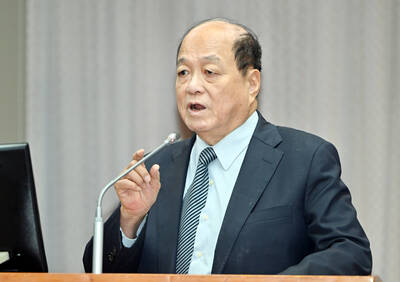
The Nuclear Safety Commission (NSC, 核安會) on Sept. 24 approved the re-operation plan that Taiwan Power Co (Taipower, 台電) filed in March for the Ma-anshan Nuclear Power Plant in Pingtung County, after three rounds of review and 589 comments. Taipower now has to carry out the work in the plan and its own inspections on ageing, radiation and seismic resistance, then report back to the commission for review and on-site checks. Minister of Economic Affairs Kung Ming-hsin (龔明鑫) has named 2028 as the earliest restart. The NSC has given no date. THE DEBATE No challenge has been identified as to whether Ma-anshan

In pandemic preparedness work, scientists like to focus on the technical challenges: identifying pathogens, diagnosing infections, understanding their effects and developing vaccines and treatments. Each step promises progress through human innovation, investment and planning. The WHO, for example, brings experts together to identify and prioritize emerging disease threats and collect the evidence needed to prepare for them. But preparedness depends on more than scientific innovation. As the past week has shown, politics is the elephant in the room in all of this. No one could have predicted we would be talking about pneumonic plague, and that the death of a single
The South China Morning Post (SCMP) article from earlier this month on how Beijing would govern a post-annexation Taiwan (Amber Wang, “Beijing’s policy advisers map out how post-reunification Taiwan could be governed,” Oct. 6, 2026) is a reminder that even “peaceful” (coerced) occupation by the People’s Republic of China (PRC) will beggar Taiwan. The “scholars” cited in the SCMP piece argued that Taiwan would be governed in a manner similar to Hong Kong. As I observed in my piece for Monday (“Beijing’s intimidation tactics in Taiwan and beyond,” Oct. 12, 2026), that claim is simply a form of cognitive warfare. One
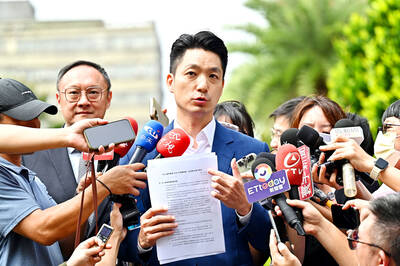
The Han Kuang exercises in August simulated the repelling of attackers from the People’s Republic of China (PRC). One scenario saw the PRC seizing Taipei International Airport (Songshan airport) in a daring helicopter assault. The airport is a key military operations center, and its seizure or destruction in a PRC invasion would be inevitable. Yet that is hardly the only conflict involving Songshan. Taipei Mayor Chiang Wan-an’s (蔣萬安) recent, surprising suggestion that the airport be converted to an AI park is just the latest variation on an old theme. Replacing Songshan airport with some kind of green or park space


 RSS