


On a recent visit to Amsterdam I fell into conversation with a woman who owned a gift shop. “Tell me, where are you from?” she asked, after we had been chatting for a few minutes. “Oh, can’t you tell?” I said, smiling and taking care to over-articulate my words. “Well, you speak with a British accent,” she said, “but you’re not white like me, so where are you from?” For non-white travelers, such incidents are familiar and a reminder that identities are not wholly ours to define. Neither my passport nor my accent nor the fact that I had spent virtually my entire life in Britain qualified me, in this woman’s eyes, as British. Since she appeared not to be persuaded by my honest answer that I was British I eventually explained that my family were originally from Pakistan, and this satisfied her. It was only after reading Who Are We?, Gary Younge’s penetrating and provocative new book, that I realized the best response to her question would have been to turn the tables on my interrogator and demand to know where she was from.
“The more power an identity carries, the less likely its carrier is to be aware of it as an identity at all,” Younge notes. “Because their identity is never interrogated they are easily seduced by the idea that they do not have one.” Among the great merits of Younge’s book is that he reminds us — and them — of the falseness of that assertion. There are few journalists better equipped to navigate this territory than Younge, not only because of his experience as a foreign correspondent for The Guardian but because his own biography demonstrates the fluid nature of identity.
In the book he weaves his own story — the working-class son of a single mother from Barbados, who was raised in England and now lives in the US — with powerful reportage from across the globe that reveals the changing nature of identity. There are fascinating tales, such as the black girl born to white South African parents and the son of a Jewish leader who was judged not to be Jewish. Younge correctly notes that identity is dependent not only on the individual but also the behavior of the wider world. This helps explain why Barack Obama, the mixed-race son of the white mother who raised him, defines himself as black, and it is also a factor in the emergence of political Islamism across Europe. Younge cites compelling statistics that depict the weak position of Muslims in Britain: More than a third of Muslim households in Britain have no adults in employment, a third of young British Muslims leave school without any qualifications and those of Pakistani and Bangladeshi descent are eight times more likely to be victims of racial attacks on the streets than whites. That, coupled with what is happening to Muslims globally in Iraq, Afghanistan and elsewhere helps explain, Younge suggests, the growth of Islamic identity among young Muslims: “Muslims will be more likely to organize around their religious identity both home and abroad, so long as they feel attacked as a result of that religious identity.” This, surely, is only part of the explanation. After all, the first generation of Muslims who came to the UK suffered far more discrimination and yet they expressed far less hatred towards the country than some young Muslims today. Indeed they often urged their children towards education precisely so that they could prosper in the UK.
Moreover, the biographies of many British jihadi terrorists reveal that they were not especially the victims of discrimination. Thus the question of why some young Muslims assert a form of religious identity that runs counter to a British identity cannot be simply about economics or racism: It has to also be about a weakened sense of what it means to be British. Islam is a potent potential identity precisely because it offers clarity at a time when no one is quite sure what Britishness is. Younge is, of course, right that identity is formed in the crucible of politics and economics, but identity is also about having a sense of belonging, and that is not measured in money; it is about having a stake in a country, feeling that it is a home and realizing that the myth of return to the motherland is likely to remain only a myth. There is a lovely passage in the book that demonstrates how that sense of belonging can be subtly transmitted when Younge describes buying his nephew and niece England football tops emblazoned with David Beckham’s name.
Younge ends his book with a plea that we search for a common higher ground that lies beyond our conflicted and confused identities. To reach this promised land he suggests the familiar routes of greater equality and more democracy. That common ground would be likely to be reached sooner, I would suggest, if the British public had more in common with those who we elect to power. Of the 23 members of the new cabinet, 22 are white, 18 are millionaires, 15 are Oxbridge graduates and 13 went to private schools. It is not just those who run the country who are overwhelmingly from this background, but the media too. It is hard not to reflect on the privileged clique and conclude that although the world is becoming ever more mixed up, and identities ever more complicated, the identities of those in power are the same as they ever were.
NOTE: Sarfraz Manzoor’s Greetings From Bury Park: Race. Religion. Rock ’n’ Roll is published by Bloomsbury.


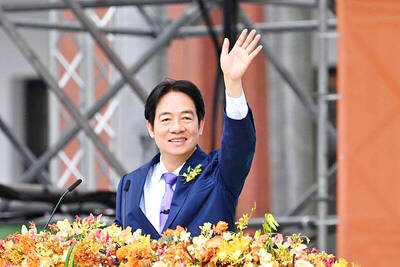
President William Lai (賴清德) yesterday delivered an address marking the first anniversary of his presidency. In the speech, Lai affirmed Taiwan’s global role in technology, trade and security. He announced economic and national security initiatives, and emphasized democratic values and cross-party cooperation. The following is the full text of his speech: Yesterday, outside of Beida Elementary School in New Taipei City’s Sanxia District (三峽), there was a major traffic accident that, sadly, claimed several lives and resulted in multiple injuries. The Executive Yuan immediately formed a task force, and last night I personally visited the victims in hospital. Central government agencies and the
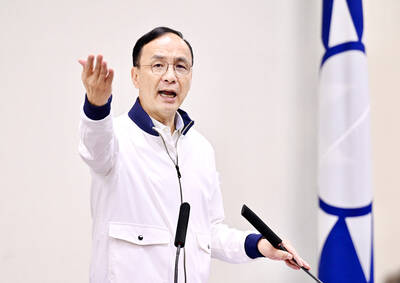
Australia’s ABC last week published a piece on the recall campaign. The article emphasized the divisions in Taiwanese society and blamed the recall for worsening them. It quotes a supporter of the Taiwan People’s Party (TPP) as saying “I’m 43 years old, born and raised here, and I’ve never seen the country this divided in my entire life.” Apparently, as an adult, she slept through the post-election violence in 2000 and 2004 by the Chinese Nationalist Party (KMT), the veiled coup threats by the military when Chen Shui-bian (陳水扁) became president, the 2006 Red Shirt protests against him ginned up by
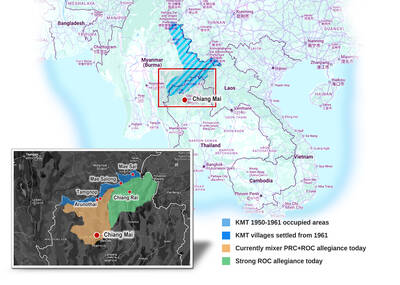
As with most of northern Thailand’s Chinese Nationalist Party (KMT) settlements, the village of Arunothai was only given a Thai name once the Thai government began in the 1970s to assert control over the border region and initiate a decades-long process of political integration. The village’s original name, bestowed by its Yunnanese founders when they first settled the valley in the late 1960s, was a Chinese name, Dagudi (大谷地), which literally translates as “a place for threshing rice.” At that time, these village founders did not know how permanent their settlement would be. Most of Arunothai’s first generation were soldiers
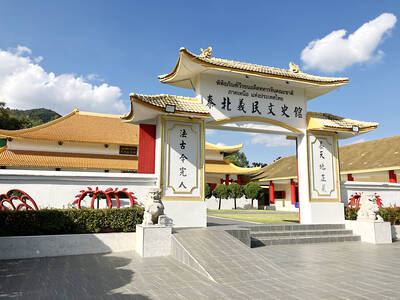
Among Thailand’s Chinese Nationalist Party (KMT) villages, a certain rivalry exists between Arunothai, the largest of these villages, and Mae Salong, which is currently the most prosperous. Historically, the rivalry stems from a split in KMT military factions in the early 1960s, which divided command and opium territories after Chiang Kai-shek (蔣介石) cut off open support in 1961 due to international pressure (see part two, “The KMT opium lords of the Golden Triangle,” on May 20). But today this rivalry manifests as a different kind of split, with Arunothai leading a pro-China faction and Mae Salong staunchly aligned to Taiwan.


 RSS
RSS