


Yaacov Agam’s artwork plays with time and dimension. It constantly transforms and gleans inspiration from sources as diverse as religion and physics. The Israeli artist, who lives and works in Paris, is famed for his pioneering contributions to kinetic art.
One of his latest pieces, The Heart of the Fountainhead, was unveiled earlier this month in Taipei City. It encompasses the exterior of Shuiyuan Market (水源市場) near National Taiwan University, with rainbow-colored panels concealing air conditioners (which Agam refers to as “visual aggression”). The centerpiece is a giant mural facing Roosevelt Road (羅斯福路) that relies on audience participation to fully blossom. From the left of the artwork, viewers see a blue and white grid, with ovals, circles and triangles sparsely interspersed throughout. From the right is a geometric rainbow that spirals into a white center. When shoppers enter the market from an overhead walkway, with the artwork above them, they see a carefully balanced mixture of the two compositions slowly dissolve into nine large prisms.
Agam was born in 1928 in Rishon LeZion, then part of British-administered Palestine. His father was an Orthodox Jewish rabbi and as a young boy Agam worried about his parent’s reaction to his budding interest in art.
“It is written in the Bible not to do a graven image. The sixth commandment is not to kill, the eighth is not to steal and the second is not to make a graven image,” explains Agam. The rabbi turned out to be supportive of his son’s passion, but Agam saw the second commandment as a challenge and inspiration to go beyond “static” paintings. He began to explore the possibilities of creating abstract artwork that was kinetic and had four — and even five or six — dimensions.
Like The Heart of the Fountainhead, the images in Agam’s art shift in relation to the viewer. The fourth dimension in Agam’s paintings and sculpture is time: Agam seeks to both defy its limits and honor its passage.
For example, his sculptural installation Peaceful Communication With the World, created for last year’s World Games in Kaohsiung, is designed to change perspective as a child grows. Beating Heart, a small kinetic sculpture made of nesting metal rings that Agam carries with him, separates, undulates and quivers like a visual representation of sound waves; no movement is ever the same.
Judaism continues to influence Agam’s work, but his message is universal. When asked why he often uses rainbow colors, Agam repeats the story of Noah and the Ark. After the flood, God promised Noah never to destroy the earth again and placed a rainbow in the sky as a symbol of that covenant.
“It is a visual prayer of open peace, reminding that everyone is obligated to keep nature, to keep the environment, to keep peace, to keep love, to keep friendship, all the values that keep the world going,” says Agam. “If not, everything can be destroyed in a minute.”
His work has been displayed in museums around the world, including the Guggenheim Museum and Museum of Modern Art in New York City and the Musee National d’Art Moderne in Paris, but Agam sounds most proud when he talks of his public art, referring to traditional museums as “cemeteries of art.” In additional to Peaceful Communication With the World and The Heart of the Fountainhead, his outdoor installations include the New Orleans Holocaust Memorial and fountains in Paris’ La Defense district and Dizengoff Square in Tel Aviv. Agam also describes the Agam Method, an art education program he developed for young children, as the most important accomplishment of his life.
“My artwork is part of life. Thousands of people can see it every day,” he says.
Taipei Times: Can you tell me about the message behind The Heart of the Fountainhead?
Yaacov Agam: The artwork I call unity and diversity, because [on one side] you have this composition, it is only blue and white and then you have the other side, which is all color. The two are different, so you can call it the yin and yang. [The right side] is like the positive, with the revolving lines, the spiral and the color. It’s positive like the movement of life and then the other side is the opposite, with no color.
Traditionally, you have either the yin or the yang, but you don’t have something that combines the two meanings. It’s important that you have the two forces and that the forces give you something together. In life, in everything, we have positives and negatives, electrons, day and night, so when the two opposites meet in life, that is what creates the power. They do not destroy one another. Love is two things combining in harmony, so this is an expression of love and unity and true diversity.
TT: How do you use the fourth dimension in your work?
YA: When you have a child, the first thing he will do is take a pen and make a line. The line is one dimension, it starts and finishes, you can measure it and everything. The first [visual] expression of man was line, it was all one-dimensional art, all drawings were done in lines. The second dimension is [represented in] Egyptian art, the legs were all shown from the side, people were drawn in profile, eyes were seen from the side.
Then you had three dimensions, which is volume. For example, in the Mona Lisa, there is not only the subject but also mountains and rocks behind her, you have depth.
When I introduced the fourth dimension, many artists started using it, and I am now exploring the fifth and sixth dimension. When you see something in my artwork, you see something that is happening and every minute can be different. When I finish a work, it is just starting.
[Agam takes out the Beating Heart kinetic sculpture and arranges it on a table.]
In modern science, in physics, the biggest advantage is that you can measure energy, you can measure time. But you can’t measure reality because if you want to measure it, you have to stop it and if you stop it then it’s not the same thing. Now, if I touch it like this [Agam gently presses on one side of the sculpture], you get one element. [Agam gently touches it again, on another side.] Now when I do it like this, the center doesn’t move, so it’s different than before. It’s different, every time you touch it, it’s another movement. Time gave me another movement and time is always unforeseen. It’s different, but it’s still the same thing. You don’t know how it will change.
TT: How did your father being a rabbi and Judaism influence your work?
YA: It is written in the Bible not to do a graven image. The sixth commandment is not to kill, the eighth is not to steal and the second is not to make a graven image. I saw the negative calling for a positive.
So I tried all these processes, slowly, slowly trying to find a way to get out of the static image. I designed a piece of artwork, it looked nice, but then I turned it around and it also looked good. So I already had a painting that looks good in two positions. Then I found three and four. I got out of the painting that has only one position. Then I took nails and I put different shapes on the [heads of] the nails and put them in different places on the painting, so I was already exploring possibilities [besides static painting].
My first breakthrough was when I found two, three, four positions for one painting. Here I have found endless positions [points to the Beating Heart]. It has many positions, but when you take a regular sculpture, it stands still in time. I designed my sculpture to be in time. In Chinese the word for “crisis” and “opportunity” is the same, so the crisis of “don’t do it” gave me the possibility to do something else. It allowed me to develop something to overcome the problem of [graven images].
TT: You say the Agam Method is the most important thing you’ve ever done. Why do you feel that way?
YA: If you don’t start teaching them at an early age, they say children will never talk. They learn and then they can read from memory, because everything is stored there. But we don’t have access to the visual memory. We don’t know how to store visual information because we are never taught how. I started the program so you can visually store everything, you can get all the information visually and organize it, because it’s the nexus of the brain, in the visual department. At an early age, the children learn to see, store and recall visually.
I can show children 10 completely different drawings, one after another in quick succession, and they will be able to copy them. They’ll be able to copy many drawings before they make a mistake. We lose that ability because the emphasis is all on words and rational thinking. Children are so inventive and so full of life and fantasy. It’s wonderful what they can do. Then they go to school and lose it. So I developed a method of visual grammar that enables you, whatever you see, to store it and recall it, because everything is an image.
[Points to a glass] What do you call this in English? In Chinese? How do you call it in Russian, in French, in German, in Arabic, in Hebrew? These are all different words and there are more. If you call [the glass] a booboo, it will be a booboo. I have named it a booboo and now it is a booboo.
But the shape is the substance, everywhere in the world it is the same, whether it is black or blue, or small or big. [Agam draws two circles connected by two lines.] You see the glass here, because the visual is the substance. I tell people, I don’t speak Chinese and you don’t speak Hebrew, but we can communicate, because the visual is universal.
Shuiyuan Market is located at 92, Roosevelt Rd Sec 4, Taipei City (台北市羅斯福路四段92號). To view a video of Agam demonstrating his Beating Heart sculpture, visit www.youtube.com/user/agamron



Just after 6am, I walked up to the ticket gate at Taipei Main Station and entered the Taiwan Railway platform without scanning any ticket; instead, I flashed the Sanrio Fun Rail pass on my phone to the gate worker and was admitted. I found my train and prepared to board. My destination? This very same station. I was embarking on a 13-hour journey on one of two round-the-island trains operated by ezTravel. They run each day, one counterclockwise around the island and one clockwise. They differ in a number of ways from an ordinary Taiwan Railway train and can make for
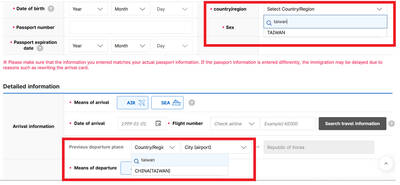
Jason Han says that the e-arrival card spat between South Korea and Taiwan shows that Seoul is signaling adherence to its “one-China” policy, while Taiwan’s response reflects a reciprocal approach. “Attempts to alter the diplomatic status quo often lead to tit-for-tat responses,” the analyst on international affairs tells the Taipei Times, adding that Taiwan may become more cautious in its dealings with South Korea going forward. Taipei has called on Seoul to correct its electronic entry system, which currently lists Taiwan as “China (Taiwan),” warning that reciprocal measures may follow if the wording is not changed before March 31. As of yesterday,
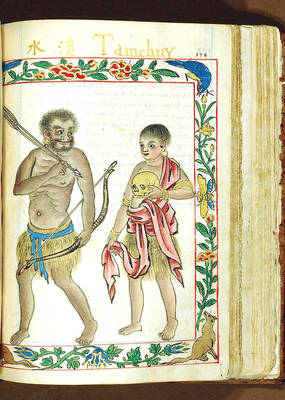
The Portuguese never established a presence on Taiwan, but they must have traded with the indigenous people because later traders reported that the locals referred to parts of deer using Portuguese words. What goods might the Portuguese have offered their indigenous trade partners? Among them must have been slaves, for the Portuguese dealt slaves across Asia. Though we often speak of “Portuguese” ships, imagining them as picturesque vessels manned by pointy-bearded Iberians, in Asia Portuguese shipping between local destinations was crewed by Asian seamen, with a handful of white or Eurasian officers. “Even the great carracks of 1,000-2,000 tons which plied
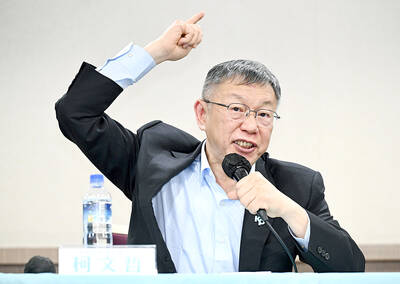
On Thursday, former Taipei mayor and founder of the Taiwan People’s Party (TPP) Ko Wen-je (柯文哲) was sentenced to 17 years in prison and had his civil rights suspended for six years over corruption, embezzlement and other charges. Seven others related to the case were also handed prison sentences, while two were found not guilty. It has been a bad week for the TPP. On Tuesday, prosecutors charged Chinese immigrant Xu Chunying (徐春鶯) with suspicion of taking part in Beijing-directed election interference. Xu has strong links to the TPP, which once offered her a party list legislator nomination. Tuesday also


 RSS
RSS