


Lying back in the kayak, I tried to follow my guide’s instructions to make myself as horizontal as possible while he propelled our two-man boat into the mouth of the sea cave and through a narrow tunnel.
“OK, now turn on your torch,” Olay said. “Look, bats!” Just a couple of feet above my face, dozens of small, grayish bundles hung like macabre Christmas decorations. I shrank down further, willing them to stay put and trying not to swallow the repulsive stench of bat guano that grew stronger the further in we floated. At last we came swerving out into a perfect, circular lagoon of blue-green water, surrounded on all sides by high cliffs, vines and vegetation clinging to the vertical habitat.
“There are only two ways into the lagoons,” Olay had said as our group’s motorized escort boat set off into Phang Nga bay from Phuket’s Ao Por Pier, “by boat or by helicopter, and I’m afraid we don’t have a helicopter.”
But there can be no better way to explore the emerald bay on the western Andaman coast of Thailand than by kayak. Over 160 limestone islands litter its breadth, characterized by sheer cliffs rising straight from the sea and, in some cases, hongs (hidden lagoons) at their centers, scenery brought to our attention by the blockbuster film The Beach in 2000. The area has been dramatically influenced by tourism since then. As part of the backpacking generation who flocked to Thailand a decade ago, I remember being totally alone on the famous jungle-backed beach where the film was set.
Sadly now, Olay reported, hundreds of tourists visit the beach daily, and the bay’s most famous “paradise” spots — Phuket in the west, Krabi on the mainland in the east, and Phi Phi Island further south — have come to symbolize the ruinous capacities of tourism, with big hotels jostling for space, and refuse, sewage and pollution problems. Yet, particularly if you travel by kayak, it is still possible to find an unspoilt side to Phang Nga. Californian John Gray was the first to bring commercial sea-kayaking to the bay back in 1989, importing a business he’d established in Hawaii (and has since rolled out to Vietnam, Fiji and the Philippines), and discovering lagoons, caves and tunnels unknown even to locals. Many other operators now run kayak tours of Phang Nga, but as the original, and an active environmentalist, John has earned local respect. Accompanying me and 20 other tourists on his signature “hong by starlight” excursion, he admitted feeling guilty about how busy the bay had become, and explained he is trying to get the industry to “green up” by educating guides and encouraging them to collect floating rubbish. “Be careful — what you’re standing on there is the mangrove’s lungs,” he said, pointing at the little nubs of root sticking up from the mud, as we squelched over one island’s interior. “I’ve seen photos of people doing pull-ups on the branches. Please don’t touch.”
The excursion’s selling point is that each customer has their own guide to paddle their sit-on-top kayak and point out wildlife — monkeys, birds and lizards — as you explore several stunning lagoons. As dusk fell we ate a delicious buffet of curries on the deck of the big boat that ferried us between kayak spots, and made kratongs, floating offerings of flowers and candles that we released to bob about a starlit lagoon. Romantic, but a tad schmaltzy, plus being paddled by the guide felt cosseting. Ideally one would explore the bay independently, but local operators won’t rent kayaks to inexperienced tourists without a guide (due to dangerous currents and complicated tides), so I had booked an extended camping and kayaking “mini expedition.” While the rest of the punters headed back towards the dazzle of Phuket, our small breakaway party — with leader Olay, Welsh guide Martin and assistant Pung — paddled out into the darkness.
We set up camp on a tiny stretch of beach backed by towering cliffs on Koh Penak, and parked our kayaks in front of our tents. Blinded by each other’s headtorches, we drank beers around the fire, listening to Martin’s tales of expat life, such as the time he discovered a curled-up cobra in his bed and hired a snake-charmer to move it.
Phosphorescence glittering in the warm sea drew us in for a late-night swim, and we floated on our backs looking up at the stars, flipping over to create our own underwater constellations, and filling bottles to make “sparkling water.”
Unzipping the tent at dawn and walking straight out on to the sand to watch a violet-rose-red sunrise is a luxury Phuket’s most expensive resorts could never match. Between looming hulks of limestone across the bay, long-tail boats cast the day’s first nets while around me the island woke up. Insects buzzed in the greenery, freshly filled rock pools fizzed, and before the tents had started emitting yawns and mosquito-aimed slapping noises, I had already watched a trio of hornbills flee squawking from the trees, and a meter-long black monitor lizard slither into the sea from the rocks. At breakfast — fresh pancakes and scrambled eggs — Olay described how he’d had to rescue the kayaks from the high tide in the middle of the night that attempted to snatch them from our sandy doorstep.
Eventually we set off, each paddling our own kayak, following the tide east into the bay. We made stops to examine quivering red anemones, explore Hong island, a glittering “diamond cave” and watch monkeys, before striking out into open water to paddle from island to island, Olay adjusting our route to circumvent the currents. In the main channel, pleasure boats chugged past, blasting their horns, loaded with tourists bound for Koh Ping Kan — “James Bond island,” the setting for Scaramanga’s lair in The Man With the Golden Gun. Inevitably, we stopped there, too, walking along a path to see the famous limestone stack just a few meters out in the water, where dozens of tourists — Japanese, French, German, Aussie — posed, fingers pointing like guns. How those people were missing out. With so many islands, it isn’t hard to find deserted places to swim and if not by kayak you can reach them by chartering a long-tail boat. We saw many tiny beaches where the company sometimes camps, though Olay insisted others were forbidden to all but licensed birds’ nest collectors, who sell the valuable ingredients for soup, and are allowed to shoot anyone who encroaches on their territory.
Riding the tide back to camp, exhausted after seven hours’ kayaking, we returned to a delicious meal cooked by chef Toy on a makeshift kitchen set on some stones, of spicy tom kha gai coconut soup, curry, noodles and sweet and sour jackfish, freshly picked cockles and chillies (I chose to ignore what John Gray had said about raw sewage being pumped into the bay).
Phang Nga is so vast, it would take weeks to paddle across; to be sure we saw the highlights, a long-tail boat whisked us around the next day. At “Tarzan beach” we swung on vines from rocks into the sea, saw huge shoals of anchovies and several cigar fish, drifted silently listening to monkey calls, and explored Hlam Tang, the largest hong yet, negotiating a thick maze of mangroves to a huge, other-worldly cavern full of dripping stalactites. Later, squatting among life jackets and paddles below deck, Toy cooked green curry — the best I had in Thailand — which we ate on the swaying roof of the boat, learning some Thai: “Pet pet pet!” (“Very spicy!”). Snorkeling later to a long sandy spit that protruded from the beach on Koh Pak Beer, I floated above massive sea urchins, brain coral, giant clams and parrot fish, and almost stepped on a stingray in the shallows.
Koh Yao Noi, the bay’s second largest island next to its neighbor, Koh Yao Yoi, was my drop-off point. With its tiny villages, beach huts, massage stalls and rubber farms, it looked charmingly traditional and unspoilt, despite the smattering of top-range hotels. But as the longtail pulled up at the immaculate lawns of the Koyao Island Resort, I knew the luxurious sea-view accommodation would never match the magic of a plastic tent on a deserted strip of sand.
On the Net: johngray-seacanoe.com


Last week, on the heels of the recall election that turned out so badly for Taiwan, came the news that US President Donald Trump had blocked the transit of President William Lai (賴清德) through the US on his way to Latin America. A few days later the international media reported that in June a scheduled visit by Minister of National Defense Wellington Koo (顧立雄) for high level meetings was canceled by the US after China’s President Xi Jinping (習近平) asked Trump to curb US engagement with Taiwan during a June phone call. The cancellation of Lai’s transit was a gaudy

From Godzilla’s fiery atomic breath to post-apocalyptic anime and harrowing depictions of radiation sickness, the influence of the nuclear bombings of Hiroshima and Nagasaki runs deep in Japanese popular culture. In the 80 years since the World War II attacks, stories of destruction and mutation have been fused with fears around natural disasters and, more recently, the Fukushima crisis. Classic manga and anime series Astro Boy is called “Mighty Atom” in Japanese, while city-leveling explosions loom large in other titles such as Akira, Neon Genesis Evangelion and Attack on Titan. “Living through tremendous pain” and overcoming trauma is a recurrent theme in Japan’s

As last month dawned, the Democratic Progressive Party (DPP) was in a good position. The recall campaigns had strong momentum, polling showed many Chinese Nationalist Party (KMT) lawmakers at risk of recall and even the KMT was bracing for losing seats while facing a tsunami of voter fraud investigations. Polling pointed to some of the recalls being a lock for victory. Though in most districts the majority was against recalling their lawmaker, among voters “definitely” planning to vote, there were double-digit margins in favor of recall in at least five districts, with three districts near or above 20 percent in
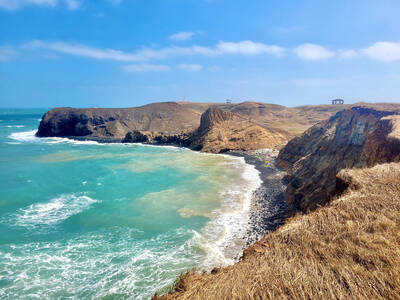
The great number of islands that make up the Penghu archipelago make it a fascinating place to come back and explore again and again. On your next trip to Penghu, why not get off the beaten path and explore a lesser-traveled outlying island? Jibei Island (吉貝嶼) in Baisha Township (白沙鄉) is a popular destination for its long white sand beach and water activities. However, three other permanently inhabited islands in the township put a unique spin on the traditional Penghu charm, making them great destinations for the curious tourist: Yuanbeiyu (員貝嶼), Niaoyu (鳥嶼) and Dacangyu (大倉嶼). YUANBEIYU Citou Wharf (岐頭碼頭) connects the mainland


 RSS
RSS