

California Grill opened its second location in Taipei’s East District (東區) last summer, but recently expanded its previously tiny storefront. The restaurant, which is right behind the Sogo on Dunhua South Road (敦化南路), is plainly decorated but roomy and, like California Grill’s Yongkang Street (永康街) location, features a flat-screen television that plays TV shows of extreme sports on constant rotation. The footage might give you ideas for how to burn off the calories you’ll consume in the form of California Grill’s hamburgers. The restaurant was founded by two Americans in 2007 and features patties made with 100 percent USDA beef. Vegetarians and health-conscious diners will also find plenty of options. All burgers are served with a side of salad or thick-cut fries.
A standout on California Grill’s menu is the Mofo burger (NT$195), which is a beef patty or teriyaki chicken breast topped with bacon, American cheddar cheese, BBQ sauce and garlic mayo on a white bread bun (a tofu version is available for NT$175). The smorgasbord of flavors, from the savory bacon to the sharp cheddar cheese, is satisfying. Another particularly decadent option is the western bacon burger (NT$205), beef or teriyaki chicken topped with strips of bacon, BBQ sauce and cheddar cheese with a heap of crispy, fresh onion rings on top for some extra crunch.
California Grill has three burgers on its menu made exclusively with chicken breast. The best is the very flavorful teriyaki chicken breast (NT$155), the worst for your arteries is the breaded fried chicken sandwich (NT$165) and the most original is the hidden valley (NT$195), which is topped with red onion, sprouts, pepper jack cheese, bacon, is smothered in ranch dressing and comes in a whole wheat bun. Despite the very piquant ingredients, however, the hidden valley sandwich was bland compared to the restaurant’s burgers. The pepper jack cheese and red onions were the dominant flavors and overwhelmed the other ingredients, including the juicy chicken breast.
If you can’t decide what to order, consider the sliders platter (NT$250), which includes four mini-burgers (beef, chicken, salmon and tofu) and a salad or fries. The slice of Canadian freshwater salmon fillet was plump and delicious (it comes as a regular-sized sandwich for NT$200), while the tofu, marinated in a sesame, soy and ginger sauce, was also surprisingly satisfying, even though its texture is softer and less toothsome than the meat-filled sandwiches.
California Grill offers three salads. The Green Goddess and Napa Valley (both NT$160) are topped with hot, freshly grilled chicken breast and are hearty enough for meals by themselves. The Valley Girl is the house salad that is served as a side with hamburgers and is NT$140 when ordered as a dish.
The restaurant’s weekday lunch specials (NT$159 each from 11:30am to 3pm) include a Napa Valley, Green Goddess salad or two classic beef, teriyaki chicken breast, tofu or breaded fried chicken sliders with French fries or salad. Each set includes iced tea (soda for NT$15 more).
The Nuclear Safety Commission (NSC, 核安會) on Sept. 24 approved the re-operation plan that Taiwan Power Co (Taipower, 台電) filed in March for the Ma-anshan Nuclear Power Plant in Pingtung County, after three rounds of review and 589 comments. Taipower now has to carry out the work in the plan and its own inspections on ageing, radiation and seismic resistance, then report back to the commission for review and on-site checks. Minister of Economic Affairs Kung Ming-hsin (龔明鑫) has named 2028 as the earliest restart. The NSC has given no date. THE DEBATE No challenge has been identified as to whether Ma-anshan
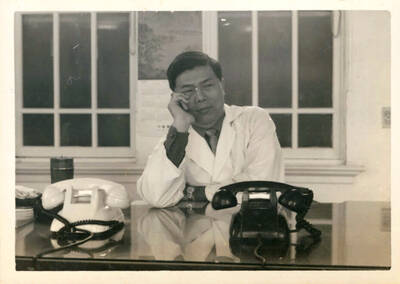
Oct. 12 to Oct. 18 After 11 years in prison on Green Island, Yen Shih-hung (顏世鴻) was finally due for release when a camp guard asked him for NT$20,000 to help pay his bride price. Yen refused. The next day, officials deemed that he had “failed to improve his thinking” and ordered him to undergo further political reeducation on Siaoliouciou (小琉球), where prisoners were also subjected to forced labor. He spent another 19 months there before regaining his freedom in January 1964. Yen’s punishment stemmed from his joining the Taiwan Provincial Student Affairs Committee

Cognitive warfare, says the Ministry of National Defense (MND), is the People’s Republic of China’s (PRC) use of “political, economic, cultural, military and legal means, with the intent to divide internal unity and undermine social stability” in Taiwan. Last week offered several examples. PRC media in October last year reported that the Chongqing Municipal Public Security Bureau had opened an investigation into Democratic Progressive Party (DPP) Legislator Puma Shen (沈伯洋), the DPP’s mayoral candidate for Taipei in next month’s election, for “Taiwan independence” activities. This was a cognitive warfare ploy, designed to unsettle the targeted person and to establish the idea

In pandemic preparedness work, scientists like to focus on the technical challenges: identifying pathogens, diagnosing infections, understanding their effects and developing vaccines and treatments. Each step promises progress through human innovation, investment and planning. The WHO, for example, brings experts together to identify and prioritize emerging disease threats and collect the evidence needed to prepare for them. But preparedness depends on more than scientific innovation. As the past week has shown, politics is the elephant in the room in all of this. No one could have predicted we would be talking about pneumonic plague, and that the death of a single


 RSS
RSS