


When
Walter Kirkby was drafted to serve in the British Army at the beginning of World War II, he had no idea that it would be more than six years and a complete circumnavigation of the globe before he saw the dales and valleys of Yorkshire again.
Mobilized in August 1939, Kirkby served in various locations around England, missing out on early fighting in both France and Norway before his unit, the 80th Anti-Tank Regiment, Royal Artillery, was told it was being drafted abroad.
“On the way out, we thought we were going to Middle East, desert, but we weren’t. We called in at Durban, Bombay and then eventually Singapore. It was about six weeks in total on a crowded boat. A big, big liner turned transporter,” he says in his strong Yorkshire accent. “When we arrived in Singapore it were all strange of course. But there were plenty of food, much different to being rationed at home.”
Following several weeks acclimatizing, a trip north into present-day Malaysia saw Kirkby encounter the Japanese army for the first, and unfortunately for him, not the last time. As his unit moved out towards the coast at Kota Bahru to try and prevent the Japanese landing — they were already too late — they were bombed and strafed by Japanese fighters.
After holding them off for a few days, the next few weeks were spent in retreat in the face of the fierce Japanese advance down the Malay Peninsula until he and his unit ended up back in Singapore, stranded after the causeway connecting it with the mainland was blown up.
Following the fall of Singapore in February 1942, Kirkby and the rest of the Allied troops found themselves corralled in the city’s Changi Prison. “It were a hell of a place, three or four of us to a small concrete cell,” he recalls.
Conditions were not good, the prisoners used to draw water from a nearby well, but after a couple of days the well began to run dry.
After three weeks in prison, Kirkby volunteered for the first of several work parties, helping the victorious Japanese build a Shinto shrine on Singapore’s Bukit Timah Hill.
This decision, taken as he thought he might be able to find more food, possibly saved his life as most of his unit was shipped north to work on the infamous “Death Railway” connecting Thailand and Burma.
But left in Singapore, reminders of death were never far away. Kirkby remembers driving past a “row of severed heads,” probable Chinese collaborators, every morning on his way to work.
Then, in October 1942, “We were loaded on the England Maru, and I mean loaded. We were packed in solid, like sardines,” he recalls.
‘HELL SHIP’ TO TAIWAN
The England Maru was one of dozens of World War II Japanese transporters, many of which were named after countries and cities, that came to be known as “hell ships” for the horrendous conditions endured by the POWs during the voyages.
“We had buckets for us toilets. What rice we got were lowered down, whether it was the same bucket or not I couldn’t tell you,” he says with a laugh.
The ship landed at Keelung 14 days later and the men were taken ashore. After a short train ride they were marched up a hill to what was then the Kinkaseki Mine, in present-day Jinguashi (金瓜石), Taipei County.
A few days later the men were put to work in the copper mine, at the time the most productive in the whole Japanese Empire.
At first not even knowing where they were, the men eventually figured out they were in Taiwan.
“We used to discuss getting away, being just half an hour from the China coast, but it was hopeless,” Kirkby says.
Sent down the mines with just a “cardboard helmet, a piece of loin cloth and a shirt made out of god knows what,” he and his fellow prisoners worked from dawn till dusk with small amounts of rice and a few vegetables for sustenance, suffering daily beatings at the hands of their captors.
“The lads would come back from mine about five or six,” he recalls, “There was a big concrete bath about 10 foot by 6 or 7 foot (3m by 2m) for about 400 to 600 men. If you were lucky and went in with the first 20, you got a reasonable wash, but if you got in with the last 20, you got more of a dip in soup.”
This went on for more than a year until the summer of 1944, when Kirkby’s sky fell in — literally. A roof collapse put him out of action for several weeks with a broken arm, injured back and several serious lacerations — the scars from which he bears to this day.
Following the accident and after recuperating with the help of camp doctor and fellow POW Canadian Ben Wheeler, “a marvelous fellow,” Kirkby, who has worn a back brace ever since, was given a job sewing “tabbies,” or rubber shoes.
Then in February 1945 the prisoners were again loaded onto a bus and taken back to Keelung where they put on another hell ship bound for Moji, Japan.
Arriving at an unknown destination after landing in Japan, Kirkby recalls, “You could see slag heaps all the way round. It was a real big mining area and we realized we were back to square one.”
But he says coal mining wasn’t as hard as it was less cramped and humid than in the copper mines, and the guards were older and less violent than those in Taiwan.
In time, Allied air raids started, signaling the advance of US troops on the Japanese main islands, and before long the prisoners started running out of equipment and materials for their work. Then one morning after a period with no work, the men got up to discover the camp guards had disappeared. They broke into the rice store and went on “scrounging parties” into the countryside, where they found “ducks, chickens and tonnes of vegetables.”
Before long, “a couple of Yanks walked into camp, bulging with equipment. They said, ‘We’re gonna get you some food,’ and must have whistled these planes up,” he says.
Next thing they knew, B-29 planes were dropping food on the camp in sealed, 42-gallon (159-liter) oil drums, with no parachutes and predictably disastrous results.
END OF THE ROAD
“There was fruit salad up railway line, on rocks and unfortunately one [barrel] went through hospital roof and killed at least one of our guys, Johnson,” Kirkby says. “To come all that way through and die like that [was a tragedy].”
The next drop was made with parachutes, but “there was so much food we couldn’t take it after living like we did for so long,” he says.
A few weeks later following a typhoon where “the wind was so strong you were walking on your hands and knees,” the Americans returned and told the men to prepare to leave.
“We traveled [by rail] quite a distance and we saw a house with its roof off and telephone poles blown down and we thought it was typhoon,” Kirkby recalls.
But it wasn’t. What the men were witnessing was the aftermath of the second atomic bomb. They were heading for Nagasaki.
The train stopped at the end of the line, so “we had to get out and walk towards the docks at Nagasaki. It were a hell of a sight,” he says. “We got to the docks and they’d got some showers rigged up. The Americans were there and we stripped off, threw everything away and they deloused us with DDT powder and put us on a small aircraft carrier.”
The men eventually arrived in Manila, their first taste of freedom for more than three years.
Two weeks and a visit by Lady Mountbatten later, they “got on a ship destined for Frisco [San Francisco], but they [the dockers] were on strike, so we finished up at Victoria, Vancouver Island,” where they spent two more weeks.
From there, the men were taken across Canada by train to New York, where they were loaded, this time in more comfortable conditions, onto the RMS Queen Mary for the last leg of his epic journey to Southampton. A short rail trip later and Kirkby was home, complete with a giant jar of Maxwell coffee he had bought in the US as a gift for his mother. It was late November 1945.
Now, 63 years on, Kirkby has come full circle and is back in Asia, returning to Taiwan for the first time since the end of the war for last week’s annual Remembrance Day ceremony at his former prison camp, where he paid his respects to his fallen comrades.
He had been meaning to return ever since 1998, when he found out that a monument was being built at the camp to the men who didn’t make it, but for one reason or another things didn’t fall into place until this year.
Speaking about his feelings on his return to the camp, Kirkby, in typically unassuming fashion, says, “It’s sad, when you know what’s happened there. It’s all there behind scenes as you might say. Unfortunate that such a lot of lads didn’t come back from there.”
“You’ve got to be a bit hard and let go, because if you worry too much about that sort of stuff you’ll go yourself,” he says with a stiff upper lip.
He may be able to let go, but he says he will never forgive the Japanese.
“I certainly don’t like [the Japanese], that’s for sure. The farther they are away from me the better. Let me put it that way,” he says.
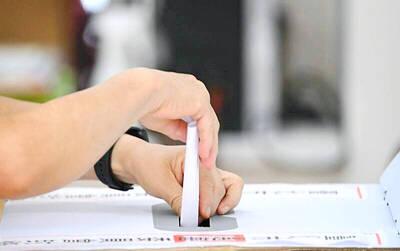
No one saw it coming. Everyone — including the Chinese Nationalist Party (KMT) — expected at least some of the recall campaigns against 24 of its lawmakers and Hsinchu Mayor Ann Kao (高虹安) to succeed. Underground gamblers reportedly expected between five and eight lawmakers to lose their jobs. All of this analysis made sense, but contained a fatal flaw. The record of the recall campaigns, the collapse of the KMT-led recalls, and polling data all pointed to enthusiastic high turnout in support of the recall campaigns, and that those against the recalls were unenthusiastic and far less likely to vote. That
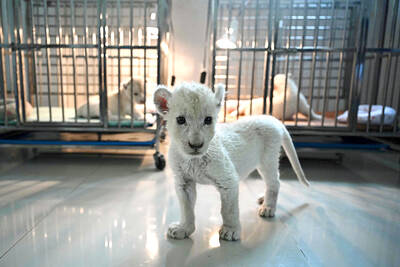
Behind a car repair business on a nondescript Thai street are the cherished pets of a rising TikTok animal influencer: two lions and a 200-kilogram lion-tiger hybrid called “Big George.” Lion ownership is legal in Thailand, and Tharnuwarht Plengkemratch is an enthusiastic advocate, posting updates on his feline companions to nearly three million followers. “They’re playful and affectionate, just like dogs or cats,” he said from inside their cage complex at his home in the northern city of Chiang Mai. Thailand’s captive lion population has exploded in recent years, with nearly 500 registered in zoos, breeding farms, petting cafes and homes. Experts warn the
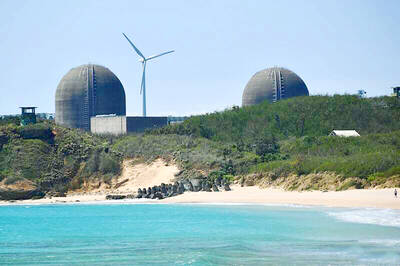
A couple of weeks ago the parties aligned with the People’s Republic of China (PRC), the Chinese Nationalist Party (KMT) and the Taiwan People’s Party (TPP), voted in the legislature to eliminate the subsidy that enables Taiwan Power Co (Taipower) to keep up with its burgeoning debt, and instead pay for universal cash handouts worth NT$10,000. The subsidy would have been NT$100 billion, while the cash handout had a budget of NT$235 billion. The bill mandates that the cash payments must be completed by Oct. 31 of this year. The changes were part of the overall NT$545 billion budget approved
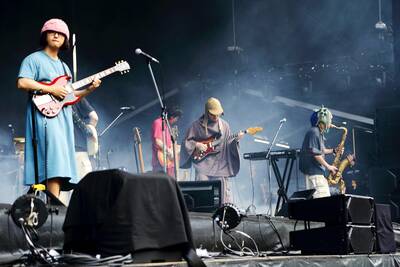
Before performing last Friday at Asia’s bellwether music festival, Fuji Rock in Japan, the Taiwanese indie band Sunset Rollercoaster (落日飛車) had previously performed on one of the festival’s smaller stages and also at Coachella, the biggest brand name in US music festivals. But this set on Fuji Rock’s main stage was a true raising of the bar. On a brilliant summer’s evening, with the sun rays streaming down over a backdrop of green mountains and fluffy white clouds, the performance saw the Taiwanese groovemasters team up with South Korean group Hyukoh, with whom they’ve formed a temporary supergroup called AAA


 RSS
RSS