

Ten years ago, he was one of Japan’s richest and most flamboyant characters, a celebrated pop producer who once boasted that he had lost track of how much money he had made.
But Tetsuya Komuro’s fall from grace was complete Tuesday when he was arrested on suspicion of fraud, accused of swindling an investor out of US$5 million, by selling him rights to music he did not own.
Television footage showed investigators marching into Komuro’s luxury flat in Tokyo, while the 49-year-old was shown in Osaka, being driven from a hotel in tears. Police said Komuro had admitted the allegations.
Avex Group Holdings, the label behind Komuro’s most successful acts, said it “very much regretted” his arrest. According to media reports, the investor agreed to make a US$5.5 million down payment for the copyrights to 806 of Komuro’s songs, even though the producer knew the rights were not his to sell.
Komuro’s knack of spotting budding pop talent generated more than 170 million CD sales and made him one of Japan’s richest men in the mid-1990s. The peroxide blond Komuro was never given to moderation — he drove Ferraris and owned villas in Hawaii, Bali and Malibu, and once boasted to a tabloid newspaper: “As my bankbook only shows up to 10 digits, I’ve lost track of my money.”
At the height of his wealth he spent US$202,000 reserving the entire first-class cabin on a flight from Tokyo to Los Angeles.
While his acts sold millions of CDs in Japan, Hong Kong and Taiwan, they were practically unheard of elsewhere, though he did co-write Together Now, the theme tune for the France 1998 World Cup, with Jean-Michel Jarre.
Komuro, who launched his career in 1984 as a keyboard player with the group TM Network, is understood to have fallen into debt after a series of failed overseas business deals and an expensive divorce.
The Nuclear Safety Commission (NSC, 核安會) on Sept. 24 approved the re-operation plan that Taiwan Power Co (Taipower, 台電) filed in March for the Ma-anshan Nuclear Power Plant in Pingtung County, after three rounds of review and 589 comments. Taipower now has to carry out the work in the plan and its own inspections on ageing, radiation and seismic resistance, then report back to the commission for review and on-site checks. Minister of Economic Affairs Kung Ming-hsin (龔明鑫) has named 2028 as the earliest restart. The NSC has given no date. THE DEBATE No challenge has been identified as to whether Ma-anshan
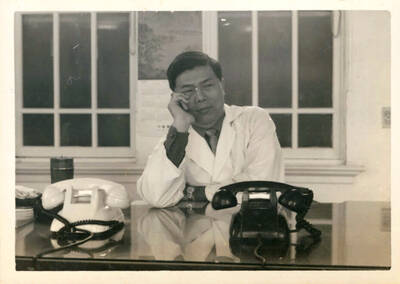
Oct. 12 to Oct. 18 After 11 years in prison on Green Island, Yen Shih-hung (顏世鴻) was finally due for release when a camp guard asked him for NT$20,000 to help pay his bride price. Yen refused. The next day, officials deemed that he had “failed to improve his thinking” and ordered him to undergo further political reeducation on Siaoliouciou (小琉球), where prisoners were also subjected to forced labor. He spent another 19 months there before regaining his freedom in January 1964. Yen’s punishment stemmed from his joining the Taiwan Provincial Student Affairs Committee

Cognitive warfare, says the Ministry of National Defense (MND), is the People’s Republic of China’s (PRC) use of “political, economic, cultural, military and legal means, with the intent to divide internal unity and undermine social stability” in Taiwan. Last week offered several examples. PRC media in October last year reported that the Chongqing Municipal Public Security Bureau had opened an investigation into Democratic Progressive Party (DPP) Legislator Puma Shen (沈伯洋), the DPP’s mayoral candidate for Taipei in next month’s election, for “Taiwan independence” activities. This was a cognitive warfare ploy, designed to unsettle the targeted person and to establish the idea
In pandemic preparedness work, scientists like to focus on the technical challenges: identifying pathogens, diagnosing infections, understanding their effects and developing vaccines and treatments. Each step promises progress through human innovation, investment and planning. The WHO, for example, brings experts together to identify and prioritize emerging disease threats and collect the evidence needed to prepare for them. But preparedness depends on more than scientific innovation. As the past week has shown, politics is the elephant in the room in all of this. No one could have predicted we would be talking about pneumonic plague, and that the death of a single


 RSS
RSS